
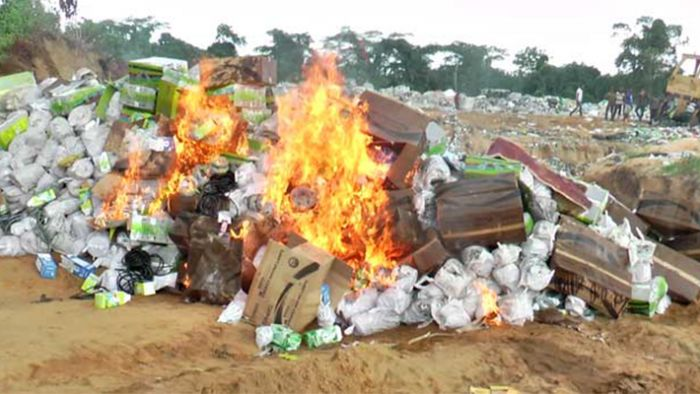
The danger may already be in your shopping bag
A bottle of perfume. A roll-on deodorant. A pack of painkillers bought from a roadside seller. A tin of food, a bottle of wine or a product picked from a market shelf because it was cheaper than the one you usually buy.
These are ordinary purchases. Most people make them without a second thought, trusting that what they take home is what the label promises.
But what happens when that trust is misplaced?
Imagine buying a familiar medicine, only to discover that it contains the wrong ingredient. Or applying a cosmetic product that has not been properly tested for safety. What if the food you serve your family has been contaminated, adulterated or stored under conditions that make it unsafe?
The danger is not always obvious. A counterfeit product can look convincing, carry a familiar brand name and come in packaging that appears genuine. A low-quality product may also be unsafe without being deliberately falsified.
In Nigeria, where rising living costs force many households to stretch every naira, the pressure to find cheaper alternatives is understandable. The problem begins when the price of a product becomes more important than its safety, and when dishonest sellers exploit that pressure for profit.
The question is no longer simply whether we can afford what we buy. It is whether we can trust what we bring into our homes.
A growing health concern we cannot afford to ignore
Cancer is among the diseases causing growing concern in Nigeria. The numbers are sobering.
The International Agency for Research on Cancer, an arm of the World Health Organization, estimated that Nigeria recorded 152,261 new cancer cases and 90,795 cancer deaths in 2024. Breast cancer was the most frequently diagnosed cancer, followed by prostate and cervical cancers.
These figures, published in the agency's September 2026 global cancer estimates, highlight a significant public-health burden. They do not, however, establish that fake food, cosmetics or other counterfeit products are responsible for the increase. Cancer has multiple causes, including certain infections, tobacco use, alcohol consumption, inherited factors and exposure to particular harmful substances.
Public concern must be guided by evidence, not fear.
Nevertheless, exposure to certain toxic chemicals and contaminants can pose serious health risks. Some substances are associated with cancer, while others can damage organs, irritate the skin or cause other forms of illness. The danger depends on the substance, the level and duration of exposure, and the person's circumstances.
Diabetes is another major health concern, but it would be inaccurate to blame counterfeit products generally for its prevalence. Diabetes has several risk factors, including genetics, body weight, physical activity, diet and other medical factors.
What we can say with confidence is that unsafe consumer products introduce avoidable risks into an already challenging public-health environment.
The World Health Organization also warns that at least one in ten medicines in low- and middle-income countries is substandard or falsified. Such products may contain the wrong ingredients, incorrect doses or harmful contaminants. Some may contain too little of the active ingredient needed to treat an illness, while others may contain none at all.
The consequences can be severe: treatment failure, worsening illness, dangerous side effects and, in some cases,
From the medicine cabinet to the dressing table
The danger does not stop at medicines.
Cosmetics and personal-care products are part of everyday life. People use soaps, creams, perfumes, deodorants, hair treatments and skin-lightening products with the expectation that they will perform as advertised and be safe when used as directed.
But products with misleading labels, undisclosed ingredients or inadequate quality controls can expose consumers to harm. Depending on their ingredients and how they are used, unsafe cosmetics may cause skin irritation, burns, allergic reactions or other health problems.
Nigeria's National Agency for Food and Drug Administration and Control (NAFDAC) has previously warned about an unregistered cosmetic soap called Fair Child Soap found in retail outlets in Lagos. In its June 2025 alert, the agency said the product was being marketed to children with deceptive and misleading labelling and was not authorised for distribution in Nigeria.
That case is a reminder that attractive packaging and confident marketing are not proof of regulatory approval.
Food presents another challenge. Adulteration, contamination, unsafe additives, poor storage and misleading labelling can turn products intended for consumption into health hazards. The danger is not that every unfamiliar tomato, bottle of wine or food product is fake. It is that consumers may not be able to identify every safety problem by sight or smell alone.
NAFDAC's 2025 regulations on the recall and disposal of unwholesome and adulterated food products specifically address issues including contamination, unsafe additive levels, pesticide residues, food fraud and poor storage or handling.
This is why food safety must involve manufacturers, importers, retailers, regulators and consumers. It cannot rest on the buyer alone.
The frightening reality of fake medicines
Perhaps the most troubling part of the counterfeit-products problem is the possibility of buying medicine that cannot be trusted.
When someone buys a drug, they are usually trying to relieve pain, treat an infection, manage a chronic condition or protect a loved one. They may not have the technical knowledge to assess the product. They rely on the manufacturer, the pharmacist, the seller and the regulatory system.
Falsified medicines exploit that trust.
In a 2025 public alert, NAFDAC warned Nigerians about counterfeit Aflotin 20/120 milligram tablets, a medicine used to treat uncomplicated malaria. The agency said the identified counterfeit batch had packaging that did not match the manufacturer's approved design.
The incident demonstrates why checking the name on a medicine box is not enough. A product may imitate a genuine brand while its contents, quality and safety remain uncertain.
Substandard medicines can also create problems even when there is no deliberate fraud. Poor manufacturing, inadequate quality control or improper storage can compromise a medicine's quality.
For patients, the result may be delayed recovery, continued symptoms or complications from an illness that should have been treated effectively. In the case of antibiotics, inappropriate or ineffective treatment can also contribute to the wider problem of antimicrobial resistance.
This is why medicines should be purchased from licensed pharmacies and authorised suppliers wherever possible. Buying drugs from an unverified online vendor or an informal seller because the price is lower can carry risks that are difficult to assess at the point of purchase.
If a medicine appears unusual, has damaged packaging, lacks clear labelling or differs from what a pharmacist supplied previously, seek professional advice before using it. Do not assume that a medicine is genuine simply because its packaging looks convincing.
Can a NAFDAC number be trusted?
A registration number on a product can offer an important clue, but it should not be treated as an automatic guarantee of authenticity.
Consumers may see a NAFDAC number printed on a bottle, carton or container and assume the product has been verified. However, a number can be copied from a legitimate product and placed on a different or falsified one. A printed number is not the same as confirming that the particular product is registered and that its details match the official record.
NAFDAC provides online tools through its registration systems for checking product registration details. Consumers can use these official services to verify a product's number and information rather than relying only on what appears on the packaging.
Visit the "NAFDAC Automated Product Administration and Monitoring System" (https://registration.nafdac.gov.ng/Home/) to access its product-verification service.
Be cautious when a seller discourages questions, cannot explain where a product came from or offers a price that seems unusually low. Check the manufacturer, batch details, expiry date, seal and packaging. If the number cannot be verified or the details do not match, do not treat the product as safe merely because the number is present.
Also, be careful with alarming lists circulated on WhatsApp and social media. Not every viral warning is genuine. On October 23, 2026, Africa Check reported that NAFDAC had disowned a widely circulated list claiming to identify numerous counterfeit products, warning that it had not originated from the agency.
A false warning can create unnecessary panic and unfairly damage legitimate businesses. Verify claims through official alerts before sharing them.
How to protect yourself without living in fear
No consumer can independently test every product they buy. The goal is not to become suspicious of everything, but to develop habits that reduce avoidable risks.
Buy from reliable sources: Choose licensed pharmacies for medicines and reputable retailers for food, cosmetics and other regulated products. Be especially careful when buying from unfamiliar online vendors or sellers who cannot provide credible information about their stock.
Verify before you trust: Check the registration number of regulated products using official channels. Read the product name, manufacturer, ingredients, batch number, expiry date and instructions. If something does not match, seek clarification.
Do not let a bargain make the decision for you: A discount is not proof that a product is fake, just as a high price is not proof that it is genuine. But a price that is dramatically lower than those offered by reputable sellers deserves closer scrutiny.
Pay attention to packaging, but know its limits: Broken seals, spelling errors, unusual colours, damaged containers and missing information are warning signs. However, sophisticated counterfeits may imitate packaging well, so appearance alone cannot establish authenticity.
Use cosmetics according to their instructions: Avoid products with unclear ingredients or misleading claims, and do not apply a product that causes a concerning reaction. Stop using it if irritation develops and seek medical advice where necessary.
Handle food safely: Buy from vendors who maintain reasonable hygiene and storage conditions. Wash produce appropriately, cook food thoroughly where required, observe storage instructions and avoid products with damaged packaging, signs of spoilage or unexplained changes.
Never self-medicate with suspicious drugs: Consult a qualified healthcare professional or pharmacist if a medicine appears different, fails to work as expected or causes an unexpected reaction. Do not increase a dose or combine medicines in an attempt to compensate for suspected poor quality.
Report suspected products: Keep the packaging, receipt and relevant product details if it is safe to do so. Contact NAFDAC through its official channels and seek medical attention if you experience a serious reaction. Do not circulate unverified accusations against a brand or seller.
Most importantly, do not abandon prescribed treatment simply because of a social media rumour. Speak to a qualified healthcare professional about your concerns.
The real cost of a cheap product
Nigeria's counterfeit and product-safety challenge is not simply a story about dishonest manufacturers. It is also about the conditions that allow unsafe goods to find buyers: financial pressure, weak traceability, gaps in enforcement, misleading advertising and consumers who may have little access to reliable information.
Regulators must strengthen surveillance and enforce standards. Manufacturers and distributors must protect their supply chains. Retailers must take responsibility for the products they sell. Online marketplaces must respond to suspicious listings. Consumers, meanwhile, need accessible information and practical ways to check what they are buying.
It is unfair to place the entire burden on individuals when product fraud can be difficult to detect. Yet small decisions can still make a difference.
The next time you buy a bottle of perfume, a skin cream, a tin of food or a packet of medicine, take a moment to look beyond the label. Ask where it came from. Check what can be checked. Seek professional advice when something does not seem right.
A cheap product is not automatically dangerous, and an expensive one is not automatically safe. But no bargain is worth gambling with your health.
Your health is too valuable to leave to guesswork.
Make your everyday choices count
Being more deliberate about your purchases starts with knowing what you are paying for and choosing services you can understand and trust.
Monica makes it easier to convert supported cryptocurrency into Naira when you need it, helping you manage that part of your financial life with greater convenience.
Download the Monica app https://monica.cash/app today and make your next crypto-to-naira conversion simpler.