
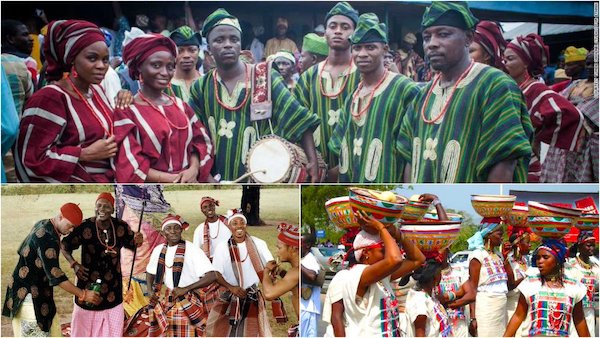
When Was the Last Time You Heard a Child Speak Their Native Language?
Imagine a child whose parents are Yoruba, but who cannot hold a conversation in Yoruba. Or an Igbo child who understands only a few words of Igbo. Perhaps a Hausa child who knows their name, family and hometown but cannot communicate comfortably in the language of their ancestors.
It is becoming a familiar experience in many Nigerian homes, particularly in urban communities.
English has become the language of everyday communication for many families. Children grow up speaking it at home, in school and with their friends. Some parents even consider it an advantage when their children cannot speak their indigenous language because they believe it makes them more polished or better prepared for the modern world.
But somewhere along the way, something important gets lost.
A report by the News Agency of Nigeria in February 2026 highlighted concerns from linguists, parents and cultural experts about the declining use of indigenous languages among younger Nigerians. Some parents admitted that their children could not speak their native languages because they had not been taught them from childhood.
And it is not just about knowing how to translate a sentence.
Language carries stories, humour, expressions, proverbs, history and ways of understanding the world. Some expressions lose their full meaning when translated into English. Certain greetings communicate more than a simple hello. Some proverbs carry lessons that would take several sentences to explain.
When a language stops being spoken at home, the knowledge carried through everyday conversations can gradually disappear with it.
We Are Losing More Than Words
Think about the way our grandparents communicated.
A greeting was rarely just a greeting. There were expressions for different times of the day, for meeting an elder, for entering a home, for acknowledging someone's presence and for showing appreciation.
In many Nigerian communities, greetings were an important part of social interaction. You did not simply walk past an older person without acknowledging them. You greeted people appropriately, and the response often came with prayers, blessings or words of encouragement.
Today, these practices still exist, but their place in everyday life is changing.
The same can be said about traditional names. Many Nigerian names carry family histories, circumstances surrounding a child's birth, prayers, gratitude or the hopes of parents. Yet, some people grow up knowing their names without knowing what they mean or the stories behind them.
Then there are folktales, traditional songs, community celebrations, indigenous games, food preparation methods and the customs that once brought families and neighbours together.
Some children know international cartoon characters better than the folktales their grandparents grew up hearing. They can sing popular foreign songs but may not recognise traditional songs from their own communities.
There is nothing wrong with enjoying foreign entertainment. The concern begins when familiarity with other cultures grows while knowledge of our own gradually disappears.
When Did Speaking Your Language Become Something to Be Embarrassed About?
Perhaps one of the most uncomfortable parts of this conversation is the attitude some people have developed towards indigenous languages and cultural expressions.
For years, speaking English fluently has been associated with education, sophistication and social status. In some schools, children were discouraged or punished for speaking their mother tongue. In certain homes, parents deliberately avoided local languages because they feared their children would struggle with English.
A 2026 News Agency of Nigeria report documented concerns from cultural experts about this attitude, describing how indigenous languages are sometimes treated as inferior in schools and elite social circles.
But why should knowing your language make you appear less educated?
A person can speak excellent English, understand technology, build a successful career and still communicate confidently in their native language. These abilities do not cancel one another out.
Being modern does not require abandoning your roots. Being educated does not mean forgetting where you come from.
And perhaps we need to stop treating cultural knowledge as something that belongs only to older people or those living in rural communities.
Our languages deserve a place in our homes, schools, workplaces, entertainment and digital spaces.
We Love the Aesthetics, But Do We Understand the Culture?
There is something interesting about how we relate to culture today.
We celebrate traditional fashion. We wear beautifully designed Ankara outfits, agbada, isi agu, aso oke and other traditional clothing. We proudly display cultural attire during weddings, festivals and special occasions.
We enjoy traditional food, dance videos, cultural festivals and beautiful photographs of Nigerian heritage.
But culture is more than what looks good in pictures.
Do we understand the significance of the clothes we wear? Do we know the stories behind the ceremonies we attend? Can we explain the meaning of some traditional greetings, songs or customs? Do we know why certain practices exist in our communities?
There is a difference between celebrating culture and understanding it.
Of course, not every tradition needs to be preserved exactly as it was practised generations ago. Some customs deserve to be questioned, particularly those that promote discrimination, inequality or harmful practices. Culture should not be used as an excuse to protect wrongdoing.
But we should be careful not to discard valuable traditions simply because they are old or unfamiliar.
We can question harmful practices while preserving the knowledge, creativity, identity and community values that make our heritage meaningful.
Is Modern Life Taking Us Further Away From Our Roots?
Our lifestyles have changed considerably.
People move from their hometowns to cities for education, employment and better opportunities. Families live far away from their extended relatives. Children grow up in environments where their parents' languages may not be spoken outside the home.
Social media has also introduced younger Nigerians to different cultures, trends, expressions and lifestyles from across the world.
There is nothing inherently wrong with this exposure. Cultural exchange can be beautiful. It allows us to learn, connect and appreciate ways of life beyond our immediate communities.
In fact, Nigerian culture continues to evolve. Young creatives are blending traditional music with contemporary sounds, designers are reimagining indigenous fabrics, and digital creators are using local languages to reach new audiences.
An Associated Press report in September 2026 highlighted how young Africans are using social media, online lessons and entertainment to reconnect with indigenous languages. In Nigeria, the Yoruba-language television game show Masoyinbo is one example of how cultural knowledge can be made entertaining and relevant to younger audiences.
This is an important reminder that modern technology does not have to be the enemy of culture. It can also become one of its strongest preservation tools.
The real challenge is ensuring that our heritage remains part of our everyday lives rather than something we remember only during cultural celebrations.
What Are We Passing on to the Next Generation?
Perhaps the responsibility does not belong to young people alone.
Parents who do not speak their native languages to their children cannot expect those children to suddenly become fluent as adults. Grandparents who know family histories, traditional songs and community stories have valuable knowledge that should be shared while they can.
Schools can also make cultural education more engaging, while filmmakers, musicians, writers, broadcasters and digital creators can give indigenous languages and traditions a stronger presence in modern entertainment.
Even simple actions matter.
Speak your language at home. Ask your grandparents about your family history. Learn the meaning of your traditional name. Teach children the songs, stories and greetings you grew up with. Visit your ancestral community when possible. Celebrate traditional food and clothing, but take time to understand their history.
You do not need to reject modern life to preserve your heritage. You only need to make room for both.
We Should Not Have to Wait Until Something Disappears to Appreciate It
There is a particular sadness in discovering that something meaningful has disappeared only when you want to pass it on.
Imagine wanting to teach your child a traditional song but realising you can barely remember the lyrics. Imagine wanting to explain a family custom but discovering that nobody has taken the time to preserve its history.
By then, the people who could have told the stories may no longer be around.
Culture survives when people practise it, teach it, question it, adapt it and pass it on. It does not survive through photographs, festival costumes and occasional celebrations alone.
Nigeria is beautifully diverse, with hundreds of languages and communities, each carrying its own history and expressions. Preserving that richness does not mean refusing to change. It means making sure that progress does not leave us with nothing to remember.
We can speak English and still speak our mother tongues. We can embrace technology and still value our traditions. We can enjoy global culture without treating our own as something to outgrow.
Perhaps the question we should ask ourselves is not whether the younger generation knows enough about our culture.
It is whether we are doing enough to give them something worth knowing.
Because one day, they will inherit whatever we choose to preserve, and whatever we allow to disappear.
Your World Is Changing. Stay Connected to What Matters.
The world keeps evolving, and staying informed helps us make better decisions about the things that shape our everyday lives. From finance and technology to the issues affecting ordinary Nigerians, Monica helps you turn supported crypto into naira when you need it.
Convert your crypto, receive naira directly into your Nigerian bank account and keep moving. Stay connected. Stay informed. Keep moving. Download Monica: https://monica.cash/app