
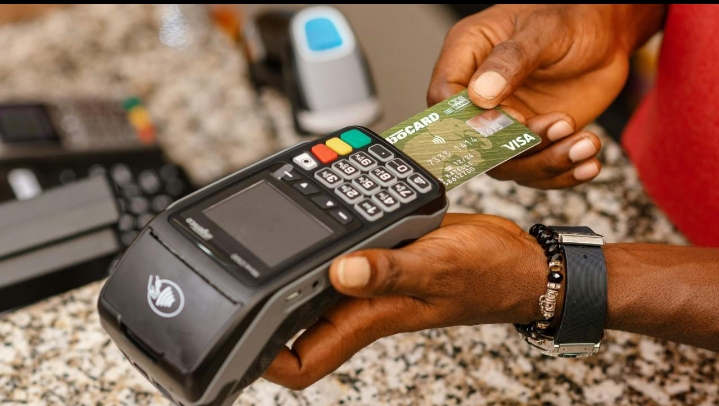
Every Transfer Is Small. Until You Add Them Up.
You send money to a friend. You pay for groceries through a transfer. You renew a subscription, buy airtime, settle a bill or make a payment for something you ordered online.
Most of these transactions take seconds. You open your banking app, enter the account details, confirm the payment and move on.
But have you ever stopped to consider how much these everyday digital activities contribute to the business of banking?
New financial figures offer an interesting perspective. Eight Nigerian banking groups generated a combined ₦521.79 billion from electronic banking and card-related fees in the first nine months of 2026. That represents an 8.1 per cent increase from the ₦482.48 billion recorded during the corresponding period in 2025.
The additional ₦39.32 billion highlights how important digital services have become to banks' revenue.
The figures, analysed by Nairametrics Research from the banks' nine-month financial statements, cover Access Holdings, Zenith Bank, First HoldCo, Guaranty Trust Holding Company, Wema Bank, Sterling Financial Holdings, Stanbic IBTC Holdings and Ecobank Transnational Incorporated.
But before interpreting the amount as money collected exclusively from customers' transfers, there is an important distinction. The reported categories include different sources of electronic banking and card-related income, such as electronic product fees, card management and other digital banking services. They do not represent transfer charges alone.
Still, the numbers reveal something significant: digital banking is no longer just an additional service banks provide. It has become an important source of revenue.
Which Banks Are Making the Most from Digital Services?
Access Holdings led the group, generating ₦172.92 billion from channels and other e-business income between January and September 2026. This represented a 14.3 per cent increase from the ₦151.35 billion recorded in the same period last year.
Ecobank followed with ₦115.93 billion in card management fees, although its figure declined from ₦125.11 billion a year earlier. Its reported category covers card management fees across its multinational operations, so it is not directly comparable with every other bank's electronic banking revenue.
Zenith Bank generated ₦77.17 billion from electronic product fees, representing a 30.7 per cent increase. First HoldCo recorded ₦73.16 billion, while GTCO earned ₦60.81 billion from e-business income.
The remaining figures were ₦10.54 billion for Wema Bank, ₦8.26 billion for Sterling Financial Holdings and ₦3.01 billion for Stanbic IBTC Holdings.
Interestingly, growth was not uniform. GTCO recorded the strongest percentage increase, with its e-business income rising by 40.6 per cent. Zenith Bank also posted substantial growth, while Wema Bank's electronic product fees declined by 56.8 per cent.
This shows that banks are experiencing different outcomes from their digital operations. Some are expanding their electronic banking income considerably, while others are recording declines in particular service categories.
The Cost of Convenience Is Becoming More Visible
For customers, digital banking has changed how money moves.
People no longer need to visit a banking hall every time they want to make a payment. Transfers can be completed from home, businesses can receive payments electronically, and customers can access financial services at almost any time.
That convenience has real value. But it does not mean digital banking is entirely free.
Depending on the service and applicable tariff, customers may encounter electronic transfer charges, card-related fees, USSD charges, account maintenance fees and other service costs.
There is also value-added tax on applicable banking service charges. The 7.5 per cent VAT introduced on certain electronic banking fees in January 2026 applies to the service charge, not the principal amount being transferred.
For example, if a customer is charged ₦50 for a service, the VAT on that charge is ₦3.75. It does not mean an additional 7.5 per cent is deducted from the entire amount sent.
This distinction matters because several deductions on bank statements can look similar even though they represent different charges or statutory taxes.
The growing use of digital services means customers should pay attention to these deductions, especially when they make frequent transactions.
A charge that appears insignificant on one occasion can become noticeable when repeated across several transactions and accounts.
Are Customers Getting Enough in Return?
This is where the conversation becomes more interesting.
Banks are investing in mobile applications, payment infrastructure, security systems, customer support and other technologies to make electronic transactions more reliable.
Customers benefit when transfers arrive quickly, applications remain accessible and payment services work without unnecessary interruptions.
However, the experience is not always smooth.
Failed transfers, delayed reversals, unavailable banking applications, disputed deductions and poor customer support remain familiar frustrations for many users.
When customers pay for services, they naturally expect a dependable experience. A digital banking platform should not only make transactions possible; it should make them reliable.
This is why the discussion about digital banking revenue should not be reduced to whether banks are charging too much. It should also consider the quality of the services supporting those charges.
The ₦521.79 billion figure does not establish how much customers paid exclusively for transfers, nor does it tell us whether every charge represents good value. But it does provide a reason to examine the relationship between what banks earn from digital services and what customers receive.
What Does the CBN Say About Bank Charges?
Bank charges in Nigeria are not supposed to be determined arbitrarily.
The Central Bank of Nigeria provides a framework for charges through its Guide to Charges by Banks and Other Financial Institutions. The existing 2020 guide contains provisions on electronic banking transactions, account maintenance, cards and other services, including limits on applicable charges.
In April 2026, the CBN published an exposure draft of a revised Guide to Charges, seeking public comments on proposed changes. However, an exposure draft should not be confused with a final regulation. Customers should check the applicable approved tariff rather than assume that every proposed charge or adjustment has already taken effect.
The regulatory framework is important because it gives customers a basis for understanding what they can be charged and provides a route for challenging unauthorised or unexplained deductions.
If you notice a charge you do not recognise, check the transaction description and your bank's published tariff. Contact the bank for an explanation and keep the transaction reference. If the complaint is not resolved, you can escalate it through the appropriate CBN consumer complaint channels.
Customers should also review their statements regularly. Small deductions are easy to overlook, particularly when several transactions happen within a short period.
Convenience Should Not Come at the Expense of Transparency
Digital banking has made financial services more accessible, but accessibility alone is not enough.
As banks earn more from electronic channels, customers should be able to understand what they are paying for and receive services that justify the cost.
The ₦521.79 billion generated by eight banking groups in nine months reflects the growing commercial importance of digital banking. It also presents an opportunity to ask bigger questions about service quality, transparency, competition and affordability.
The future of banking will undoubtedly involve more digital transactions. The challenge is ensuring that the experience remains beneficial to the people who use these services every day.
Because convenience is not simply about sending money in seconds. It is also about knowing what it costs, trusting that it will arrive and being confident that help is available when something goes wrong.
A bank should make managing your money easier, not leave you wondering where the deductions came from.
Need to Turn Your Crypto into Naira?
Whether you're paying bills, handling everyday expenses or simply need naira in your bank account, converting your supported cryptocurrency should not be complicated.
With Monica, you can convert supported crypto directly into naira and receive the funds in your Nigerian bank account. No crypto storage, no unnecessary steps. Just crypto in, naira out.
Make your crypto conversion count. Download Monica: https://monica.cash/app