
You see a phone you have wanted for months. The price is a little beyond what you can comfortably afford right now, but there is another option at checkout: pay in instalments.
Instead of bringing out the full amount, you can make a smaller initial payment and spread the balance across the next few weeks or months. Suddenly, the purchase looks possible.
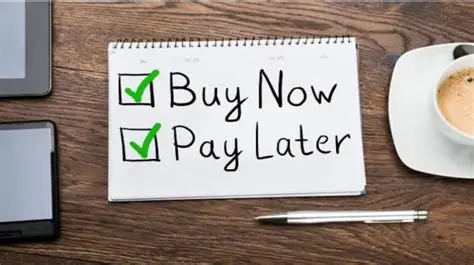
That is the appeal of Buy Now, Pay Later (BNPL). It gives consumers the opportunity to get what they want or need immediately without paying the entire cost upfront.
For someone who needs a laptop for work, a refrigerator for the house or a phone for everyday communication, this arrangement can be helpful. But there is a side of the convenience that deserves more attention.
When several purchases are divided into smaller payments, how much of your future income have you already committed?
The attraction of paying in bits
The idea behind BNPL is straightforward. Rather than paying the full price of a product at once, a customer spreads the cost across agreed instalments.
Depending on the provider, the customer may pay an initial deposit and settle the remaining balance over a few weeks or months. Some arrangements advertise interest-free instalments, while others may include interest, service charges or late-payment fees.
This makes BNPL attractive, particularly when income is limited or a purchase cannot reasonably be postponed.
It also benefits merchants. Offering instalment payments can encourage customers to complete purchases they might otherwise abandon because of the upfront cost.
For businesses, that could mean more sales. For consumers, it means greater flexibility.
However, being able to divide a payment does not mean the product has become cheaper. The full amount is still owed, even if it no longer feels like one large expense.
When small payments begin to add up
The problem often starts when convenience becomes a spending habit.
Imagine buying a phone through instalments, then using another payment plan for a television, followed by a separate arrangement for clothing or household appliances.
Each purchase may appear manageable on its own. One requires ₦25,000 monthly, another ₦18,000, while a third takes ₦12,000 from the next salary.
Individually, these amounts may not seem overwhelming. Together, they represent ₦55,000 of income that is already committed before rent, food, transport, electricity and other responsibilities are considered.
This is where BNPL can become financially uncomfortable.
Unlike a traditional purchase, where the customer parts with the money immediately, instalment payments create obligations that follow the buyer into future paydays.
And income does not always arrive as expected. A salary could be delayed, business sales could fall, or an emergency could arise. The repayment date, however, may remain unchanged.
The danger is not necessarily one large loan. It can be several small commitments that gradually become difficult to manage.
Interest-free does not always mean cost-free
One of the most attractive phrases in instalment advertising is interest-free.
It sounds simple enough: buy something today and pay for it over time without additional interest.
But consumers should look beyond that phrase.
Are there processing or service charges? Is a deposit required? What happens if a payment is late? Are there penalties for missing an instalment? Does the arrangement have conditions that affect the advertised price?
The total amount payable matters more than the size of the individual instalment.
A customer considering a ₦300,000 purchase, for example, should establish whether the final amount remains ₦300,000 or increases because of additional charges.
The same attention should be given to repayment dates. A payment plan that looks affordable on paper may become difficult when it falls close to rent, school fees or other major expenses.
The smartest approach is to understand the complete repayment obligation before accepting the offer.
Nigeria's growing digital credit conversation
BNPL sits within a wider expansion of digital credit and consumer lending in Nigeria. More financial services are making it possible to access credit through mobile applications, websites and merchant platforms.
But the growth of digital lending has also raised concerns about transparency, irresponsible lending, data privacy and aggressive debt recovery.
In September 2025, the Federal Competition and Consumer Protection Commission (FCCPC) announced its Digital, Electronic, Online or Non-Traditional Consumer Lending Regulations, commonly called the DEON Regulations.
The framework covers unsecured consumer lending offered through digital and other non-traditional channels. It establishes requirements around lender registration, transparent loan terms, data protection and responsible debt recovery.
The regulations faced a legal challenge in 2026, leading to a temporary suspension of enforcement. However, on July 20, 2026, the FCCPC announced that the Federal High Court had upheld the framework and that implementation and enforcement had resumed.
The rules are important because consumers should be able to understand what they are agreeing to when they borrow. They should also have protection against unfair treatment, misuse of personal information and abusive recovery practices.
Not every instalment arrangement is necessarily structured in the same way, so consumers should establish who is providing the credit and which terms govern the transaction.
Before you click pay, ask yourself these questions
The convenience of BNPL should not replace basic financial judgement.
Before accepting an instalment offer, consider whether the purchase is necessary now or can wait until you have saved enough to pay for it.
Check the full repayment amount, including any fees or penalties. Know exactly when payments are due and whether they fit comfortably within your regular income.
It is also important to consider existing commitments. If you already have outstanding loans, subscriptions, rent obligations or other instalment payments, adding another one could stretch your finances further than expected.
Most importantly, do not judge affordability by the first payment alone. A product is not affordable simply because the initial amount is small.
Credit should make life easier, not harder
There is nothing inherently wrong with paying for a purchase in instalments. When properly structured and responsibly used, BNPL can provide flexibility, help consumers manage necessary expenses and give businesses another way to serve customers.
But convenience should not become an invitation to spend without considering tomorrow.
The real measure of an affordable purchase is not whether you can make the first payment. It is whether you can comfortably complete every payment without sacrificing other financial responsibilities.
Sometimes, the best financial decision is to take the instalment offer. At other times, it is to wait, save and buy when the money is available.
Because getting what you want today should not leave you struggling to afford what you need tomorrow.
Make every naira count. Whether you are managing your income, planning a purchase or converting your digital assets, financial decisions are easier when you understand the value of your money and where it goes. With Monica, you can convert supported cryptocurrencies into naira and receive the funds directly in your Nigerian bank account.
Download the Monica app here: https://monica.cash/app