
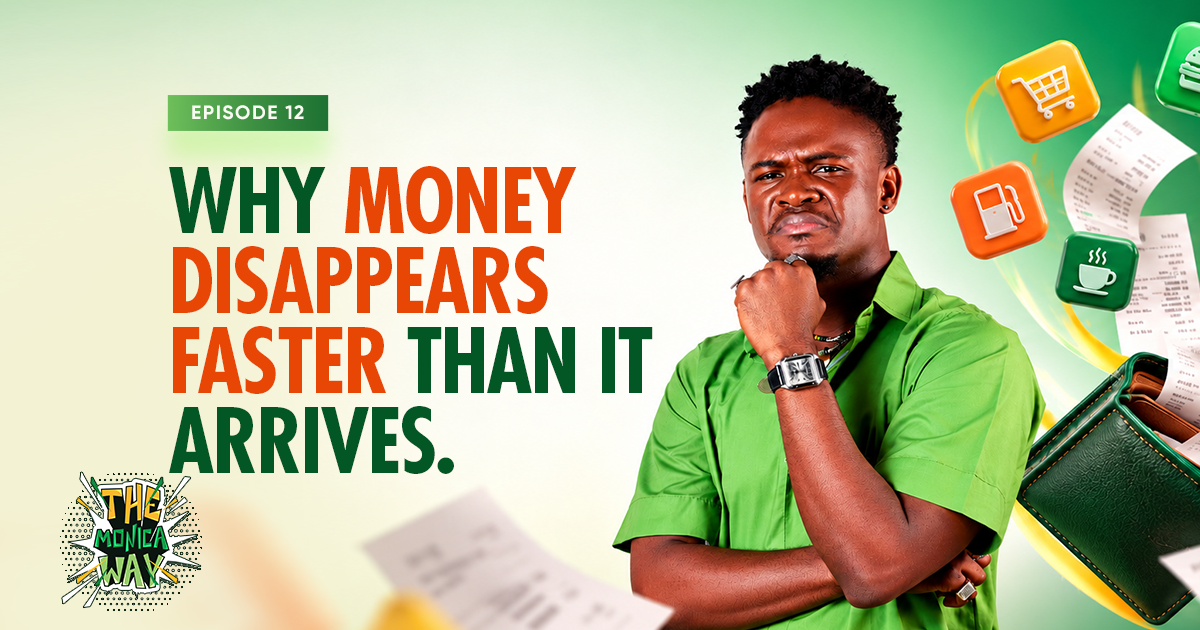
It's not that you spent badly. It's that money has a way of vanishing in increments too small to notice and too frequent to count. Here's what is actually going on.
It never feels like theft. It feels like nothing at all.
₦200,000 lands in your account on a Monday, and for about an hour, it feels like real money, the kind that could cover rent, start a small investment, finally buy that thing you've been circling on your phone for weeks.
By Thursday, somehow, it feels like ₦50,000. Not because you bought anything significant. Not because you remember a single moment of reckless spending you could point to and say, there, that's where it went. It just... left. Quietly. In pieces too small to notice individually, but large enough, together, to leave you staring at your balance wondering what happened to a person who was, four days ago, financially comfortable.
This isn't a story about bad money habits. It's a story about how money actually behaves once it's in your hands, and why almost nobody is taught to see it clearly.
The Problem Isn't the Big Spend. It's the Invisible One.
If you asked most people where their money goes, they'd point to the obvious things, the subscription they forgot to cancel, the outing they maybe shouldn't have joined, the online order that arrived faster than their regret did. Those exist. But they're not usually the main story.
The main story is smaller, and it hides in plain sight. ₦500 here on a top-up because your data finished at the worst possible moment. ₦1,500 there because the walk to the bus stop felt too long today. ₦2,000 on something you didn't plan to buy but saw at the perfect angle, at the perfect moment, when your willpower happened to be somewhere else entirely.
None of these feel like decisions. Each one feels like a non-event, a rounding error, too small to deserve the mental effort of actually tracking it. And that's precisely the trap. A ₦500 leak feels irrelevant in isolation. Multiplied across a week, across a month, across the version of you that makes this exact kind of small, unexamined choice six or seven times a day, it stops being irrelevant and starts being the entire explanation for where ₦150,000 went.
Why Your Brain Is Built to Miss This
This isn't a willpower failure. It's closer to a design flaw, one that belongs to how human brains evaluate money in general, not to any individual person's discipline.
Big, single expenses get remembered because they register as events, something happened, a decision was made, a story can be told about it later. Small, repeated expenses don't register the same way. Each one is forgettable on its own, and the brain, reasonably, doesn't flag forgettable things for long-term memory. The ₦800 you spent on roadside suya doesn't compete for the same mental shelf space as the ₦30,000 you spent on a weekend trip, even though five of those suya purchases in a week add up to more than the trip did.
There's also a psychological trick in how spending feels different depending on form. Cash leaving your hand feels like loss, visible, immediate, slightly painful. A tap, a transfer, a one-click payment feels like almost nothing, the same amount of money, moving with none of the friction that used to make you pause and reconsider. The easier money becomes to spend, the less your brain treats each spend as a real decision, and the less it remembers afterward.
The Nigerian Layer on Top of All This
In Nigeria specifically, there's an additional pressure that makes the leak harder to see and harder to stop: the cost of simply existing has a way of moving while you're not looking.
Transport fares shift depending on fuel prices, weather, or just the driver's mood that morning. Data and airtime get bought reactively, in the moment of running out, rather than planned in advance. Small obligations, a contribution here, a "help me with" there, arrive with social weight attached, making them feel less like spending decisions and more like things that simply have to happen. None of this is irresponsible. It's just a financial environment where the ground keeps shifting slightly under your feet, and shifting ground makes it genuinely harder to track where anything actually goes.
What Actually Closes the Leak
The fix isn't a spreadsheet nobody has time to maintain, and it isn't guilt, guilt has never once made anyone's money last longer. What actually works is smaller and more boring than that: making the invisible spending visible again, even slightly, even imperfectly.
Give your money jobs before the week assigns them for you, essentials first, a set, realistic amount for the small, forgettable stuff second, so that when the ₦500 top-up or the roadside suya happens, it's happening inside a boundary rather than outside one entirely. Notice the pattern of your leaks specifically, is it data, is it transport, is it the small impulsive buys, because the leak is rarely evenly spread, it usually has a favourite category, and once you know what it is, it's considerably easier to watch for.
And where you can, reduce the friction between spending and noticing. This is one of the few places a tool genuinely helps rather than just sounding like good advice.
On Monica, paying your actual recurring essentials, data, airtime, electricity, subscriptions, inside one place rather than scattered across five different apps means you're looking at where that category of money goes in one view, instead of losing track of it across a dozen small, separate transactions you'll never fully reconstruct later.
Closing Thought
₦200,000 didn't become ₦50,000 because you failed at managing money. It became ₦50,000 because money, by its nature, leaves in amounts too small to grieve and too frequent to count, and almost nobody is ever taught to watch for that specifically.
You don't need to track every naira. You need to know where your particular leak lives, give the money around it a job before the week decides for you, and make the small, repeated spending just visible enough that it has to earn its place instead of disappearing by default.
The money isn't vanishing by accident. It's just very good at being unnoticed. Once you notice it, it stops being as good at that.
New edition every Friday. One real situation. One honest lesson. One step closer to understanding where your money actually goes.
Monica lets you pay bills, buy airtime and data, renew subscriptions, fund your betting wallet and convert supported crypto to naira, all from one balance, all in one app, all visible in one place.
See where it goes before it goes. Start with Monica 👉https://monica.cash/app