Nigerian Football Just Hit Reset and This Time It Might Actually Mean Something
The NFF president is gone, The general secretary is gone, The executive committee is gone, And the president of Nigeria has finally said out loud what every football-loving Nigerian has known for years: the problem is not the talent. It never was.
August 27 2026 was not a quiet day for Nigerian football.
Ibrahim Gusau, president of the Nigeria Football Federation, resigned. Mohammed Sanusi, the NFF general secretary, resigned. The entire executive committee resigned. And within hours of all of that, President Bola Tinubu issued a directive that framed the moment not as a crisis to be managed but as an opportunity that had been postponed for too long.
“Football, Nigeria’s most popular sport and the greatest beneficiary of public support, investment and national attention, has continued to struggle basically due to structural deficits within the system.”
That sentence, from the presidential directive signed by spokesman Bayo Onanuga, is worth sitting with, because it is not a sentence about a bad result or a disappointing tournament. It is a diagnosis, and the diagnosis places the blame precisely where every honest observer of Nigerian football has placed it for years, not on the players, not on the passion, not on the resources, but on the structure built around all of those things.
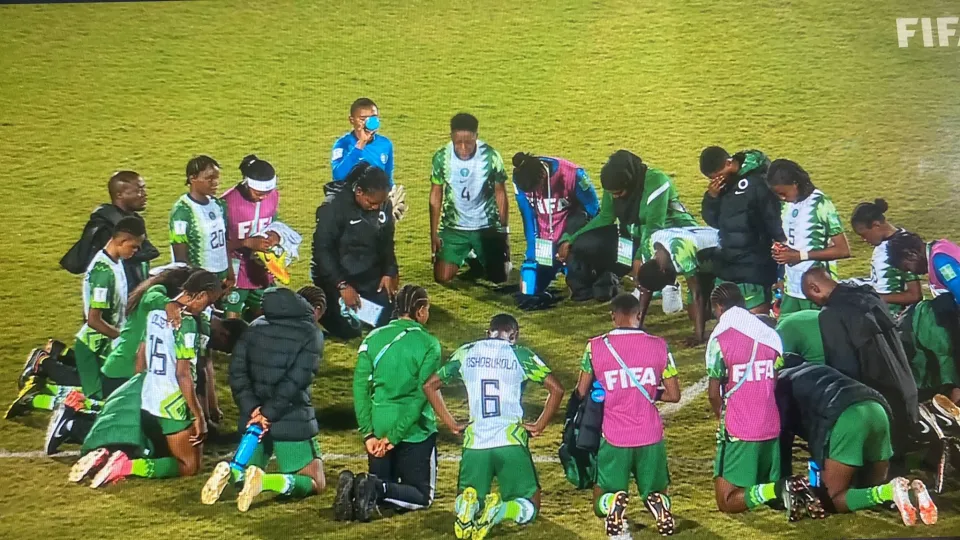
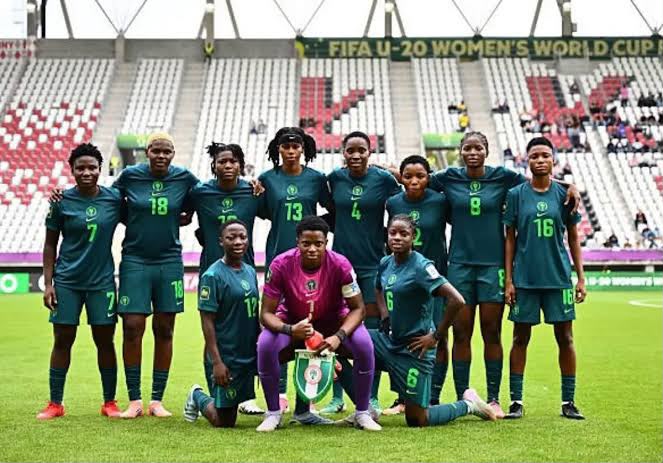
The Super Eagles did not qualify for the 2022 FIFA World Cup. They did not qualify for the 2026 FIFA World Cup, at an edition where Africa received an unprecedented 10 slots, meaning nine African nations that are not Nigeria will be in that tournament while the Green Eagles watched from home. The Super Falcons, ten-time WAFCON champions, failed to qualify for the 2027 FIFA Women’s World Cup in Brazil for the first time since the tournament began accepting African teams.
Two consecutive World Cup absences for the men. A Women’s World Cup miss that broke a streak spanning the entire modern history of the competition. At some point the pattern stops being bad luck and starts being a system that consistently produces the same result regardless of the individuals inside it.
Tinubu has directed National Sports Commission Chairman Shehu Dikko to work with the NFF Secretariat, FIFA and CAF in a broad consultative reform process while ensuring essential football administration continues during the transition, and the reform framework he outlined covers governance, administration, stakeholder representation, development pathways, domestic competitions and accountability across Nigerian football.
Those six pillars are not chosen randomly. They map directly onto the six areas where Nigerian football has most visibly failed.
Governance has been fractured by political interference, factionalism and the capture of football administration by interest groups whose relationship with the sport is primarily extractive. Administration has been inconsistent, with coaching appointments made and reversed, contracts dishonoured, players unpaid and the basic operational machinery of running national teams frequently breaking down at critical moments. Stakeholder representation has excluded the voices most invested in football’s success, the clubs, the coaches, the players and the supporters, in favour of bureaucratic structures that are accountable to nobody in practice. Development pathways from grassroots to professional football are broken at multiple points, meaning Nigeria continues to discover world-class talent by accident rather than by design. Domestic competitions are underfunded, poorly attended and structurally unable to serve as the foundation for sustainable national team development. Accountability has been essentially absent, with failure producing resignations rather than consequences and resignations producing the same structures with different names.
The directive acknowledges that other Nigerian sports have made meaningful progress since the National Sports Commission was re-established, with athletics, para-sports and other disciplines showing what organised administration and sustained development can produce, and implicitly asks why football, with its massive financial resources, popular support and raw talent base, has been the exception rather than the leading example.
The reform is consultative and will take time to produce structural change. What it does immediately is remove a leadership group that had exhausted its credibility and create space for a process that, if handled with genuine seriousness, could produce the institutional foundations Nigerian football has needed since before most of its current players were born.
Nigeria has never lacked football talent. The country that produced Jay-Jay Okocha, Nwankwo Kanu, Sunday Oliseh, Vincent Enyeama, John Obi Mikel and the generation now playing in Europe’s top leagues has never had a talent problem.
It has had a system problem. And the president has now said so in writing.
What happens next is the story worth watching.
Nigerian football is being rebuilt. Your finances should never need rebuilding. Monica keeps your money moving smoothly so you are always ahead of the game.
Build something that lasts. Your money starts here 👉🏼https://monica.cash/app