
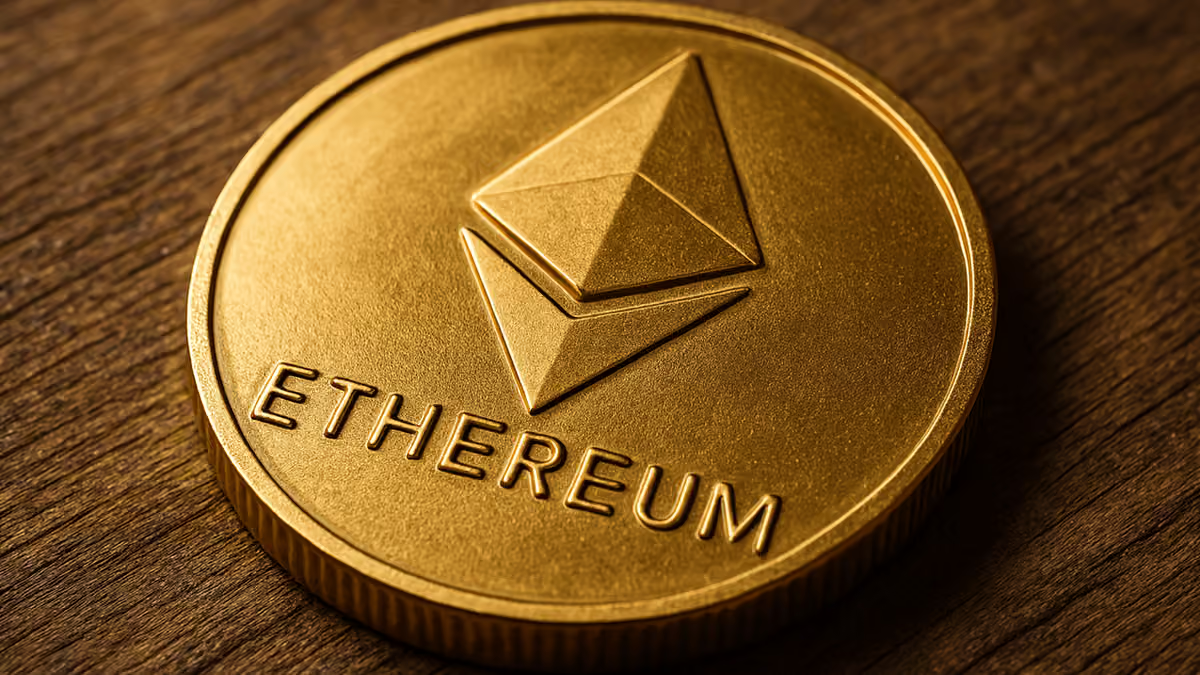
Ethereum is getting busier but its cryptocurrency is not enjoying the same momentum.
The network has recorded a new high in average daily transactions this year, with more addresses interacting with its mainnet. Developers are also working on a major upgrade intended to improve how the blockchain processes transactions and manages its resources.
Yet Ether (ETH), Ethereum's native cryptocurrency, has been moving in the opposite direction.
After trading above $2,400 earlier in November, ETH fell towards the $2,000 level as investors reacted to hotter-than-expected US inflation figures and withdrawals from spot Ethereum exchange-traded funds (ETFs).
It is an interesting contradiction. More activity is taking place on the network, but that has not prevented the asset's price from declining.
To understand what is happening, it is worth looking beyond the price chart.
Inflation and ETF withdrawals put ETH under pressure
Ethereum's recent decline has coincided with a difficult macroeconomic environment.
On November 10, US inflation data showed that consumer prices increased by 0.4 per cent in October, above economists' expectations of 0.3 per cent. Core inflation, which excludes food and energy, also rose by 0.3 per cent, exceeding forecasts.
The figures strengthened expectations that the Federal Reserve could maintain tighter monetary conditions or consider another interest rate increase.
Why does this matter to cryptocurrency?
When interest rates are expected to remain high, investors may become more cautious about assets considered risky or speculative. Higher borrowing costs can also reduce the appeal of investments that do not provide traditional income.
Ethereum was among the digital assets affected by the resulting market uncertainty. By November 11, ETH had fallen towards $2,040, extending its weekly losses.
Spot ETF activity added to the pressure.
US spot Ether ETFs recorded approximately $184.6 million in net outflows on November 9, marking their third consecutive trading session of withdrawals. BlackRock's ETHA accounted for the largest share, with approximately $119.3 million leaving the fund.
The withdrawals suggest that some investors were reducing their exposure to Ether through these investment products.
However, ETF outflows do not tell the entire story of Ethereum demand. They measure activity in a particular investment channel, not every transaction, application or use of ETH across the wider ecosystem.
The network is getting busier, despite the falling price
Here is where the story becomes more interesting.
According to Coin Metrics data reported in November, Ethereum's mainnet averaged approximately 2.16 million transactions daily from the beginning of 2026 through November 4. This represents a 51 per cent increase from the 1.44 million daily average recorded in 2025.
Average daily active addresses also reached a record of approximately 899,000, compared with 662,000 in 2025.
These figures suggest that Ethereum's main network is processing more activity than it did last year.
That activity matters because Ethereum is not simply a cryptocurrency people buy and sell. It is also infrastructure for decentralised finance, stablecoins, tokenised assets and smart-contract applications.
Everyday transactions and interactions with these services help create demand for the network.
But there is an important distinction between network usage and the market value of ETH. More transactions do not automatically mean that more people are buying Ether as an investment.
Network activity can increase while the token's price declines, particularly when transaction fees are low, market sentiment is weak or investors are reducing their exposure.
This is why record transaction numbers should be viewed as evidence of network activity, not as a guarantee of an immediate price recovery.
Ethereum is losing ground in the stablecoin market
Another development worth watching is Ethereum's changing position in the stablecoin ecosystem.
According to figures shared by crypto analyst Tom Wan, Ethereum's share of the stablecoin market fell to approximately 46 per cent, its lowest level on record.
Over the preceding year, the supply of stablecoins on Ethereum reportedly declined by $32.5 billion. During the same period, Tron's stablecoin supply increased by approximately $16.2 billion, taking its share of the market to 32 per cent.
Solana and Hyperliquid also recorded increases in stablecoin supply.
The movement highlights growing competition among blockchain networks for stablecoin activity.
Stablecoins are an important part of the cryptocurrency economy because they allow users to transfer dollar-linked value, participate in decentralised finance and move between digital assets without constantly converting into traditional currencies.
Ethereum remains a major stablecoin network, but the latest figures suggest that some of that activity is shifting elsewhere.
Lower transaction costs and different network features can influence where users and businesses choose to operate. Ethereum's challenge is therefore not simply to increase the number of transactions on its network, but to remain competitive as other blockchains attract users and liquidity.
Glamsterdam faces another development hurdle
While market participants are watching ETH's price, Ethereum developers are dealing with another important challenge: preparing the network for its next major upgrade.
The upcoming Glamsterdam upgrade is designed to improve Ethereum's ability to process transactions and manage its blockchain state. Its proposed changes include adjustments to gas pricing, which determines how much users pay for different operations.
However, testing has identified compatibility concerns involving existing smart contracts.
In a November 6 update, the Ethereum Foundation explained that developers had identified projects that could be affected by the proposed changes in EIP-8037 and EIP-8038.
These changes could break certain assumptions made by existing smart contracts. Developers have therefore delayed the upgrade process on the Hoodi testnet while they investigate the potential impact and consider possible revisions.
This is not a minor technical detail. Smart contracts power many of the applications built on Ethereum. Changes to how the network charges for operations must be carefully tested to avoid disrupting applications that already depend on it.
The delay does not mean the upgrade has been abandoned. Instead, it shows that developers are taking compatibility concerns seriously before proceeding.
For a network supporting financial applications and digital assets worth billions of dollars, getting an upgrade right is more important than rushing its release.
Vitalik Buterin wants a different conversation about ETH's value
Ethereum co-founder Vitalik Buterin has also contributed to the ongoing discussion about what gives ETH its long-term value.
On November 8, Buterin argued that Ethereum should focus more on ETH's role as a store of value than on maximising the amount of the cryptocurrency removed from circulation through transaction-fee burning.
Ethereum burns part of its transaction fees through a mechanism introduced by EIP-1559. This reduces the circulating supply of ETH, and when the amount burned exceeds newly issued ETH, the overall supply can decline.
The mechanism has helped shape the idea of Ethereum as 'ultrasound money', a narrative that gained popularity among ETH supporters.
Buterin's argument is that the network should not depend too heavily on fee burning to justify the value of ETH.
He instead emphasised Ethereum's decentralisation, security, censorship resistance and long-term reliability. In his view, these qualities are central to the network's value, particularly as it supports more financial and digital applications.
The comments are significant because they shift attention from how much ETH the network burns to what makes the underlying asset useful and worth holding over time.
Institutional interest has not disappeared
Despite the market decline, institutional developments continue to show interest in Ethereum.
Bitmine Immersion Technologies reported that its ETH holdings had grown to more than 6.07 million tokens as of November 8. The company said the holdings represented approximately 4.97 per cent of Ethereum's total supply.
This is a substantial position and reflects the company's stated strategy of accumulating ETH.
However, corporate treasury accumulation should not be confused with a broad market recovery. A company's decision to hold a large amount of an asset does not guarantee that its price will rise or that other investors will follow.
The broader point is that institutional interest in Ethereum continues to exist alongside market uncertainty.
So, what should ETH holders be watching?
Ethereum's latest developments reveal a network experiencing two different realities.
On one side, price weakness, ETF withdrawals and competition in the stablecoin market show that the asset faces genuine challenges. On the other, record mainnet activity, continued institutional accumulation and ongoing development work suggest that Ethereum's ecosystem remains active.
The next important signals will include whether ETH can regain lost price levels, whether ETF flows return to positive territory and how developers resolve the compatibility concerns surrounding Glamsterdam.
The network's ability to retain stablecoin activity and attract developers will also be important as competition among blockchains increases.
For investors and everyday users, the lesson is to look beyond a single price movement. A cryptocurrency's market performance and the underlying network's development are related, but they are not the same thing.
Ethereum may be getting busier, but its next challenge is ensuring that this activity strengthens the long-term value and usefulness of its ecosystem.
When it is time to move from crypto to naira, Monica makes the conversion straightforward. Convert your supported cryptocurrency and receive the naira directly in your Nigerian bank account, without needing to treat a conversion platform as a place to store your assets.
Download Monica: https://monica.cash/app