
The rules of the crypto market are becoming harder to ignore. Across major financial markets, regulators are moving beyond broad warnings about digital assets and introducing more specific requirements for the businesses that issue, trade and facilitate them.
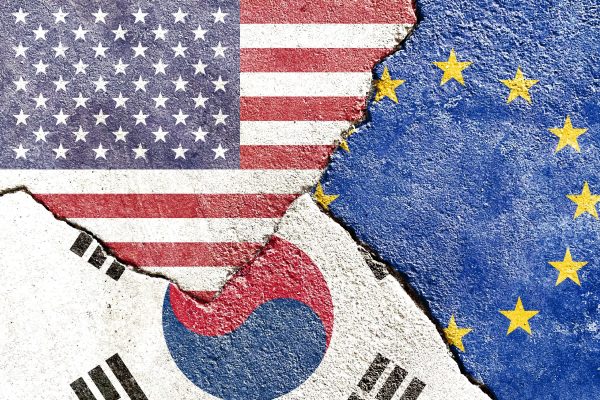
This week's developments offer a clear picture of that shift. Europe is preparing tighter oversight of a major dollar-backed stablecoin, South Korea is restricting access to unregistered crypto platforms, and the US state of Illinois is advancing rules for taxing digital asset services.
The measures differ in scope, but they point towards the same question for the industry: how can digital finance grow while meeting the standards expected of established financial services?
Europe puts USDC under closer supervision
One of the week's most significant developments came from the European Banking Authority (EBA), which classified USDC, issued by Circle Internet Financial Europe, as the European Union's first significant e-money token under its Markets in Crypto-Assets Regulation, commonly known as MiCA.
The EBA announced the classification on October 14. From November 12, 2026, it will assume direct supervisory responsibilities for key areas involving USDC, including the issuer's own funds, reserves, liquidity requirements, and recovery and redemption plans. France's banking supervisor, the Autorité de Contrôle Prudentiel et de Résolution, will retain responsibility for other areas, including governance and outsourcing.
The designation matters because stablecoins are increasingly used for crypto trading, digital payments and transfers between platforms. Although USDC is designed to maintain a value equivalent to one US dollar, its reliability also depends on the issuer's ability to manage reserves and meet redemption obligations.
Under MiCA, a token classified as significant attracts additional supervisory requirements because of its potential scale and impact. The new arrangement does not mean USDC has been banned or declared unsafe. Instead, it places key aspects of its financial safeguards under direct EU-level supervision.
For stablecoin issuers and other crypto businesses, the message is clear: as digital assets become more deeply integrated into financial markets, the standards governing their operation are becoming more demanding.
South Korea blocks 27 unregistered crypto websites
South Korea is taking a different approach, focusing on access to platforms operating without the required registration.
On October 13, the country's Financial Intelligence Unit confirmed that authorities had approved measures to block access to 27 websites associated with unregistered virtual asset service providers. The decision followed reviews conducted on October 6 and 7 and extends earlier efforts to restrict access to applications linked to unregistered operators.
The authorities said the action was intended to prevent consumer harm before victims necessarily report losses. Unregistered platforms may expose users to risks involving fraud, money laundering, cyberattacks and inadequate protection of personal information or assets.
There is a notable contrast: the measure targets platforms operating without the required registration, rather than imposing a blanket ban on cryptocurrency.
For users, it reinforces the importance of checking whether a platform is authorised to serve their market. A website's accessibility, professional appearance or popularity on social media does not establish that it meets local legal requirements.
For businesses, it is another reminder that serving customers across borders does not remove the need to comply with the rules of the countries in which they operate.
Illinois advances digital asset tax rules
In the United States, Illinois is developing the administrative framework for its Digital Asset Tax Act, which introduces a tax on specified digital asset business activities involving customers in the state.
The Illinois Department of Revenue published draft proposed rules in late September and invited public comments through October 30. The underlying law provides for a 0.2 per cent tax on the value of qualifying digital asset business activities, scheduled to begin on January 1, 2027.
The development deserves attention because the tax applies to defined services provided by digital asset brokers. Its precise application depends on the legislation and implementing rules, so it would be premature to conclude that every decentralised exchange or DeFi protocol will automatically be treated as a broker.
The consultation process is particularly important for companies that exchange, transfer or hold digital assets on behalf of customers. They will need to understand whether their activities fall within the law's scope and how any applicable tax must be collected and reported.
For the wider industry, the proposal illustrates how regulation increasingly extends beyond licensing and anti-money laundering obligations into the taxation of digital asset services.
What the developments mean for crypto and fintech
Taken together, these developments show that digital finance is entering a more demanding regulatory phase.
Stablecoin issuers face closer scrutiny of their reserves and ability to honour redemptions. Crypto platforms must pay greater attention to registration and the jurisdictions they serve. Businesses offering digital asset services must also consider how new tax obligations could affect their operating models and customer costs.
None of this means the industry is moving towards a universal set of rules. The European Union, South Korea and individual US states are taking different approaches, and requirements vary by jurisdiction and business activity.
That creates a practical challenge for companies serving international customers: compliance can no longer be treated as a final administrative step after a product has been built. It increasingly influences how services are designed, where they can operate and what customers need to know before using them.
For consumers, stronger oversight may improve accountability and help authorities intervene against unlawful operators. However, regulation alone cannot eliminate scams, market volatility or every form of financial risk. Users still need to verify platforms, protect account credentials and understand the services they use.
For Nigeria's digital finance ecosystem, these international developments are also worth watching. Global regulatory decisions can influence how international platforms operate, how stablecoin services are structured and what standards businesses may need to meet as cross-border digital finance expands. Nigerian users should nevertheless distinguish foreign regulatory developments from requirements issued by Nigeria's own authorities.
The next phase of digital finance
The industry's next chapter will not be shaped by technology alone. It will also depend on how effectively companies navigate regulation, demonstrate accountability and earn the confidence of the people using their services.
This week's developments offer a reminder that understanding digital assets means looking beyond prices and market rallies. The rules behind the platforms matter, too.
At Monica, the journey from digital assets to everyday spending is about making your crypto useful when you need naira. Whether you are converting supported cryptocurrency or taking care of everyday payments, Monica brings those practical money moves closer to you.
Ready to turn your crypto into naira? Explore Monica and make your next move at https://monica.cash/app