The Companies Holding Your Retirement Money Are Merging: Here Is the Full Story
You contribute to your pension every month and probably think very little about what happens to it once it leaves your salary. Right now, the companies managing that money are in the middle of the most significant reshaping the industry has seen in years, and every Nigerian worker needs to understand what is changing and why.

There is a number sitting at the heart of Nigeria's pension industry right now that explains almost everything else happening in it.
₦31.32 trillion.
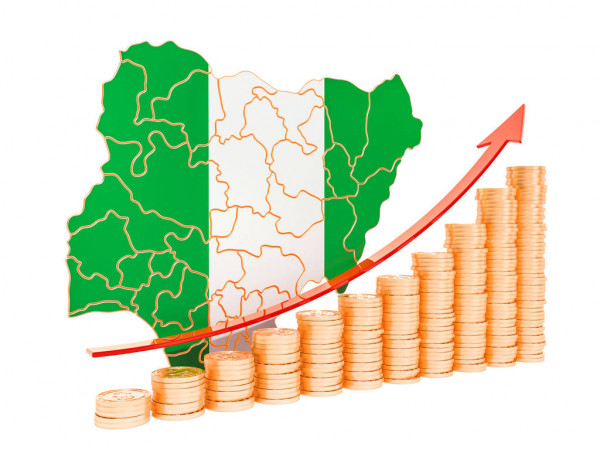
That is the total value of pension assets under management in Nigeria as of May 2026, according to PenCom's unaudited industry report released June 29, and it represents growth of 29.5 percent year-on-year from ₦24.18 trillion in May 2025, with the industry adding approximately ₦384.98 billion in a single month between April and May alone.
To put that in context: Nigeria's pension industry created roughly ₦4 trillion in additional value in just the first five months of 2026. That is not a niche financial sector story. That is the retirement savings of millions of Nigerian workers growing at a pace that has made the companies managing that money significantly more valuable, significantly more powerful and significantly more visible to a regulator that has decided the industry's current structure is no longer adequate for the assets it now holds.
The consequence of that decision is a merger wave that is actively reshaping who manages your pension and how.
The most recent and most significant development is the proposed combination of Premium Pension Limited and Trustfund Pensions, currently the fifth and sixth largest Pension Fund Administrators in Nigeria respectively, which if approved by regulators will create a new entity called Premium Trustfund Pensions Limited, managing nearly ₦3.08 trillion in combined assets and ranking third among all PFAs in the country.
The merger is not happening because the two companies want to grow. It is happening because they have to, and understanding the distinction matters.
PenCom introduced tougher capital thresholds in September 2025, designed to strengthen the financial resilience of pension operators, improve governance and position the industry to manage Nigeria's rapidly expanding pension assets. The deadline for compliance is June 2027, and PenCom Director-General Omolola Oloworaran has been direct about the consequences of missing it: any PFA that is not compliant will have its licence revoked.
No ambiguity. No extensions implied. Comply or close.
For smaller and mid-sized PFAs facing a capital requirement they cannot meet independently, the mathematics of that ultimatum points in one direction: find a partner, merge your operations and build the combined balance sheet that the new rules demand, which is exactly what Premium Pension and Trustfund Pensions have done, and which analysts expect several other operators to do before the June 2027 deadline arrives.
This merger is not the first. Access Holdings previously acquired Sigma Pensions and First Guarantee Pension, combining them with ARM Pensions to create Access ARM Pensions, while Leadway Holdings completed the acquisition of PAL Pensions, and the pace of consolidation is likely to accelerate as the deadline approaches and operators who have been watching from the sidelines make their own calculations about whether independence or combination gives them the better chance of surviving the new regulatory environment.
The structural rationale for consolidation goes beyond meeting a capital threshold. Larger pension funds have more diversified investment portfolios, lower operational costs per naira managed, stronger negotiating positions with investment counterparties, better technology infrastructure and more robust risk management frameworks, all of which ultimately benefit the contributors whose money is being managed.
For the average Nigerian worker making monthly contributions under the Contributory Pension Scheme, the immediate practical effect of a merger involving their PFA is primarily administrative: the entity managing their Retirement Savings Account changes name and ownership structure, but their contributions, their accumulated balance and their entitlement to those funds remain unchanged and are protected under the regulatory framework that governs the industry.
The longer-term effect, if the consolidation wave produces the stronger, better-capitalised and more professionally managed industry that PenCom intends, is that the money being set aside for retirement is held in more resilient institutions, invested with greater sophistication and returned at the end of a working life with more of its real value intact than the more fragmented pre-consolidation industry was able to guarantee.
₦31 trillion is too much money to manage casually. PenCom decided that in September 2025. The industry is still absorbing what that decision means.
By May 2026 pension assets had risen to about ₦31.3 trillion. That is roughly ₦4 trillion in additional value created by the industry in just five months.
That money belongs to Nigerian workers. The industry being rebuilt around it is supposed to make sure it stays that way.
Managing your money well today builds the foundation for tomorrow. Monica handles your everyday transactions so every naira you earn goes further.
Your future starts with smarter money moves today.
Open Monica👉 https://monica.cash/app