The Naira Had a Better Week but the Bigger FX Story Is in the Numbers
The naira closed the week stronger against the dollar as foreign exchange activity increased and Nigeria's external reserves continued to build, offering another sign of improved stability in the official market
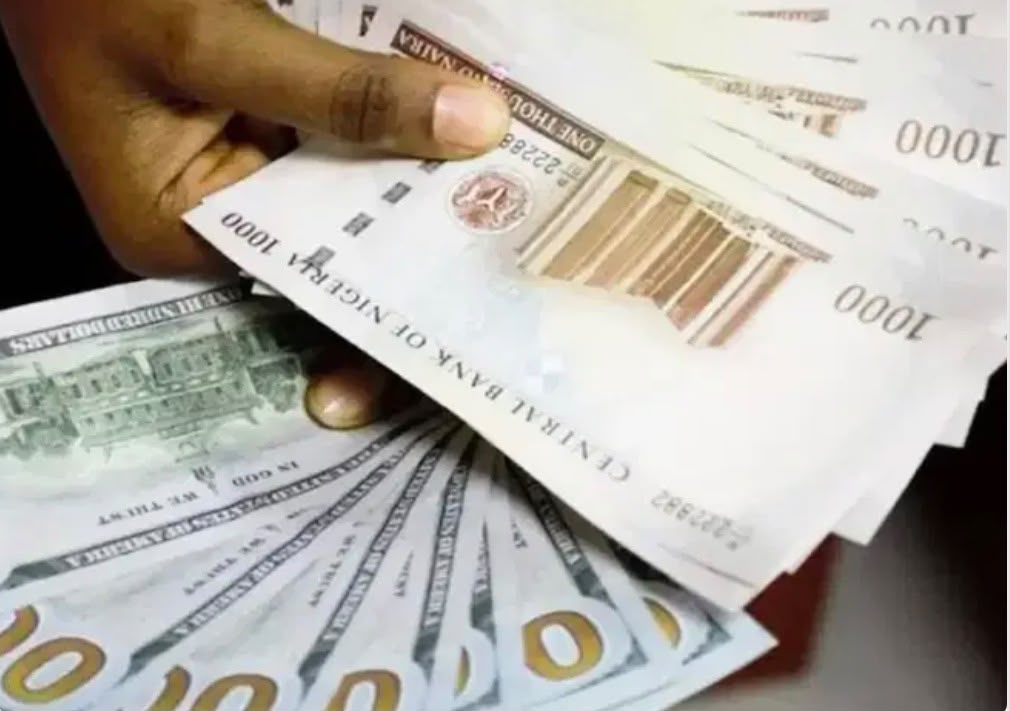
The naira ended the week with a little more breathing room.
At the official foreign exchange market, the local currency closed at ₦1,346.49 to the dollar on Friday, gaining ₦11.12 from the ₦1,357.61 recorded a week earlier. That represents a weekly appreciation of about 0.83 percent.
It was not a dramatic rally. There was no sudden currency miracle. But in Nigeria's foreign exchange market, where sharp movements in the naira can quickly affect everything from imported goods to business costs, another week of relative stability is worth watching.
The naira also edged up by about ₦1.14 from Thursday's ₦1,347.63 close. Across the five trading sessions, however, the currency's performance was relatively measured, gaining about ₦3.05 from its Monday opening rate of ₦1,349.54.
What makes the week's movement more interesting is what happened behind the exchange rate.
More dollars moved through the market
Foreign exchange turnover increased significantly during the week.
At the Nigerian Foreign Exchange Market, total turnover reached $5.26 billion on Thursday, up 33.16 percent from the $3.95 billion recorded on the corresponding Thursday a week earlier. The number of deals also increased by 6.59 percent, from 1,791 to 1,909.
The interbank market recorded an even larger jump in turnover on Friday, with transactions reaching $1.82 billion, compared with $1 billion a week earlier — an increase of about 82 percent.
That matters because exchange-rate stability is not only about the number displayed on a currency board. It is also about whether there is enough activity and liquidity in the market to allow buyers and sellers to meet without creating violent price swings.
For now, the numbers suggest there is more activity flowing through the system.
The reserve cushion is getting bigger
Nigeria's external reserves provide another piece of the puzzle.
The country's reserves rose to $52.65 billion as of August 19, according to data cited from the Central Bank of Nigeria. That was 28.41 percent higher than the $41 billion recorded at the same point in 2025.
Higher reserves do not automatically guarantee a stronger naira, but they give the country a larger external buffer and greater capacity to meet foreign obligations and support orderly conditions in the foreign exchange market.
That is particularly important after several years in which Nigeria's currency market was marked by significant volatility and a wide gap between official and parallel-market rates.
The Naira's next move will matter to everyone — from businesses buying goods abroad to individuals paying for subscriptions, sending money or managing everyday expenses. As the market finds its footing, having simple ways to move and manage your money matters too.
When your money needs to move, let Monica move with you. Download Monica https://monica.cash/app and discover a simpler way to handle your everyday financial needs, from crypto conversion to bills, airtime and more.
The gap has narrowed considerably.
The Naira reportedly ended the week at about ₦1,405/$ in the parallel market, compared with ₦1,410 previously. That left a difference of roughly 4.75 percent between the two rates.
A smaller gap is significant because a large difference between official and parallel rates can create incentives for arbitrage and make it harder for businesses and individuals to determine the true cost of accessing foreign currency.
But stability is not the same as a victory lap
This is where the week's numbers need some context.
The naira is stronger than it was a week ago, but that does not mean Nigeria's foreign exchange problems have disappeared.
Businesses still need dollars to pay for imports, international services and other obligations. Consumers remain exposed to the prices of imported goods, while companies with foreign-currency expenses continue to watch the exchange rate closely.
The Central Bank's data also showed that foreign exchange utilisation fell sharply in April, declining by 35.23 percent to $3.42 billion. Visible imports accounted for 41.92 percent of utilisation, while invisible imports made up the larger share at 58.08 percent.
Lower demand for dollars can help ease pressure on the naira, but the sustainability of that relief depends on what happens to both demand and supply in the months ahead.
That is why the latest reserve figures, market turnover and exchange-rate movements are more useful when viewed together rather than separately.
What the stronger naira means outside the trading floor
For the average Nigerian, the most important question is not whether the naira gained ₦11.12.
It is whether that gain eventually makes life cheaper.
A more stable exchange rate can make it easier for businesses to plan, reduce uncertainty around imported inputs and limit some of the pressure that currency volatility places on prices. But exchange-rate movements do not immediately translate into cheaper goods. Other costs — including transportation, energy, wages, taxes and global commodity prices — continue to influence what consumers pay.
So, while Friday's ₦1,346.49 close is encouraging, it is best viewed as another data point in a much longer story.
Nigeria's foreign exchange market appears to be operating with stronger reserves, higher transaction volumes and a considerably narrower gap between official and parallel rates than it has experienced in recent years.
The real test now is consistency.
One good week can make the headlines. Several stable months would make a much bigger difference to businesses, investors and households.
For now, the Naira has bought itself another week of calm.
The market will determine whether that calm becomes a trend.