THE APP HAS BECOME THE BANK
Nigeria's financial life is moving from bank halls to smartphone screens. As fintechs expand beyond payments, the app is becoming the new front door to banking.
There was a time when needing to do something with your money meant finding your bank.
You needed cash? Bank.
You wanted to transfer money? Bank.
You needed to pay a bill? Bank.
You needed a statement? Definitely bank.
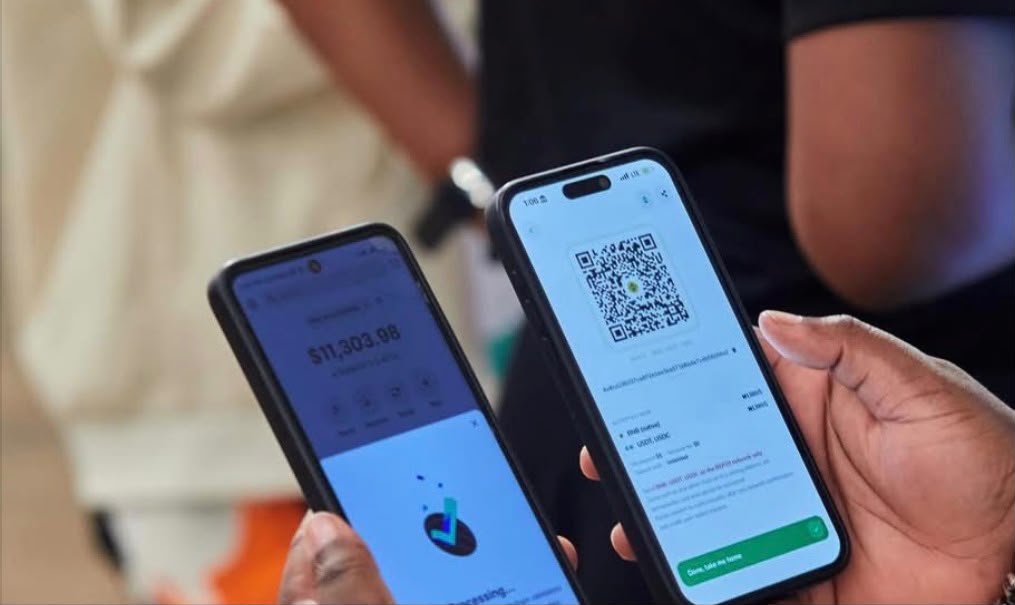
Today, many Nigerians simply reach for their phones.
The bank branch may still be standing around the corner, but increasingly, the financial life of the customer is happening somewhere else: inside an app.
Nigeria's fintech boom has changed what people expect from financial services. A smartphone can now serve as a wallet, payment terminal, bill-payment centre, savings tool, credit channel and, increasingly, an all-in-one financial platform. Mobile-first fintech companies have helped bring banking and payment services to millions of Nigerians who previously had limited access to traditional financial institutions.
That shift is bigger than convenience.
It is changing the competition.
For years, fintech companies built their appeal around one simple promise: make one financial task easier. Transfer money faster, Pay a bill without queuing, Send money with a few taps or Receive payments from customers.
Then the market changed.
Users stopped wanting ten different apps for ten different financial problems.
They wanted one place that could handle more of their financial lives.
That is why Nigeria's largest fintech companies are increasingly moving towards becoming broader financial institutions themselves. TechCabal reported in June that major fintechs were accelerating their push into banking through microfinance-bank licences and acquisitions, with Paystack acquiring Ladder Microfinance Bank and Flutterwave securing a national microfinance-bank licence through its acquisition of Mono.
The message is clear: fintech no longer wants to sit beside the banking system, It wants to become part of the banking system.
And perhaps that explains why the question Nigerians increasingly ask is not simply, “Which bank do you use?'' but, “Which app do you use?”
The answer can determine how someone pays rent, sends money home, buys airtime, pays for electricity, receives a customer's payment, saves money or manages a small business.
The numbers show how deeply this behaviour has spread. A June 2026 ranking of Nigerian fintech apps found that leading platforms had accumulated tens of millions of downloads, while services now span transfers, bills, savings, investments and merchant payments.
But there is an important distinction that gets lost in the excitement.
Not every financial app is a bank.
Some fintechs operate under banking or payment licences; others provide technology or financial services through partnerships with licensed institutions. The fact that an app can perform a banking-like function does not automatically make the company behind it a bank.
That distinction matters because customers are trusting these platforms with real money.
It also explains why regulation is becoming increasingly important as the lines between banking, payments and technology continue to blur.
The Central Bank of Nigeria introduced new instant-payment rules this year, including stronger fraud monitoring, tighter identity verification and greater customer control over instant transfers. From July 1, 2026, financial institutions were required to comply with new standards covering areas including device linking and real-time fraud monitoring.
In other words, convenience is no longer enough.
The next phase of digital finance will be judged by reliability, security, regulation and trust.
Because when your entire financial life lives inside an app, a failed transaction is no longer just an annoying technical problem.
It can mean a trader cannot pay a supplier.
A customer cannot receive an order.
A family cannot send money home.
A business cannot meet a deadline.
The smartphone has therefore become much more than a tool for accessing financial services.
For millions of Nigerians, it is becoming the front door to those services.
The bank is still there.
The branch is still there.
The account is still there.
But increasingly, the relationship is happening on a screen.
And the fintech companies that understand that relationship best may not simply be building payment apps.
They may be building the bank Nigerians carry in their pockets.
Your money should fit in your pocket too
From transferring money to paying bills, managing subscriptions and converting crypto to naira, everyday finance is becoming increasingly digital.
Monica brings multiple money moves into one simple app, giving you a convenient way to manage your everyday transactions.
Download Monica Now [https://monica.cash/app] and put more of your money moves in one place.