OPay Eyes US Listing as African Startup Funding Shifts Back to Equity
From OPay's planned public offering in the United States to renewed equity investment across Africa and a global market watching oil prices, the new week opens with major developments in finance, crypto and technology.
A new week, new money moves. Across Nigeria, Africa and global markets, financial institutions are positioning for growth, investors are becoming more selective and technology companies are finding new ways to turn infrastructure into opportunity.
From a major development involving Nigerian fintech giant OPay to a shift in African startup funding and the growing demand for artificial intelligence infrastructure, Monday's headlines offer a glimpse into where capital is moving and what could shape the next phase of the digital economy.
Nigeria's OPay prepares for a major market move
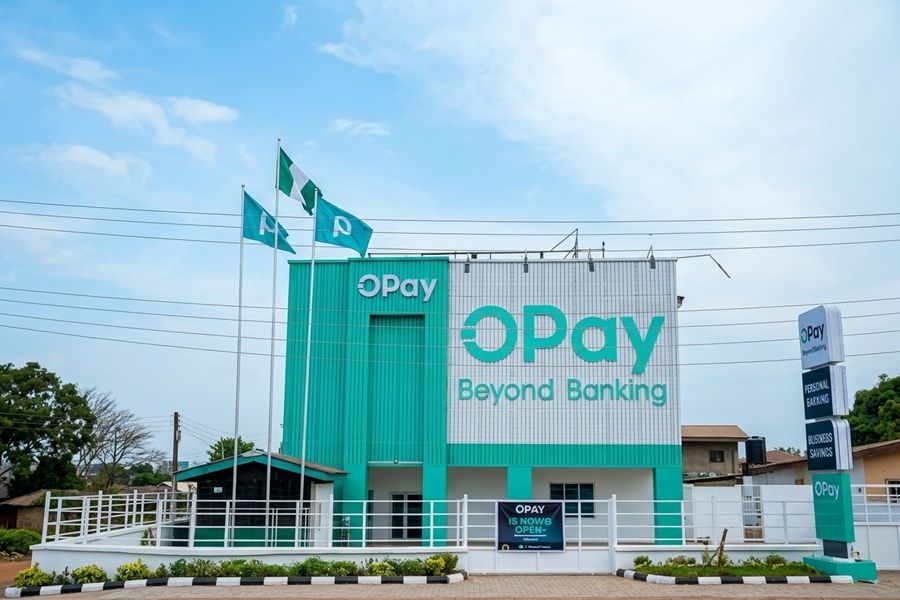
One of the biggest Nigerian fintech stories opening the week is OPay's proposed public listing in the United States, alongside a planned strategic investment from South African banking group Standard Bank.
Standard Bank announced on October 9 that it had signed an agreement to invest in OPay, subject to the completion of the proposed initial public offering and relevant regulatory approvals. OPay has also filed a registration statement with the US Securities and Exchange Commission and applied to list its American depositary shares on the New York Stock Exchange under the proposed ticker OPAY.
The planned partnership goes beyond an investment. Both companies intend to explore opportunities involving digital banking, merchant payments and the distribution of selected financial products across African markets.
For Nigeria's fintech sector, the development puts a major homegrown digital financial platform in the spotlight as it pursues international capital and broader expansion. However, the proposed listing and investment remain subject to the necessary conditions and approvals.
African startups attract $2.16 billion as equity returns
Africa's startup funding market is showing a notable change in investor preference.
Startups across the continent raised approximately $2.16 billion between January and September 2026, excluding exits, according to Africa: The Big Deal. Although the total was about four per cent lower than the $2.24 billion recorded in the corresponding period of 2025, equity financing increased by 23 per cent to $1.5 billion. Debt financing, meanwhile, fell by 33 per cent to $669 million.
The figures suggest that the funding market is changing rather than simply expanding or contracting. Investors are putting more money into equity deals, which give them ownership stakes in companies, while debt financing has lost some of its recent momentum.
For founders, the distinction matters. Equity investment can provide capital without the same scheduled repayment obligations as a loan, although it dilutes existing ownership. Debt can preserve ownership but creates repayment commitments.
The stronger equity performance is encouraging, but it does not mean every startup is finding fundraising easy. Capital remains competitive, and companies still need credible business models, clear growth plans and evidence that they can use funding effectively.
In the global technology market, infrastructure built for cryptocurrency mining is finding a second life in artificial intelligence.
Digital infrastructure company SWI Group has acquired data centres associated with Genesis Digital Assets, a former Bitcoin-mining business linked to the collapse of FTX. SWI has raised €800 million, approximately $900 million, to upgrade and expand the facilities for AI computing and cloud infrastructure rather than continue their use for cryptocurrency mining.
The move reflects a broader commercial opportunity. AI systems require substantial computing capacity and electricity, while data centres originally designed for mining may offer infrastructure that can be adapted for other high-demand digital services.
It also illustrates how quickly the economics of technology infrastructure can change. Facilities once built to support crypto operations are now being repositioned to serve a growing market for AI computing.
For the technology sector, the question is increasingly not just who owns the infrastructure, but which services can make the best use of it.
Global markets watch oil and US inflation
Investors are beginning the week cautiously as geopolitical tensions, energy prices and upcoming US inflation data shape expectations for interest rates.
Oil prices eased on Monday after recent increases, with Brent crude trading around $103 to $104 a barrel in early market reporting. Investors were also assessing developments involving Russia and Ukraine, alongside continued tensions in the Middle East.
Attention is now turning to US consumer inflation data expected on Wednesday. The figures could influence expectations for the Federal Reserve's next interest-rate decision and affect sentiment across equities, bonds, currencies and digital assets.
For businesses and consumers, movements in global oil prices can influence energy costs, transport expenses and inflation. Changes in US interest-rate expectations can also affect borrowing conditions and investor appetite for risk across international markets.
The outcome is not predetermined. Markets will be watching the data for signs of whether inflation pressures are easing or proving more persistent than expected.
What this means for the week ahead
The opening week's developments point to three important themes: fintech companies are seeking larger pools of capital, African startups are seeing a change in the type of funding available, and global technology infrastructure is being redirected towards new commercial opportunities.
For Nigeria, OPay's proposed listing will be worth watching as the process develops. Across Africa, the balance between equity and debt funding could shape which startups secure the resources needed to grow. Globally, oil prices and US inflation data remain key indicators for investors assessing the direction of financial markets.
For anyone following money, technology and digital assets, the week has started with plenty to watch.
And when your crypto needs to move into your everyday Nigerian finances, Monica gives you a straightforward way to convert supported cryptocurrencies to naira. Make your next money move with Monica.
Download the app at https://monica.cash/app.