ONE IN FOUR WILL BE AFRICAN BY 2050: ARE WE READY?
Africa's population boom could become its greatest opportunity or expose the consequences of years of inadequate preparation.
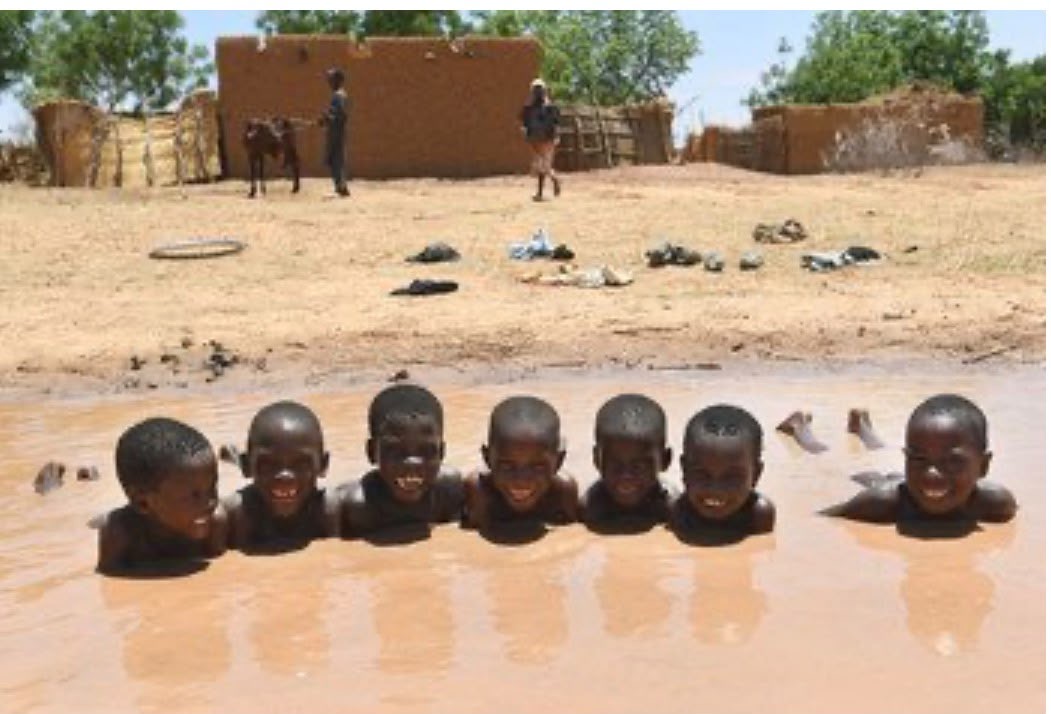
By 2050, one in every four people on earth is projected to be African.
It is a striking demographic reality, one that could transform Africa's economic and political importance in the decades ahead. But behind the impressive statistics lies a question that deserves far more attention: are African countries prepared for the people they are expected to produce?
The United Nations estimates that Africa's population, which had already exceeded 1.5 billion in 2024, could reach about 2.5 billion by 2050. Africa's share of the world's population is projected to rise to about 28 per cent by then.
The United Nations Development Programme put it more simply in 2025: by 2050, one in four people will be African.
That projection is neither a reason for panic nor an achievement to celebrate blindly, It is a call to prepare.
A population is an asset but only if it is productive
A large and youthful population can give Africa an enormous advantage.
More people can mean a larger workforce, a bigger consumer market, more entrepreneurs, greater innovation and a stronger domestic economy. This is the thinking behind the much-discussed concept of a demographic dividend—the economic opportunity that can emerge when a large working-age population is healthy, educated, skilled and productively employed.
But population size alone does not create prosperity.
People need schools before they become graduates. They need skills before they become workers. They need jobs before they can become taxpayers and consumers. They need hospitals, housing, transportation, electricity, water and other basic services before population growth can translate into a better quality of life.
This is where the optimism surrounding Africa's demographic future meets a difficult reality.
The World Bank says between 10 and 12 million young people enter Africa's labour market every year, while current growth patterns create only about three million formal jobs annually.
The question, therefore, is not simply how many Africans there will be.
The question is: what will they do?
What happens to the children?
Consider a child born in Nigeria today.
By the time that child reaches adulthood, the country could be substantially more populous than it is now. The United Nations' latest population projections estimate Nigeria's population at about 374 million by 2054, compared with about 230 million in 2024.
That child will need an education.
Then a job.
A place to live.
Access to healthcare.
Affordable food.
Reliable electricity.
Transportation.
Clean water.
And an economy capable of giving that child a reasonable opportunity to build a life.
The question is whether the country will have expanded these systems at the same pace as its population.
Nigeria's own long-term development blueprint recognises the challenge. The Nigeria Agenda 2050 identifies high population growth alongside unemployment, poverty, inequality, low productivity and significant infrastructure deficits in areas including transportation and power. Its priorities include education, healthcare, food security, housing, urbanisation, water and sanitation and employment generation.
In other words, the challenge is not unknown.
It has already been identified in Nigeria's development planning.
The bigger question is whether implementation will match the scale and speed of the demographic change.
More people will also mean more crowded cities
Population growth will not happen only in villages and rural communities.
It will increasingly be visible in cities.
The United Nations has projected that 68 per cent of the world's population could live in urban areas by 2050, with nearly 90 per cent of the additional urban population expected to be concentrated in Asia and Africa. Nigeria is among the countries expected to contribute substantially to this growth.
For Nigerians, this is already familiar.
Lagos is struggling with traffic, housing pressure, waste management, drainage and infrastructure demands despite being one of the country's most economically important cities.
Now imagine adding millions more people to urban centres without a corresponding expansion of housing, public transportation, schools, hospitals, water systems and employment opportunities.
Population growth does not create those problems by itself.
Poor planning does.
Should families stop having children?
This conversation must also be handled carefully.
It is easy to look at the numbers and ask why families struggling financially continue to have several children. But fertility is influenced by much more than income.
Education, access to family planning, reproductive healthcare, cultural expectations, child marriage, women's economic opportunities, infant mortality and individual preferences all influence family size.
The United Nations' latest fertility analysis shows that fertility is declining globally, including in Africa, although the decline has been slower in many African countries. Nigeria's total fertility rate, for example, was estimated at about 4.38 births per woman in 2024, according to the United Nations' World Fertility 2024 dataset.
The answer, therefore, cannot simply be to tell people how many children they should have.
It must also involve giving individuals, particularly women and couples, the information, education, healthcare and freedom to make informed reproductive decisions.
The danger is not population. It is unprepared population growth.
Africa's demographic expansion could become one of the continent's greatest opportunities.
But opportunity requires preparation.
If millions of young Africans receive quality education, acquire relevant skills, find productive work and participate in growing economies, the continent could harness an extraordinary demographic dividend.
If they instead encounter overcrowded schools, inadequate healthcare, limited employment, unaffordable housing and weak infrastructure, the same demographic growth could deepen poverty and inequality and increase pressure on already strained public systems.
The World Bank has warned that without sufficient skills and employment opportunities, Africa's youth bulge could contribute to social instability. It has also stressed that creating jobs and improving productivity are essential to turning demographic growth into an economic dividend.
This is why 2050 should not be treated as a distant date.
It is already being shaped today.
Every classroom built or neglected matters.
Every teacher trained or left without support matters.
Every job created matters.
Every hospital equipped matters.
Every road, railway, water system and power project matters.
Every policy that improves or restricts opportunities for young people matters.
The clock is already moving
Africa does not need to fear having more people.
It needs to ensure that those people have somewhere to learn, work, live and thrive.
Nigeria does not need to fear becoming one of the world's most populous countries.
It needs to become one of the countries best prepared to support its population.
The demographic future is not completely predetermined. The United Nations itself stresses that population projections represent plausible trajectories and that changes in fertility, mortality and migration can alter future outcomes.
But the direction is clear enough to demand action.
By 2050, one in four people could be African.
The real question is no longer whether Africa will have more people.
It is whether Africa will have built enough opportunities for them.
Because population can be power.
But without preparation, population becomes pressure.
Africa is changing fast, and the future will belong to those prepared to move with it. From earning and spending to paying bills and managing everyday financial needs, having the right tools matters. Stay ready for what is ahead with Monica.
Download the app https://monica.cash/app and discover a simpler way to move your money.