NIGERIA’S STOCK ARE SURGING: WHAT’S BEHIND IT ?
For much of 2026, Nigeria’s stock market has looked like a market in a hurry.
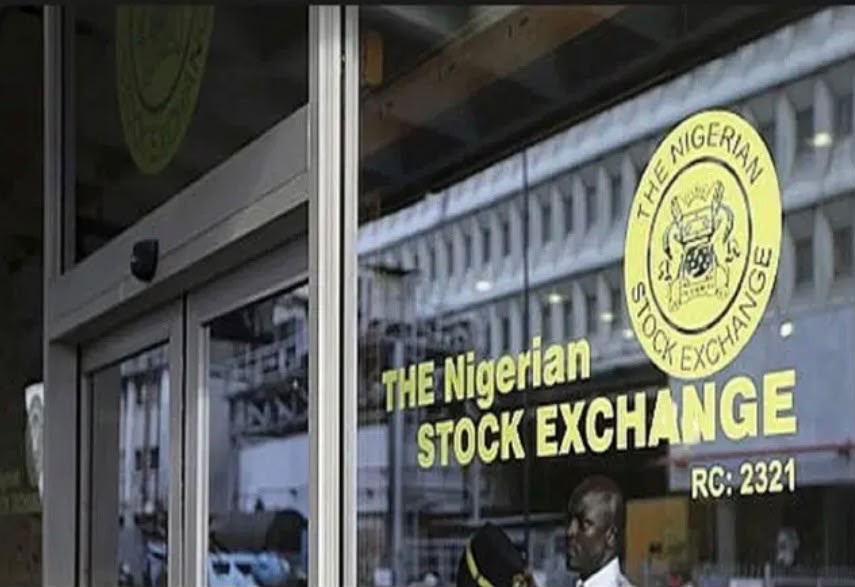
The Nigerian Exchange has pushed through one milestone after another, with investors pouring money into equities and the value of listed companies climbing sharply. By late July, the All-Share Index was trading around the 247,000-point mark, while market capitalisation hovered above ₦159 trillion.
It is a striking turnaround for a market that has had to navigate inflation, currency volatility, high interest rates and an uncertain investment environment.
But the headline numbers tell only half the story.
Behind the rally is a combination of strong corporate earnings, renewed interest in financial stocks, expectations around economic stability and investors looking for assets that can preserve or grow wealth in an economy where the value of money has been under pressure.
And now, after months of impressive gains, the market is beginning to show signs that investors are becoming more selective.
That is where the story gets interesting.
Nigeria's equities market entered 2026 on strong footing after adding about ₦36.6 trillion in market value during 2025. The momentum carried into the new year, with market capitalisation rising by another ₦6.8 trillion in January alone.
The banking sector has been one of the biggest engines of the rally.
Investors have been closely watching Nigerian banks as they strengthen their capital positions and report earnings following the Central Bank of Nigeria's recapitalisation drive. The resulting investor appetite has pushed the valuations of several major financial institutions higher, with banking stocks accounting for a significant part of the market's recent gains.
However, the banks are not doing all the work.
Companies across sectors including industrial goods, consumer goods, insurance, telecommunications and oil and gas have also contributed to the market's expansion. On July 7, for instance, the All-Share Index jumped 1.24 per cent in a single session, adding ₦1.86 trillion to market capitalisation. The following day, the index gained another 2.27 per cent, taking market capitalisation to ₦155.59 trillion.
The speed of the climb has naturally attracted attention beyond Nigeria.
Recent reporting by BusinessDay described Nigerian equities as the world's best-performing major stock market this year, although it also highlighted a less comfortable side of the boom: foreign investors are still hesitant to return in the numbers that might normally be expected from such strong performance.
That apparent contradiction is important.
A market can deliver spectacular returns and still struggle to attract foreign capital.
Part of the explanation is that international investors do not look at share prices alone. They also consider currency risk, the ease of moving money in and out of the country, liquidity and the broader economic environment. A Nigerian stock may rise strongly in naira terms, but a foreign investor ultimately has to think about what those returns are worth after exchange-rate movements.
For domestic investors, however, the calculation can look different.
When inflation erodes the purchasing power of cash, equities can become more attractive to people looking for alternatives. This does not mean shares are automatically a safe haven, they are not but it helps explain why investors have continued to search for opportunities on the NGX.
There is another factor keeping the financial market interesting: interest rates remain high.
At its July 20–21 meeting, the Central Bank of Nigeria's Monetary Policy Committee kept the Monetary Policy Rate at 26.5 per cent, while retaining the cash reserve requirement for deposit money banks at 45 per cent.
High interest rates can make fixed-income instruments attractive, but they also increase the cost of borrowing and can influence how investors value shares. That leaves the market balancing between the appeal of equities and the returns available elsewhere.
After such a strong run, some investors are also beginning to lock in profits.
The market has recently experienced sessions of weakness and profit-taking, a reminder that a rising market does not move in a straight line. By late July, the All-Share Index had slipped from its recent highs, while investors reassessed positions and responded to corporate results.
That does not necessarily mean the rally is over, It means the market is entering a different phase.
The first part of the story was about momentum. The next part may be about justification.
Investors will increasingly want to know whether companies can deliver the earnings needed to support their valuations. Strong share-price performance can attract buyers, but ultimately, businesses still have to make money.
And that is perhaps the most useful lesson for anyone watching the NGX from the sidelines.
When the market is rising, it is easy to focus on the percentage gains and the stories of people who bought early. It is much harder and much more important to ask what is actually behind a company's share price.
A ₦160 trillion market is impressive.
But market capitalisation is not cash sitting in one giant Nigerian account. It represents the combined market value of listed companies based on their share prices and shares outstanding. If prices rise, the market's value rises with them. That does not mean every investor has made money, and it certainly does not mean every stock has performed well.
For the Nigerian market, therefore, the real test is not whether it can produce another headline-grabbing gain.
It is whether the companies behind those numbers can continue to grow, generate profits and reward investors while the wider economy settles into its next phase.
For now, the NGX has momentum, corporate earnings are keeping investors interested and the banking sector remains a major source of activity. But after an extraordinary run, caution is beginning to return to the room.
The market may still have more ground to cover. It just may not get there as quickly and that could be the most important shift of all.
Keep your everyday money moving
The stock market may have its own rhythm, but everyday finances should not feel complicated.
With Monica, you can convert crypto to naira, pay bills and utilities, manage subscriptions and fund betting wallets from one app.
Download Monica and keep your money moves simple 👉🏼https://Monica.cash/app