Nigeria’s Economy Is Growing. So Why Does Life Still Feel Expensive?
Nigeria’s economy is growing faster, but that does not automatically mean Nigerians have more money to spend. The latest GDP figures reveal an important gap between macroeconomic progress and what households experience every day.
You hear that Nigeria’s economy grew by 4.43 per cent in the second quarter of 2026. You hear that this is an improvement from the 3.89 per cent recorded in the first quarter and the 4.23 per cent recorded in the same quarter last year. You hear that both the oil and non-oil sectors contributed to the expansion.
Then you go to the market.
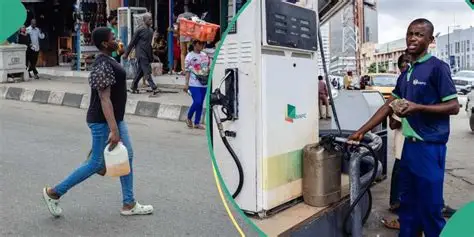
The price of food is still a conversation.
Transport still takes a noticeable piece of your salary.
Rent still feels like a financial event rather than an ordinary expense. Running a small business still requires constant calculation. Even people who have managed to keep their incomes relatively stable may find that the same amount of money simply does not stretch as far as it used to. So the question almost asks itself:
If the economy is growing, why does life still feel so expensive?
The short answer is that economic growth and household financial wellbeing are not the same thing.
GDP Can Grow Without Your Wallet Growing
Gross domestic product tells us how much economic activity is taking place. It is useful for understanding whether the economy is expanding or contracting, but it does not tell us exactly how much an individual worker earns, whether that income has kept pace with prices, or whether a family can afford more with its monthly income.
Nigeria’s latest numbers are encouraging from a macroeconomic perspective. Real GDP grew by 4.43 per cent year on year in Q2 2026, according to the National Bureau of Statistics, compared with 3.89 per cent in Q1. Reuters reported that stronger performances in both the oil and non-oil sectors supported the expansion, with oil production also increasing during the quarter.
That is economic progress.
But progress at the national level can take time to reach the household level.
And sometimes, the path from one to the other is far more complicated than the headline figure suggests.
The Price Problem Did Not Disappear Because Inflation Fell
One of the easiest mistakes to make when discussing inflation is to assume that a lower inflation rate means prices have returned to where they were before.
They have not.
Inflation measures the rate at which prices are rising. If the rate slows, prices can still be significantly higher than they were previously.
Nigeria’s headline inflation rate stood at 15.43 per cent in July 2026, according to the latest available figures reported from the National Bureau of Statistics. More importantly for households, food prices continued to put pressure on consumers. Monthly food inflation rose to 5.56 per cent in July from 3.75 per cent in June.
That distinction matters.
Imagine a household that has already adjusted its budget several times because food, transportation and other essentials became more expensive. If prices begin rising more slowly, the household may stop experiencing the same rapid increases.
But it is still paying the higher prices.
That is why someone can hear that inflation is easing and still genuinely feel that nothing has become cheaper.
There Is Also the Cost of Getting Through the Day
For many Nigerians, the pressure is not coming from one giant expense.
It is the accumulation of smaller ones.
Transport to work. Food during the day. Electricity. Data. School expenses. Rent. Fuel. Medication. Business logistics. Family obligations.
One increase might be manageable. Several at the same time become a different problem.
The International Monetary Fund has also warned that higher food and fuel prices can intensify inflationary pressure and aggravate poverty and food insecurity, while rising domestic and international transport costs weigh on economic activity.
This is why the question of growth cannot stop at GDP.
The more important question for ordinary households is what happens to purchasing power.
The Missing Link Is Purchasing Power
Economic growth becomes meaningful to an individual when it eventually translates into something tangible.
A better-paying job.
More stable employment.
A business that can sell more without its operating costs swallowing the gains.
Cheaper or more reliable essential services.
A salary that can buy more than it did before.
That is the bridge between a growing economy and a better standard of living.
Nigeria’s latest GDP figures have generated precisely this debate. Labour groups and business organisations have argued that the 4.43 per cent expansion should not automatically be interpreted as a full economic recovery because households, workers and businesses are still dealing with significant pressures.
And that criticism is important because growth is ultimately supposed to improve economic opportunity, not simply produce a better number on a quarterly report.
Growth Is Still Good News
There is another side to this conversation that is worth acknowledging.
It would be wrong to conclude that GDP growth does not matter simply because people are still struggling.
It matters.
A growing economy can create more room for investment, business expansion, employment and government revenue. Stronger output can provide a foundation for better living standards if the gains are sustained and the right policies allow more people to participate in them.
The problem is not that Nigeria is growing.
The problem is that growth has not yet become relief quickly enough for many households.
That distinction is important.
The latest numbers suggest that parts of the economy are moving in a better direction. But the experience of a worker deciding whether to buy food, pay transport costs or postpone another bill belongs to a different layer of the economy.
Both realities can exist at the same time.
Nigeria can be growing.
And Nigerians can still be struggling.
So When Will People Actually Feel the Recovery?
That is the question that matters now.
Not simply whether GDP can grow above 4 per cent.
Not simply whether inflation can continue to moderate.
Not simply whether government revenue can improve.
The real test is whether economic stability eventually becomes visible in people’s everyday lives.
Can salaries buy more?
Can businesses plan beyond the next few weeks?
Can young Nigerians save without watching every unexpected expense destroy the plan?
Can families spend less of their income simply trying to maintain the standard of living they already have?
Can a person earn more without feeling as though every additional naira has already been claimed by another rising expense?
Those are the questions that will determine whether economic recovery feels real.
The Economy Is Not Just a Number
For policymakers, GDP is an essential measure.
For ordinary Nigerians, however, the economy is much more personal.
It is the amount left after rent.
It is what is in the shopping basket.
It is the cost of getting to work.
It is whether a small business owner can restock and still make a profit.
It is whether a salary increase actually feels like an increase after prices have moved.
That is why the latest 4.43 per cent growth figure deserves both recognition and scrutiny.
It is good news.
But it is not the finish line.
Nigeria does not only need an economy that grows. It needs an economy whose growth eventually becomes income, purchasing power, opportunity and a better quality of life for the people producing that growth.
Until that happens, the question will remain perfectly reasonable:
The economy is growing. But when will life start feeling a little easier?
Money works best when you have more control over how you move it.
Whether you receive crypto from abroad, convert digital assets to naira or simply need a more direct way to move your money, Monica is built to make the journey from crypto to naira straightforward.
Explore Monica and download the app: https://monica.cash/app