Dangote Refinery Is Producing More. So Why Is Fuel Still Getting More Expensive?
Nigeria has its own refinery now. Petrol is still climbing toward ₦1,500 a litre in some cities. That gap is confusing until you understand what a local refinery can and can't actually protect you from.

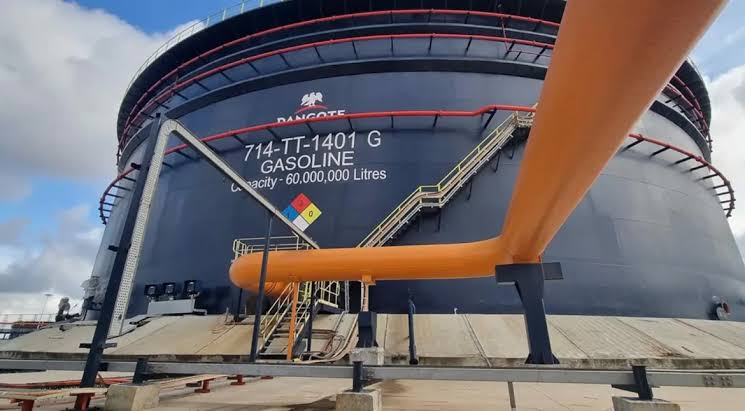
Nigeria has a functioning, full-capacity domestic refinery now. That was supposed to be the thing that finally broke the link between global oil chaos and what Nigerians pay at the pump. Instead, petrol prices have risen from ₦1,165 per litre at Dangote's gantry on August 21 to ₦1,350 on September 12, a jump of ₦185 in just 22 days, with pump prices in parts of Abuja already approaching ₦1,500 and inland northern markets like Kano and Kaduna facing estimates as high as ₦1,600.
If the refinery is working, why does this keep happening? The honest answer requires understanding something most fuel price explanations skip entirely: owning a refinery does not mean owning your price.
The part everyone assumes but isn't true
The intuitive assumption is that because Nigeria produces its own crude oil and now refines it domestically, Nigerian fuel prices should be insulated from what happens in the Middle East or at OPEC meetings thousands of kilometres away. That assumption treats "producing oil" and "pricing oil" as the same thing. They are not.
Dangote Refinery, like every refinery on earth, buys crude oil at prices set by the global market, whether that crude comes from Nigerian fields or is imported, and it sells refined petrol at prices calibrated to remain commercially viable against that global benchmark. Brent crude spiked above $100 a barrel in the weeks before this latest round of increases, later easing toward $94 amid diplomatic hopes around the Middle East, but even that pullback still sits well above where prices were earlier in the year. When the input Dangote pays for its crude rises, the price it charges for the petrol coming out the other end rises with it, domestic refinery or not.
This is exactly what happened here. The refinery raised its gantry price by 6.7%, from ₦1,265 to ₦1,350, explicitly citing developments in the international oil market, according to Olatide Jeremiah, CEO of Petroleumprice.ng, speaking to Vanguard. The refinery didn't cause the increase by existing. It transmitted an increase that originated somewhere else.
What the refinery has actually changed
None of this means the refinery has changed nothing. It has, just not in the way "cheap Nigerian fuel forever" implies.
Before Dangote, Nigeria imported the vast majority of its refined petroleum products, meaning Nigerian pump prices carried the cost of Nigerian crude, foreign refining margins, and shipping products back into the country, three layers of cost instead of one. The refinery collapses that to a single domestic step: crude in, product out, no round trip across an ocean. Nigeria's landing cost for imported petrol has climbed to ₦1,314.67 per litre according to MEMAN data, and at several points in the supply chain PMS continues to trade below that import benchmark, meaning the refinery is, in fact, providing a discount relative to the counterfactual of continued full import dependence. The floor is lower than it would otherwise be. It is not zero, and it does not move independently of global crude.
Why Abuja pays more than Lagos
The second half of this story is entirely domestic, and it explains why the same national refinery produces wildly different prices depending on where you're standing.
Lagos, Port Harcourt and Warri sit close to refineries, terminals and coastal supply infrastructure. Abuja and the wider north do not. Every kilometre a truck has to travel inland adds transportation cost, and those costs compound the farther a market sits from the coast, which is exactly why NIPCO stations in Abuja moved from ₦1,350 to ₦1,430 following the same gantry adjustment that pushed some Lagos stations only to around ₦1,400, and why Kano, Kaduna and Jos face estimates reaching ₦1,600. Diesel tells the same geography story even more sharply: Lagos ex-depot prices between ₦1,790 and ₦2,100 translate into inland figures potentially reaching ₦2,100 to ₦2,400 once transport and distribution margins are added.
A single national gantry price becomes a range of regional retail prices the moment it leaves the depot, and that range is shaped by roads, distance and logistics cost as much as by anything happening on an international oil chart.
What this actually costs beyond the pump
Fuel is an input cost that touches almost everything else. Transport fares rise because commercial vehicle operators are paying more to fill their tanks. Food prices climb because the trucks moving produce from farm to market cost more to run. Small businesses running generators, still a daily reality across much of Nigeria, absorb the increase directly into their operating costs, which eventually shows up in what they charge. Labour leaders and industry groups including the Oil and Gas Service Providers Association of Nigeria have already warned that the latest increase will pressure households and businesses further, a pattern Nigerians have lived through enough times to recognise without needing the warning spelled out.
The honest bottom line
A domestic refinery is a genuine structural improvement. It removed one entire layer of cost that used to sit on every litre of Nigerian fuel. But it was never going to be a shield against global crude prices, because the refinery still has to buy crude at the price crude actually costs, and geography still decides what it costs to move fuel from a coastal depot to an inland pump.
Producing more oil domestically and being insulated from the global oil market are two different achievements. Nigeria has made real progress on the first. The second was never actually on offer.
When fuel costs rise, everything downstream feels it. Monica keeps your money moving fast, so rising costs don't have to mean rising stress.
Fuel prices move. Your money moves faster on Monica👉https://monica.cash/app