Nigeria Is Growing Faster Than the Rest of the World. So Why Does It Still Feel Hard?
The IMF just handed Nigeria a 4.1% growth forecast in a year the global economy is struggling. The numbers look good-the streets tell a different story, both are true.
Something interesting happened this week.
The International Monetary Fund released its July 2026 World Economic Outlook, a report that essentially takes the temperature of every major economy on earth, and while most of the world got bad news, Nigeria got something different.
Global growth this year? 3.0 percent. Slowing down, weighed down by the Middle East conflict, rising inflation and a world still trying to find solid ground after years of disruption.
Nigeria? 4.1 percent. Unchanged. Holding steady in a year when holding steady is genuinely difficult.
That number puts Nigeria ahead of the global average, ahead of most emerging markets and ahead of every advanced economy on the planet. The IMF credited improved macroeconomic stability and Nigeria's position as an oil exporter, with crude oil prices sitting at approximately $89 per barrel this year, nearly a third higher than 2025, for the country's resilience.
On paper that is a good story.
But numbers and lived experience are not always the same thing, and the IMF was honest enough to say so in the same report, warning that higher prices for essential goods are expected to worsen poverty and food insecurity even as the broader economy grows, which is the uncomfortable truth sitting underneath the headline figure.
Nigeria's economy is doing better than the world's. Nigeria's households are still under pressure. Both of those things are true at the same time and pretending otherwise would not help anybody understand what is actually happening.
What the 4.1 percent tells us is that the reforms are working at the macro level, external reserves at a 17-year high of $50.12 billion, a more stable naira, improving terms of trade, credible signals being sent to international investors, these are not accidents, they are the results of a difficult and costly reform process that has been running since 2023 and is beginning to show up in numbers that matter to the outside world.
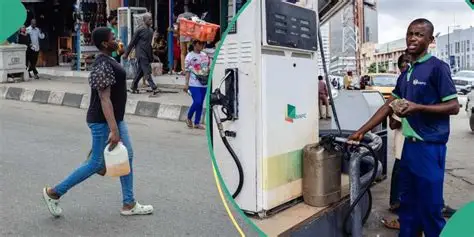
What it does not tell us is that the average Nigerian waking up this morning is feeling that growth in their pocket yet, because the gap between macroeconomic improvement and household relief is real and it takes time to close.
The naira is still trading about 25.6 percent below its fair value according to the IMF's own assessment, meaning there is more recovery ahead if the momentum holds, food prices globally are rising 8 percent this year, and the cost of living remains elevated for most Nigerian households navigating a market that has not yet caught up with the optimism in the data.
The honest answer to the question in this headline is that both things are true, Nigeria is genuinely growing faster than most of the world, and it still feels hard for most Nigerians, and the space between those two realities is where the next chapter of this country's economic story will be written.
The foundations are better than they were. The job is not finished.
In an economy that keeps moving, your money needs to move with it. Monica keeps you ahead, convert, pay, manage, all in one place. Don't wait for the economy to catch up to you. Get ahead of it.
Join the Gheng now - https://monica.cash/app