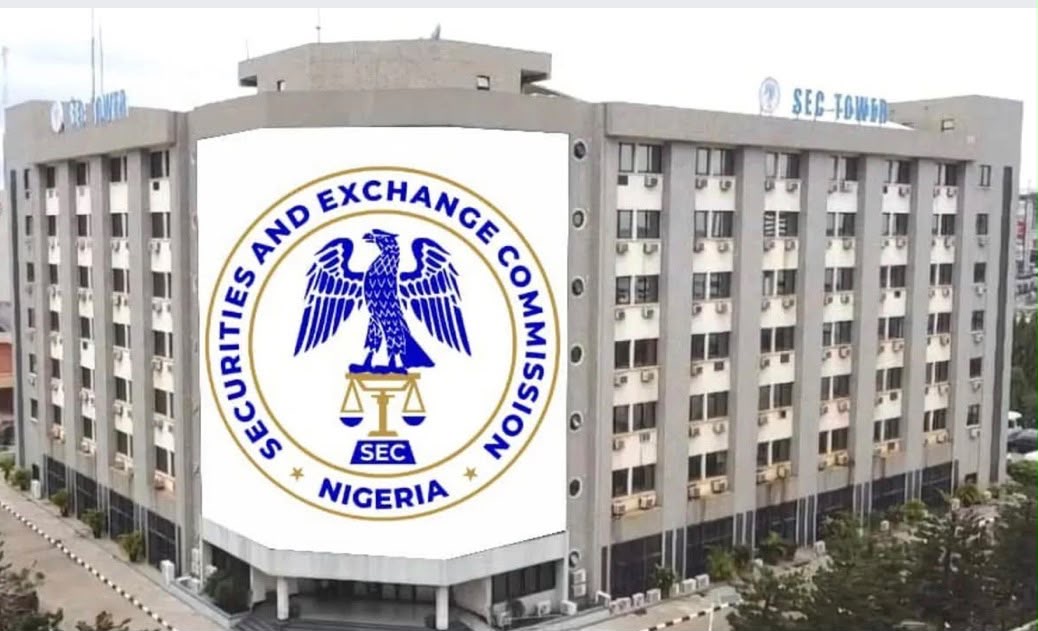
Nigeria’s Financial System Is Entering a New Era
Between March and June 2026 the CBN issued what analysts are calling the most sweeping set of fintech regulations in Nigeria's history. This week Nigeria added CFD rules to that pile. Here is what is happening, why it matters and what it means for anyone operating in the Nigerian financial space.

There is a phrase that keeps appearing in analyst reports, regulatory reviews and fintech industry commentary when the subject turns to Nigeria's financial regulation in 2026: "most sweeping in the country's history."
It is appearing a lot, because it keeps being accurate.
Between March and June 2026 the Central Bank of Nigeria issued a set of fintech mandates that collectively represent the most significant regulatory intervention in Nigeria's digital financial sector since the CBN's ill-fated 2021 bank-crypto ban, only this time moving in the opposite direction, not to restrict but to structure, not to exclude but to bring in under a framework designed to match the scale and sophistication of an industry that has grown faster than the rules designed to govern it.
This week Nigeria added another chapter to that story, proposing new rules on Contracts for Difference trading, a financial instrument that allows retail investors to speculate on the price movements of assets including crypto, commodities and stocks without owning the underlying asset, in a move that brings CFD activity under formal regulatory scrutiny for the first time and reflects a regulator that is no longer playing catch-up with the market but actively trying to stay ahead of where the market is going.
What the 2026 Regulatory Year Has Already Delivered
To understand where the CFD proposal fits, it helps to understand the architecture that 2026 has already assembled around it.
The Investments and Securities Act 2025, which came into force at the beginning of this year, made the most fundamental change: it formally recognised digital assets and cryptocurrencies as securities under Nigerian law, placing issuance, trading and intermediation under SEC oversight and ending years of regulatory ambiguity that had allowed both legitimate operators and bad actors to occupy the same grey zone with equal comfort.
That single legislative change transformed the entire regulatory landscape. Exchanges, custodians, token issuers and related intermediaries now fall under SEC oversight as a matter of statute rather than policy guidance, and the CBN, which had historically taken the most restrictive position on crypto in Nigeria, now permits financial institutions to open accounts for SEC-licensed virtual asset service providers, a reversal of the 2021 ban that represents the most significant shift in the CBN's posture toward crypto in the institution's history.
The Presidential Executive Order on Virtual Assets Coordination signed by President Tinubu on July 18 2026 added another structural layer, creating a Virtual Asset Council chaired by the CBN with the Nigeria Revenue Service and SEC as vice-chairs, and the Nigerian Financial Intelligence Unit and Office of the National Security Adviser as members, establishing for the first time a formal coordination mechanism that prevents the jurisdictional overlap and regulatory gap problems that had historically allowed different agencies to supervise different parts of the market without talking to each other.
Then came the CBN's own mandates between March and June, which analysts have described as the most sweeping in Nigerian fintech history: market concentration caps preventing single entities from dominating both card-issuing and merchant-acquiring simultaneously, mandatory data localisation requiring all payment transaction data to be stored on servers within Nigerian borders by January 2027, ring-fencing requirements separating bank parent companies from their fintech subsidiaries, and Ultimate Beneficial Ownership disclosure requirements designed to end anonymous shell structures within the startup ecosystem.
The SEC has been equally active, raising minimum capital requirements for Digital Asset Exchanges from ₦500 million to ₦2 billion, introducing a 30 percent corporate tax on VASP profits, and expanding the ARIP regulatory sandbox which now includes over 14 licensed or provisionally licensed operators including Blockchain.com, Luno Nigeria, GetEquity and several others admitted in August and September 2026.
The New CFD Rules and What They Add
Contracts for Difference trading, which allows participants to speculate on asset price movements without owning the underlying asset, has existed in a regulatory grey area in Nigeria for years, with platforms offering CFD products to Nigerian retail users operating under varying degrees of formal oversight depending on where they were licensed and whether Nigerian authorities had jurisdiction over them.
The proposed rules move to change that, bringing CFD trading under formal Nigerian regulatory scrutiny and establishing standards for how platforms offering these products must operate, disclose risks to users and handle client funds.
The proposal is consistent with a broader regulatory philosophy that has defined 2026 in Nigeria: bring everything into the framework rather than leave gaps that get filled by unregulated activity, apply risk-based oversight proportionate to the complexity and risk of each product category, and establish the kind of transparent rule-based environment that attracts serious international operators while filtering out those whose business model depends on operating where the rules are absent.
What Nigeria's Regulatory Architecture Now Looks Like
The cumulative effect of everything that has happened between January and September 2026 is a Nigerian digital finance regulatory landscape that looks fundamentally different from the one that existed at the start of the year.
Rather than placing every virtual-asset activity under one specialist regulator, Nigeria has preserved the CBN, SEC, tax and intelligence roles while creating the coordination mechanism that allows them to function as a system rather than competing silos.
That architecture has a Nigerian distinguishing feature that sets it apart from the approaches taken in comparable markets. Singapore applies a deliberately high licensing threshold for businesses serving customers offshore. The UK requires AML registration now with a full authorisation regime opening in September 2026 for a broader Financial Services and Markets Act regime expected to begin in October 2027. Nigeria's coordination council model is different from both, and its effectiveness will be measured not by the elegance of its design but by whether the coordination it is designed to produce actually happens at the operational level where regulators interact with businesses on a daily basis.
The international institutional interest in the Nigerian market has never been more visible. J.P. Morgan, Mastercard and a roster of global financial services companies are now sending senior representatives to Lagos fintech forums as speakers rather than observers, a shift that reflects genuine commercial assessment rather than courtesy engagement, and that commercial interest is partly a function of the regulatory clarity that 2026 has produced.
What It Means For Nigerian Crypto and Fintech Users
For everyday Nigerians using crypto platforms, digital payment apps and fintech services, the regulatory architecture being built in 2026 translates into practical protections that did not exist before.
Licensed operators are required to segregate customer funds, maintain cybersecurity standards, comply with AML and KYC requirements and submit to regular reporting that gives regulators visibility into market activity in real time. Platforms that meet these standards have committed to a level of operational discipline that unregulated alternatives cannot match, and the consumer protection framework that surrounds licensed operators means there is somewhere to turn when things go wrong rather than the helpless outcome that has characterised disputes with unregulated platforms.
The 30 percent corporate tax on VASP profits has raised concerns in the industry about competitive positioning relative to more lightly taxed jurisdictions, and the ₦2 billion capital requirement for Digital Asset Exchanges has prompted consolidation among smaller operators who cannot meet the threshold independently, but both of these pressures are the predictable consequences of formalisation rather than signs that the regulatory framework is hostile to the industry it is governing.
Nigeria built Africa's largest crypto market without a comprehensive regulatory framework. It is now building the framework. The question 2026 will answer is not whether regulation is necessary, that debate is settled, but whether the specific rules being built serve the market they govern without pushing activity into the informal channels that regulation is designed to bring under oversight.
The answer is still being written. But the direction of travel has never been clearer.
Monica operates within Nigeria's regulatory framework, SEC VASP-framework aligned, KYC-verified and built for the financial landscape that Nigerian regulators are constructing in 2026 and beyond.
Regulated. Trusted. Built to last. That is Monica 👉🏼https://monica.cash/app