Nigeria Has $78.5 Billion in Projects to Fund, but Can Investment Change the Economy?
Nigeria is courting investors, rebuilding foreign reserves and recording slower inflation, while a new African credit rating agency seeks to reshape how the continent is assessed. The opportunity is significant, but the real test is whether capital can translate into productive businesses, better jobs and improved living standards.
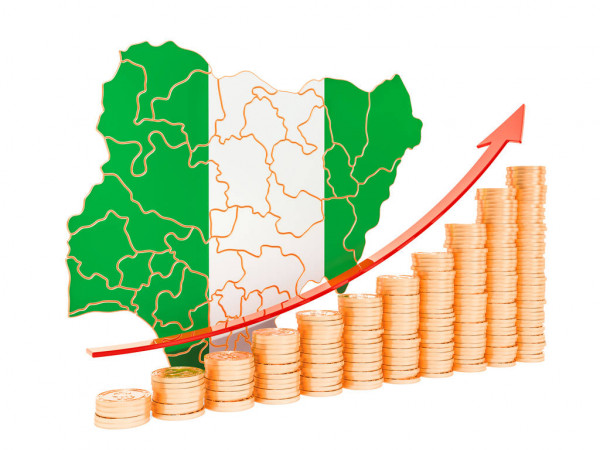
Nigeria's economic story is entering a consequential phase. After years in which currency instability, rising prices and difficult business conditions dominated the conversation, the latest figures offer some encouraging signs. But alongside the improvements is a more demanding question: can greater financial stability attract enough investment to expand production, create jobs and improve the everyday experience of Nigerians?
The Federal Government has put 65 investment projects requiring a combined $78.5 billion before potential investors. The Central Bank of Nigeria says foreign exchange reserves have climbed to their highest level in 18 years, while inflation eased in September. At the same time, the International Monetary Fund's October outlook places Nigeria behind South Africa and Egypt in projected nominal dollar GDP for 2026.
These developments tell different parts of the same story. Nigeria is working to strengthen its financial position and attract capital but lasting economic progress will depend on what happens after the announcements.
The $78.5 billion question: will investors commit?
The Federal Government's new investment drive is one of the clearest signals of its ambitions. Presented during the October International Monetary Fund and World Bank meetings in Bangkok, the 65-project pipeline spans oil and gas, power, transport, maritime infrastructure, agriculture, manufacturing, mining, technology, healthcare and urban services.
According to the government's published project information, the portfolio requires $78.5 billion in capital and is projected to generate approximately 366,763 jobs if the projects are realised. Energy and transport account for much of the funding requirement, reflecting the scale of infrastructure investment Nigeria needs to support businesses and economic activity.
The government is also developing a digital Deal Room to give prospective investors access to project information and facilitate investment decisions. Officials have highlighted incentives, including the possibility of full foreign ownership in most sectors, subject to applicable laws and restrictions.
The size of the proposal is significant, but it is important to understand what the figure represents. The $78.5 billion is the capital required for the proposed projects, not money that has already entered Nigeria.
For the initiative to deliver on its promise, prospective investors must be able to assess projects, secure financing, navigate approvals and operate under predictable rules. Projects must also move beyond presentations and expressions of interest into construction, production and employment.
That is where the economic impact will ultimately be measured. A new power project could help businesses manage energy costs. Better transport infrastructure could reduce the time and expense involved in moving goods. Investment in agriculture and processing could create opportunities for farmers, manufacturers and distributors.
The value of the investment drive will therefore depend not simply on the amount of capital attracted, but on how effectively that capital expands Nigeria's productive capacity.
Foreign reserves hit an 18-year high, strengthening Nigeria's financial buffer
Nigeria's investment ambitions come as the country reports an improvement in its external financial position.
The CBN's gross external reserves reached $55.1 billion as of October 13, 2026, the highest level in 18 years, according to Governor Olayemi Cardoso. The reserves rose from approximately $53.90 billion at the beginning of September to $54.93 billion at the end of the month, before climbing further in October.
Foreign reserves matter because they provide a buffer against external economic shocks and support confidence in the country's ability to meet international payment obligations. They can also strengthen the central bank's capacity to manage pressures in the foreign exchange market.
For businesses that depend on imported machinery, raw materials and other inputs, greater foreign exchange stability can make financial planning less difficult. It can also reduce some of the uncertainty confronting investors who need to convert foreign earnings or fund local operations.
However, rising reserves do not automatically translate into cheaper goods or a stronger naira in every transaction. Their effect depends on several factors, including foreign exchange demand, export earnings, capital flows and monetary policy.
The more important question is whether Nigeria can sustain the improvement through stronger exports, more reliable foreign investment and increased domestic production, rather than relying on temporary inflows.
Inflation falls to 14.63%, but the cost-of-living challenge remains
Another encouraging development came from the latest inflation figures.
Nigeria's headline inflation rate eased to 14.63 per cent in September 2026, down from 15.39 per cent in August, according to the National Bureau of Statistics. Yet food inflation stood at 19.59 per cent, slightly above the 19.57 per cent recorded in August.
This is significant because lower inflation does not mean prices are falling across the economy. It means the general price level is rising more slowly than before. Goods and services that have already become expensive do not automatically return to their previous prices.
For households, the relief may therefore be gradual. Food, transport, electricity and other essential expenses continue to compete for a large share of monthly income. Businesses, meanwhile, must still manage operating costs, wages and consumer demand.
The next stage of the disinflation process will matter as much as the headline figure itself. If inflation continues to ease while production and employment improve, households and businesses could gain more room to plan and spend.
But if food and energy costs remain stubbornly high, the improvement in headline inflation may feel less significant in everyday life.
Nigeria slips behind South Africa and Egypt in projected GDP ranking
Nigeria's investment push is unfolding alongside a notable development in Africa's economic rankings.
The IMF's October 2026 World Economic Outlook projections put Nigeria's nominal GDP at approximately $386.67 billion, compared with $489.08 billion for South Africa and $442.89 billion for Egypt. Nigeria is therefore projected to rank third among the continent's economies by this measure, with real economic growth forecast at 4.2 per cent in 2026.
The figures require context. Nominal GDP measured in US dollars reflects both domestic economic output and exchange-rate movements. A weaker local currency can reduce the dollar value of an economy even when its domestic production is growing.
That means the ranking alone does not establish whether Nigerians are becoming poorer or whether the economy's productive capacity has declined. GDP growth, inflation-adjusted output, employment, productivity and income per person all contribute to a fuller picture.
Nevertheless, the figures underline a challenge for Nigeria: economic growth must be sustained and broad-based, while currency stability and productivity improve. A large population and substantial natural resources create opportunities, but they do not guarantee higher incomes or a better standard of living.
For investors, the key considerations are whether businesses can operate efficiently, reach customers, obtain financing and generate returns over time.
CBN looks to China as cross-border payments move into focus
Nigeria is also exploring deeper financial cooperation with China, an important trading partner for Nigerian businesses.
According to an October 17 report by Nairametrics, CBN Governor Olayemi Cardoso said discussions with People's Bank of China Governor Pan Gongsheng had covered stronger financial cooperation, including cross-border payment arrangements to support trade and investment. Cardoso indicated that further discussions were planned during a visit to Beijing.
More efficient cross-border payment systems could help businesses sending money between Nigeria and China navigate international transactions more effectively. Depending on the arrangements adopted, improvements could affect payment processing, settlement options and the costs associated with trade.
The opportunity is particularly relevant to importers and exporters that need reliable ways to pay suppliers and receive funds. But discussions should not be mistaken for a completed agreement or a fully operational new payment system. The practical benefits will depend on the terms, implementation and regulatory arrangements eventually established.
For Nigeria, stronger payment links could complement the broader effort to attract investment and support businesses engaged in international trade.
Africa launches its own credit rating agency
Beyond Nigeria, another financial development could influence the continent's long-term investment prospects.
The African Union-backed Africa Credit Rating Agency (AfCRA) was officially launched in Mauritius on October 7. It is intended to provide independent, Africa-focused assessments of sovereign governments, businesses and other institutions, complementing existing international rating agencies rather than replacing them.
Credit ratings influence how lenders and investors assess the risk of providing finance. They can affect borrowing costs, investment decisions and access to international capital markets.
Supporters of the new agency argue that African economies need assessments that account for local data, economic structures and country-specific circumstances. However, the agency's long-term credibility will depend on its analytical independence, transparent methods and ability to earn the confidence of investors.
If it succeeds, AfCRA could provide an additional source of information for assessing African borrowers and businesses. It cannot, by itself, guarantee lower borrowing costs. Countries and companies will still need sound finances, credible institutions and reliable economic data to secure favourable terms.
The initiative is part of a wider effort to strengthen Africa's financial architecture and improve its access to investment.
The global capital opportunity is growing, but competition remains fierce
The World Bank Group reported that it mobilised a record $112 billion in private capital during the 2026 financial year, more than three times the $35 billion recorded in 2022. Africa accounted for approximately $22 billion of the latest figure, up from around $9 billion in 2022.
The figures reflect an international push to use public finance, guarantees and other financial tools to attract private investors into development projects.
For Nigeria, the trend presents an opportunity to compete for capital needed to expand power generation, transport networks, agriculture, manufacturing and other productive sectors. But international investment is not distributed automatically or evenly. Investors compare markets based on expected returns, project risks, regulation, infrastructure and the likelihood of recovering their capital.
Nigeria's proposed $78.5 billion project pipeline must therefore compete with opportunities elsewhere. Clear project documentation, predictable policies, credible sponsors and transparent implementation will be essential to turning interest into commitments.
The objective should be to attract capital that builds productive assets, supports local supply chains and creates sustainable employment, rather than measuring success solely by the volume of money announced.
What the latest figures mean for Nigeria
Taken together, the developments point to an economy with opportunities as well as unresolved pressures.
Higher foreign reserves provide a stronger external buffer. Slower inflation offers the prospect of more predictable prices. The investment pipeline creates a framework for financing projects that Nigeria needs, while discussions with China and the launch of AfCRA reflect wider efforts to strengthen financial links and access to capital.
Yet none of these developments guarantees prosperity on its own.
The investment proposals must secure funding and become functioning projects. Inflation must continue easing before households feel more substantial relief. Financial stability must support businesses and productive activity, while new trade and investment arrangements must deliver practical benefits.
For Nigerians, the ultimate measure will be visible in everyday economic life: more reliable infrastructure, businesses that can expand, jobs that pay, more affordable essentials and greater confidence in planning for the future.
Nigeria's next economic milestone should not simply be more money pledged or stronger figures on a financial dashboard. It should be a measurable improvement in what the economy produces and what ordinary people can afford.
At Monica, we believe understanding how money moves is part of making better financial decisions. From following developments in markets and digital finance to converting supported cryptocurrencies into naira and paying everyday bills, the practical side of money matters just as much as the headlines.
Keep up with the financial developments shaping your world, and when you need to turn your crypto into naira or take care of everyday payments, make your next move with Monica. Download the app at https://monica.cash/app
Editorial note: Figures and policy developments are based on reports and official material available as of October 19, 2026. GDP values are projections, the $78.5 billion investment figure represents proposed project capital requirements, and announced financial initiatives should not be interpreted as completed investments or agreements.