MetaMask Had a Security Incident, But Your Wallet Is Not the Whole Story
MetaMask says there is no immediate threat to its wallets after an infrastructure security incident. But the decision to exit affected Ethereum validators reveals how much technology sits behind the wallet users see on their screens.
When you open a crypto wallet, you usually see something very simple.
Your balance.
A send button.
A receive button.
Perhaps a list of tokens and a few networks.
It can make cryptocurrency storage feel like a straightforward relationship between you, your wallet and your money.
But that is only the part you can see.
Behind a crypto wallet can sit blockchain networks, validators, staking infrastructure, software, security systems and other services that help transactions and related activities function.
A recent incident involving MetaMask has offered an unusual look behind that interface.
On September 30, MetaMask disclosed an ongoing security incident affecting part of its infrastructure. The company said it had identified no immediate threat to MetaMask wallets, but it began proactively exiting affected Ethereum validators connected to its non-custodial staking operations.
That distinction is worth understanding because a wallet and the infrastructure surrounding a wallet are not necessarily the same thing.
First, What Exactly Is a Crypto Wallet?
The word “wallet” can be misleading.
Your crypto is not literally sitting inside the MetaMask application waiting for you to open it.
The assets exist on a blockchain.
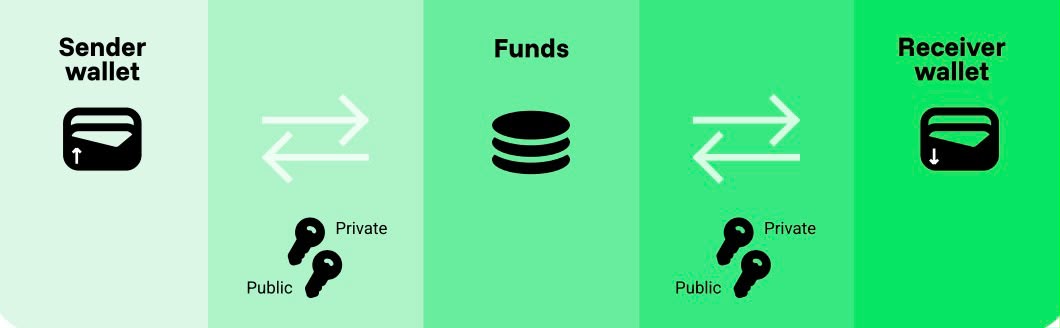
A wallet provides the tools through which you interact with those assets. It helps you view balances, generate addresses, sign transactions and interact with blockchain applications.
The most important part is the control over the cryptographic keys that authorise those transactions.
That is what people mean when they talk about self-custody.
With a self-custodial wallet, the user controls the keys rather than handing custody of the assets to a central company.
That is why MetaMask’s statement about its wallets matters.
The company has not said that users’ wallet keys were compromised. Instead, it has described the incident as affecting part of its infrastructure and said there is currently no identified immediate threat to MetaMask wallets.
So, what happened to the validators?
The Part of MetaMask You Do Not Usually See
MetaMask also operates staking services.
Ethereum uses a proof-of-stake system in which validators help secure and operate the network. Operating those validators requires infrastructure that is separate from the simple wallet interface most users interact with.
Following an investigation into an infrastructure compromise, MetaMask Staking began exiting affected Ethereum validators operated through the Lido protocol.
Lido said the move was taken as a precaution to protect client assets. It also confirmed that the affected validators were beginning the exit process, with the final validators expected to be exited by October 7.
That does not mean MetaMask is withdrawing from Ethereum or that ordinary users have suddenly lost access to their wallets.
It means a particular layer of its staking operation is being removed from service while the investigation continues.
And this is where the story becomes interesting for anyone who uses crypto wallets.
Your Wallet Can Be Non-Custodial Without Everything Around It Being Simple
“Non-custodial” is one of the most important words in crypto.
It means the service does not hold the user’s assets in the same way a traditional financial institution holds money on behalf of a customer.
MetaMask says its staking operations are also non-custodial and that it does not manage withdrawal keys for clients’ staked assets.
That explain why this incident has not automatically translated into a wallet-funds crisis.
There is a difference between:
the keys controlling your wallet,
the infrastructure operating a staking service,
and the Ethereum network itself.
They are connected, but they are not identical.
A problem in one layer does not automatically mean every other layer has been compromised.
Then Why Is Ethereum’s Staking Queue Feeling It?
Because blockchain infrastructure does not always move at the speed of a mobile application.
Once MetaMask began exiting affected validators, the amount of ETH waiting to leave Ethereum staking increased sharply.
CoinDesk reported that the Ethereum staking exit queue reached its longest level of 2026 after MetaMask began withdrawing validators. The queue had reached about 851,000 ETH on October 2, according to the report.
This is a useful reminder of something people sometimes forget about blockchains.
You cannot necessarily tell a blockchain:
“I have changed my mind. Move everything now.”
Ethereum has rules governing how validators enter and leave the network.
Lido said the ETH associated with MetaMask-operated validators would gradually return through the exit, withdrawal and re-entry process, with the entire cycle potentially taking around 45 days because of the extended entry queue.
For stETH holders, Lido said no action is required.
That is very different from a situation in which someone’s wallet has been emptied.
What About the ETH Reported to Have Been Lost?
This is another area where headlines can easily create confusion.
CoinDesk reported that an Ethereum security researcher estimated approximately 0.36 ETH in block-production payments had been diverted.
The same reporting cited an estimate of roughly 17,000 validators holding about 523,000 ETH that were being exited as a precaution. MetaMask had not independently confirmed those figures or publicly explained exactly how its infrastructure was compromised.
Those numbers should not be treated as though 523,000 ETH was stolen.
It wasn’t.
The much larger number represents ETH associated with validators being removed from the staking operation as a precaution.
That is one reason the distinction between wallet compromise, infrastructure compromise and precautionary withdrawal matters so much.
So, Is MetaMask Still a Self-Custodial Wallet?
Yes.
And that is perhaps the most interesting question to come out of this incident.
Self-custody does not mean that every piece of technology you interact with is controlled entirely by you.
It means that the private keys controlling your wallet are not being held for you by a central custodian.
You can still interact with decentralised applications.
You can still stake through a service.
You can still connect your wallet to protocols.
And those services can have their own infrastructure.
That is why owning your keys is powerful, but understanding what you connect those keys to is equally important.
A Wallet Is an Interface. The Blockchain Is Somewhere Else.
Think about the app on your phone.
You open it and see that you have 0.5 ETH.
But the 0.5 ETH is not sitting inside the app.
The blockchain records the balance associated with your address.
Your wallet gives you the ability to interact with that address using the appropriate cryptographic keys.
This is why deleting a wallet application does not automatically delete your crypto.
It is also why restoring a wallet on another compatible device is possible when you have the correct recovery information.
The application is the interface.
The blockchain holds the record.
The keys give you control.
And the infrastructure around the wallet helps make certain services possible.
That is the bigger lesson hidden inside the MetaMask incident.
What Wallet Users Should Take Away
The immediate message from MetaMask is relatively calm: the company says there is no identified immediate threat to MetaMask wallets.
But the incident is a useful reminder to understand what your wallet actually does.
Know which assets you hold.
Know which network they are on.
Know whether you are simply holding assets or participating in staking.
Know which applications you have connected to your wallet.
And, above all, understand what gives you control of your assets.
A wallet is not simply an app you download.
It is your interface to a financial system that operates very differently from a traditional bank account.
That is why the most valuable wallet habit is not checking your balance every five minutes.
It is knowing what you are actually controlling.
The Wallet Story Is Bigger Than MetaMask
The MetaMask incident is still developing, and the company has not publicly disclosed the full technical details of the infrastructure compromise.
What we do know is enough to make the story interesting.
MetaMask identified an infrastructure problem.
It found no immediate threat to its wallets.
It began removing affected validators.
Lido is processing the associated exits.
And Ethereum’s staking queues have responded to the sudden movement of so much validator activity.
For crypto users, the lesson is not that wallets are suddenly unsafe.
It is that a wallet is only one layer of the crypto experience.
Once you understand that, stories about validators, staking, networks and wallet infrastructure start making a lot more sense.
And that understanding matters every time you receive, hold, send or convert crypto.
From Wallet to Naira
Eventually, crypto is often meant to do something outside the blockchain.
You may want to pay for something, send money to someone or convert your digital assets into naira.
That is where the route you choose matters.
Monica provides a direct way to convert supported cryptocurrencies to naira, taking your crypto from the blockchain into your Nigerian bank account without requiring you to find a buyer yourself.
Your wallet gives you control. What you do with that control is the next part of the journey. Explore Monica Now: https://monica.cash/app