Maybe You Don't Need a Break From Life, You Need a Break From Your Phone
Your Saturday was supposed to be for resting, seeing people and doing absolutely nothing important. Then you picked up your phone and somehow spent the next two hours scrolling
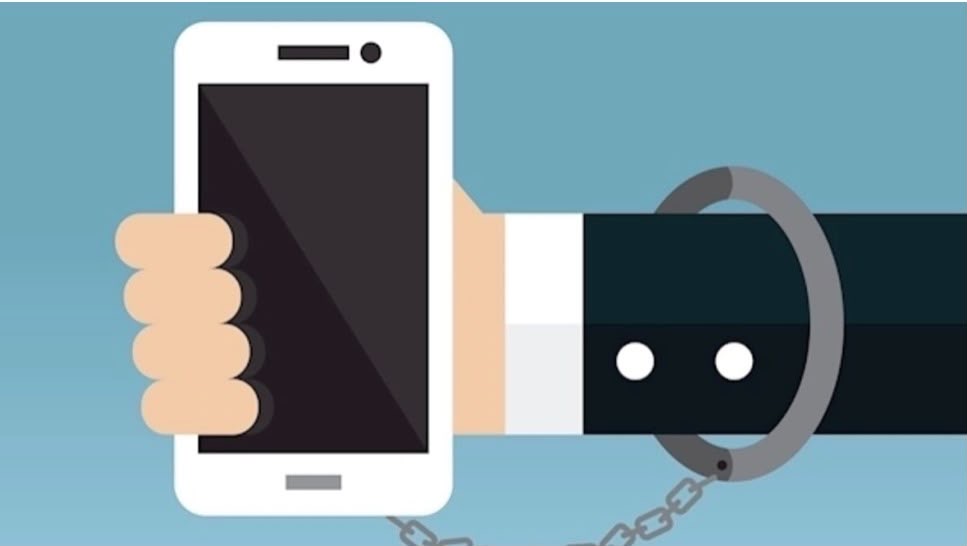
You woke up, checked WhatsApp, scrolled Instagram, watched a video on TikTok, then another, answered a message. Opened Instagram again because, surely, something new must have happened in the last three minutes. checked the news, watched a video someone sent you. Opened TikTok “just for a minute.” And suddenly, half the morning is gone.
Welcome to the weekend.
Except you are not really resting.
You are scrolling.
For many of us, the phone has become the first thing we reach for when we wake up, the thing we carry from room to room and the last screen we see before sleep. It helps us work, communicate, pay bills, find directions, entertain ourselves and keep up with the world.
It is useful, veryuseful.
But sometimes, useful becomes constant.
And that is where Saturday can offer something different.
Not necessarily a complete digital detox. Nobody is asking you to throw your smartphone into the Lagos Lagoon and disappear from civilisation.
Just put it down for a little while.
Your brain deserves an off day too
There is a reason the idea of a digital detox has become increasingly popular.
People are beginning to question the habit of being permanently available to every notification, message, headline and short video that enters their orbit. Around the world, phone-free gatherings, digital-detox retreats and offline social activities are gaining attention as people look for ways to create more space away from their screens.
Researchers are paying attention too.
A randomised controlled trial published in BMC Medicine found that reducing smartphone screen time for three weeks was associated with improvements in well-being, depressive symptoms, stress and sleep quality. The researchers also found that screen use began climbing again after the intervention ended, which says something about just how easily old habits return.
So perhaps the goal is not to become a person who never touches a phone.
That would be unrealistic.
The goal is to become someone who knows when to put it down.
What happens when the scrolling stops
Try something simple today.
Put your phone on silent.
Not vibration.
Silent.
Leave it somewhere you cannot automatically reach for it every thirty seconds.
Go outside.
Take a walk without documenting it.
Eat without watching a video.
Sit with someone and actually listen to their story.
Read a few pages of that book you've been postponing.
Play music without opening another app every time a notification appears.
Or do absolutely nothing.
Yes, nothing.
You don't have to turn every free hour into a productivity challenge.
You don't have to learn a new skill.
You don't have to start a side hustle.
You don't have to “maximise” your Saturday.
Sometimes sitting quietly, staring through a window and allowing your mind to wander is enough.
Your phone isn't the enemy
This is not an anti-technology campaign.
Your phone is probably doing more work for you than some people in your contact list.
It connects you to family.
It helps you work.
It gives you access to information.
It lets you pay for things, send money, book services and keep track of your everyday life.
The problem isn't necessarily having a smartphone.
The problem is when the smartphone starts deciding where your attention goes.
That distinction matters.
A recent 2026 study on evening smartphone use and sleep also found that the relationship is more complicated than the simple claim that “phone before bed equals bad sleep.” The researchers found some unexpected associations, reinforcing the need to think about how and why we use our phones rather than treating every form of screen use as equally harmful.
Watching an educational video is not the same as endlessly refreshing social media.
Calling your mother is not the same as spending an hour doomscrolling.
Paying a bill is not the same as opening an app without knowing why you opened it.
Intent matters.
Try a Saturday experiment
You don't need seven days.
Start with one hour.
Choose an hour today when you will deliberately stay away from social media.
Then notice what happens.
Do you feel restless?
Do you instinctively reach for the phone?
Do you suddenly remember five things you wanted to search?
Or do you discover that the world continues perfectly well without you refreshing your feed every five minutes?
Maybe you'll discover that the quiet was nice.
Maybe you'll discover that you actually had more time than you thought.
Maybe you'll even notice the things your screen has been competing with for your attention, the conversation, music, food, sunlight, laughter, your own thoughts.
And when you eventually pick up the phone again, perhaps you'll use it because you want to, not because your thumb automatically took you there.
Because a digital detox doesn't have to mean abandoning technology.
Sometimes, it simply means remembering that you are supposed to be the one in control of it.
So this Saturday, before you ask what is trending, who posted what or what the algorithm has prepared for you next, try something unusual.
Put the phone down.
Look around.
There is a whole weekend happening outside the screen.
Keep the phone useful, not overwhelming
When you do reach for your phone, make it count.
From paying bills and subscriptions to sending money and converting your crypto to Naira, Monica puts useful financial tools within reach without making your money life complicated.
Take the weekend back and when it's time to make your next money move, let Monica do the scrolling for you.
Download Here: https://monica.cash/app