Packed Like Crayfish: The Untold Story of What Nigerian Transportation Is Really Doing to People
Two in front, Four in the back, No negotiation, No complaints. Just your body folded into a geometry it was never designed to hold, wondering at what point this became normal and why nobody is angry enough about it.
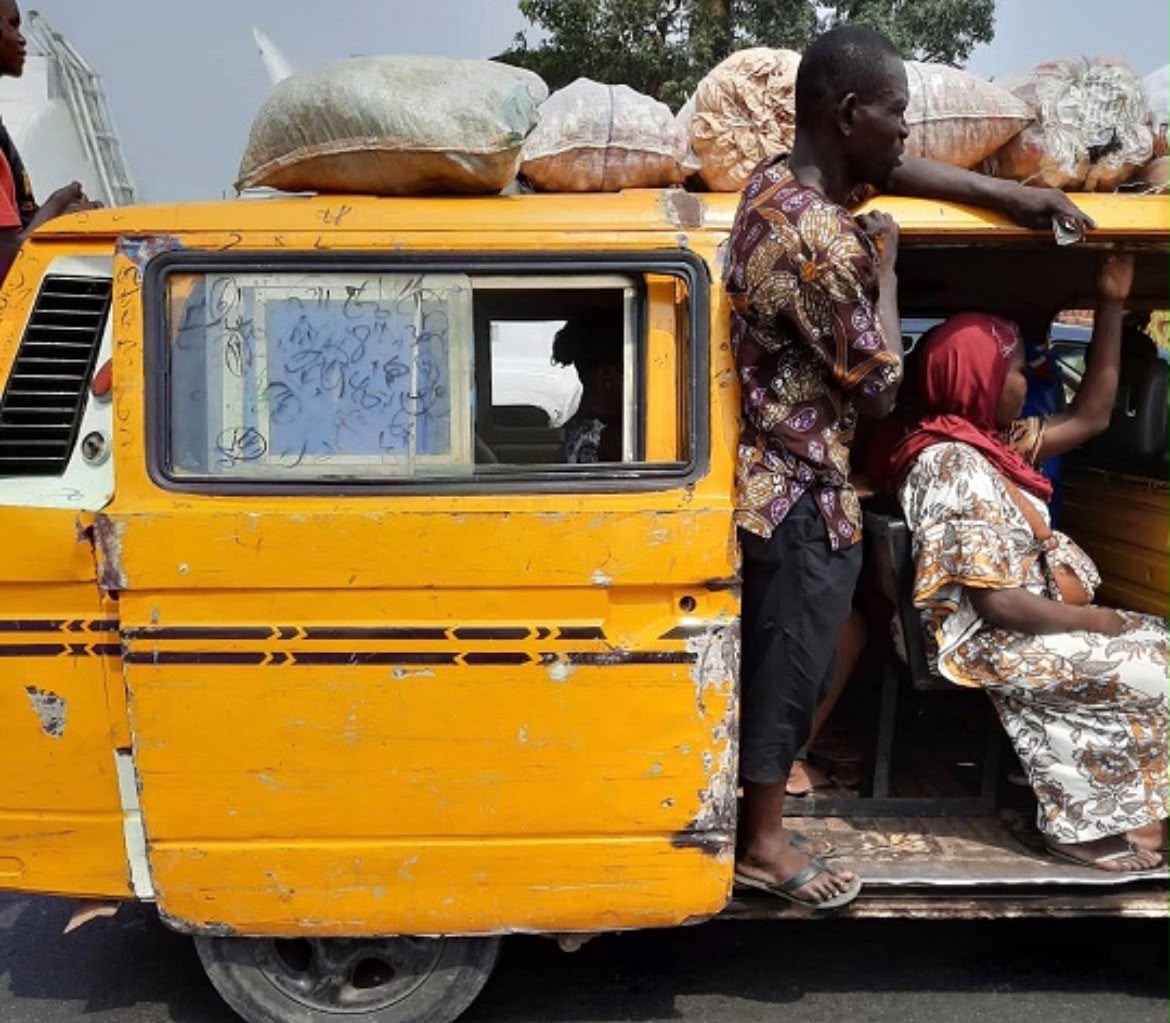
There is an unspoken agreement that every Nigerian commuter has signed at some point, and nobody remembers agreeing to it, but everyone is living by it.
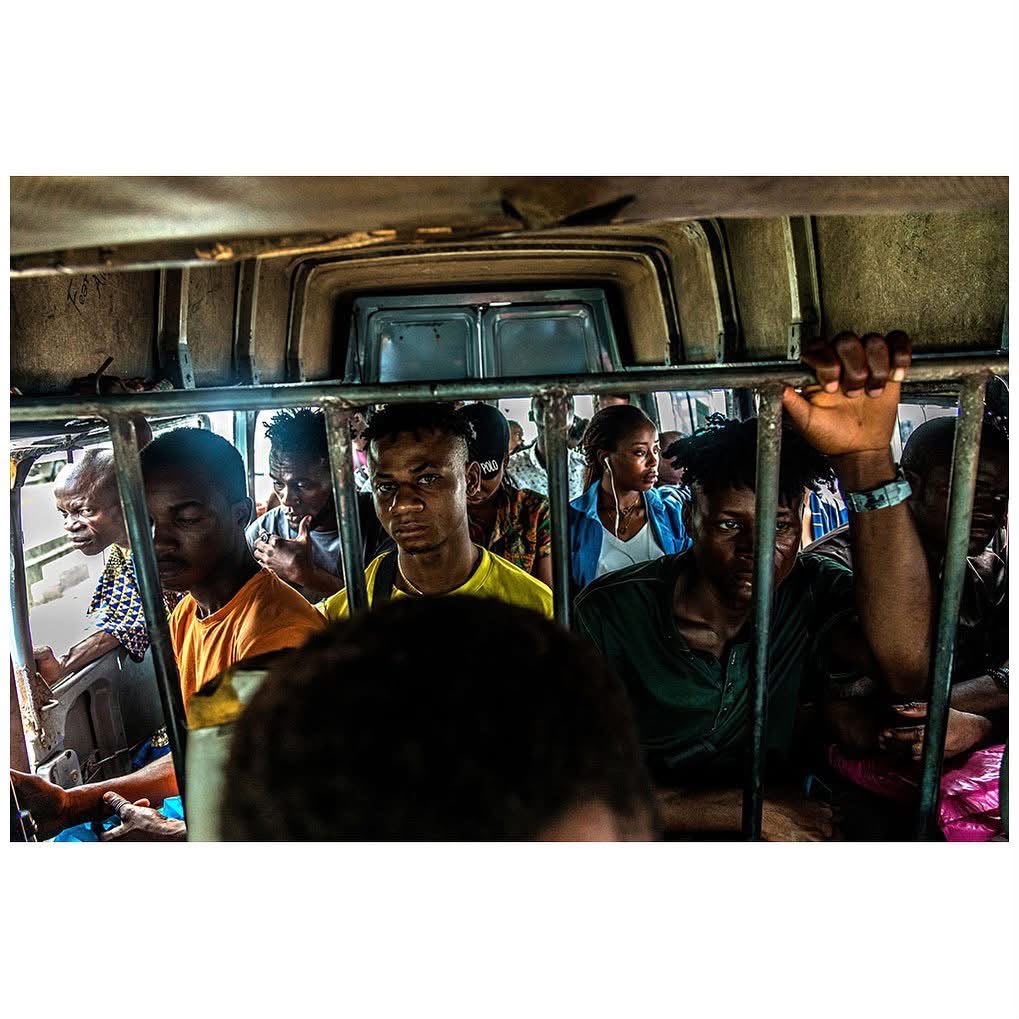
You get in, You adjust, You compress yourself into whatever space is available. You do not complain because complaining will not move the bus and might get you spoken to in a manner that will ruin the rest of your day, and you sit there, packed against a stranger whose elbow is in your ribcage, whose bag is on your lap and whose body heat is doing something to the air in that vehicle that scientists would probably find interesting.
This is Nigerian transportation in 2026 and it has become so normalised that most people have stopped noticing how genuinely unreasonable it is.
The bus was not always like this. The interstate car was not always like this. There was a time, not so long ago in living memory, when four people in the back of a commercial vehicle meant four people with their own seat, their own space and something approximating dignity for the duration of the journey.
What happened?
What the Numbers Say
The National Bureau of Statistics has been quietly documenting something that every Nigerian body already knows.
The average fare paid by commuters for bus journeys within Nigerian cities stood at ₦1,397.27 in April 2026, a 39.83 percent increase year-on-year from ₦999.27 in April 2025. By May 2026 it had risen further to ₦1,431.25. Intercity bus travel averaged ₦9,607 in April 2026, a 21.6 percent year-on-year increase.
Transport fares across Nigeria have roughly tripled between 2020 and 2026 on most major routes, driven by fuel subsidy removal in May 2023 which pushed petrol prices to between ₦800 and ₦1,200 per litre in many states, naira depreciation that made vehicle spare parts dramatically more expensive, inflation that increased the operational cost of running every vehicle on every road and an infrastructure deficit that means those roads are costing operators more in maintenance than any sane business model should absorb.
The Lagos State government announced a 13 percent BRT fare increase in February 2026, even as commuters complained about overcrowded buses, long waiting times and unreliable service delivery.
Pay more. Get less. Sit closer together.
That is the deal.
The Four-In-The-Back Situation
Here is what nobody is writing op-eds about but everyone is experiencing.
The back seat of a Nigerian interstate vehicle, that was once understood to hold three people comfortably or four at a push in extraordinary circumstances, has quietly been redefined by the transport industry to hold four people as the standard, non-negotiable, this-is-what-you-paid-for arrangement, and the standard has been further compressed by a combination of factors that individually seem reasonable and collectively produce a situation where a person of average Nigerian build is being asked to share forty centimetres of horizontal space with three other people of average Nigerian build for journeys that can last four, six, eight or more hours.
The short distance version of this is bad. The interstate version is something else.
You are packed next to a stranger for hours. The air conditioning may or may not work. The seat may or may not recline to an angle that is meaningfully different from the angle it started at. The road may or may not cooperate. The driver may or may not feel that his passengers’ comfort is relevant to the performance of his duties. And the conductor, should there be one, will speak to anyone who raises a concern with the kind of authority that suggests the person raising the concern is the problem and not the conditions that generated the concern.
If you do not like it, come down. Someone else will enter.
And they will. Because the alternative is not entering and the alternative is often worse.
Is This the Economy? The Population? Or Just Greed?
Honestly it is all three and separating them is harder than it looks.
The economy created the conditions. Fuel prices tripling since 2023 meant every vehicle operator had to either raise fares, reduce services or find ways to extract more revenue per journey, and the easiest lever available to transport operators across Nigeria was the number of passengers per vehicle, because increasing the number of passengers per trip is immediate, requires no investment and costs nothing except the comfort and dignity of the people inside the vehicle.
The population made it worse. Nigeria’s urban population is growing at a rate that road infrastructure and public transport capacity have consistently failed to match, which means more people competing for the same buses, the same seats and the same space, and the economics of that competition always resolve in one direction, operators know demand exceeds supply and price and pack accordingly.
But greed has also played its part, and pretending otherwise would be dishonest, because the decision to sell a fourth seat in a space designed for three is not exclusively an economic necessity, it is a revenue calculation, and the calculation consistently prioritises the operator’s income over the passenger’s experience in ways that go beyond what pure economics alone would dictate.
The conductor who tells a complaining passenger to come down if they do not like it is not simply enforcing an economic reality. He is enforcing a power dynamic that exists because passengers have internalised the idea that their comfort is a luxury rather than a reasonable expectation of a paid service, and the industry has never been seriously challenged on that idea by regulation, consumer protection or organised passenger advocacy.
Why Nobody Is Talking Loudly Enough About This
Part of the reason Nigerian transportation conditions do not generate the kind of sustained public outrage they probably deserve is that everyone is experiencing them simultaneously.
There is no reference class of people who are not being packed into buses, not being spoken to rudely by conductors, not paying 40 percent more for less space than they had a year ago, so the comparison that usually generates outrage, the awareness that things are worse for you than they are for someone else, is harder to make.
Nigerians have also developed an almost architectural capacity for adaptation, building workarounds for difficult conditions so efficiently and so quickly that the condition itself stops registering as something to be fixed and starts registering as simply how things are, and how things are becomes the new normal, and the new normal is four in the back and silence about it.
This does not mean it is acceptable. It means it is accepted, which is a different thing entirely.
The difference matters because accepted conditions do not generate the political and consumer pressure that produces change, and Nigerian transportation will not improve meaningfully until enough people decide that their physical dignity during a paid journey is something they are entitled to demand rather than grateful to receive.
What Would Actually Help
More organised public transport that competes with the informal sector and gives passengers a genuine alternative, better road infrastructure that reduces operators’ maintenance costs and allows them to move passengers without pricing dignity out of the equation, fare regulation that balances operator sustainability with passenger protection, enforcement of vehicle capacity standards that are currently on paper and nowhere else, and a cultural shift in how the transport industry relates to the people it serves, from the driver who will not adjust his mirror to the conductor who speaks to seated paying customers like they are inconveniencing him by existing.
None of this is impossible. All of it requires sustained pressure from the people inside those back seats, which begins with acknowledging that the pressure belongs there in the first place.
Four in the back is not normal. It became normal. That is different, and the difference is worth being uncomfortable about.
While the road sorts itself out, let your money move without friction. Monica converts your crypto to naira instantly, zero stress, zero extra passengers.
Your money deserves better than a middle seat, Give it Monica.
Download monica now:https://monica.cash/app