Everything You Need to Know About Solana ETFs in 2026
Solana ETFs just crossed $904 million in assets under management and most people still do not fully understand what they are. Here is the complete picture.
Solana has spent the last two years proving itself as one of the most active and capable blockchain networks in the world, processing billions of transactions weekly, hosting a thriving ecosystem of applications and attracting serious institutional interest, and now that institutional interest has a new vehicle, one that does not require you to touch a crypto wallet at all.
What Is a Solana ETF
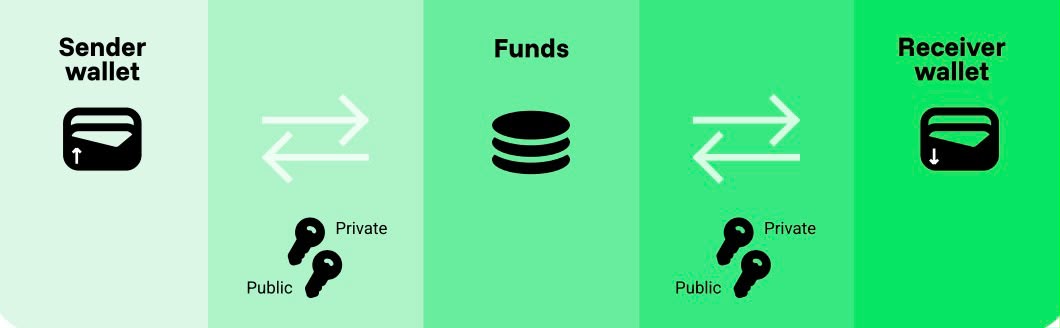
A Solana ETF is an exchange-traded fund that allows investors to gain exposure to Solana's price movements without directly holding the cryptocurrency itself, meaning anyone with a standard brokerage account can invest in SOL the same way they would buy shares in a company, no private keys, no seed phrases, no risk of losing access to funds because of a forgotten password or a misplaced hardware wallet.
It tracks the price of Solana, rises when SOL rises, falls when SOL falls, and sits in a regulated, familiar investment structure that traditional investors already understand and trust.
How Solana ETFs Work
Solana ETFs can be structured in two main ways. The first is a spot ETF, which holds actual SOL tokens, meaning the fund buys and custodies real Solana on behalf of its investors, with the fund's value directly tied to the current market price of SOL. The second structure tracks SOL-related assets or reference rates without holding the token directly, though spot ETFs are now the dominant structure in the US market.
Some Solana ETFs go a step further by incorporating staking, which involves committing a portion of the fund's SOL holdings to support Solana's blockchain operations in exchange for additional rewards, the same way a savings account earns interest, and those rewards are either reinvested into the fund or distributed to shareholders depending on the specific product's structure.
The 21Shares Solana ETF, ticker TSOL, is one of the most prominent examples, tracking SOL's performance using an established reference rate while staking between 70 and 90 percent of its holdings through providers including Figment, distributing the resulting rewards back to shareholders and charging a 0.21 percent annual fee paid in SOL, a fee that has been waived entirely until October 2026.
Products currently available in the US market include Bitwise's BSOL, 21Shares' TSOL, Grayscale's GSOL, Fidelity's FSOL, VanEck's VSOL and the REX-Osprey Solana Staking ETF, all held in custody by regulated institutions including Coinbase, Anchorage and BitGo.
Benefits of Solana ETFs
The most immediate benefit is ease of access, because buying a Solana ETF requires nothing more than a standard brokerage account, removing every technical barrier that has historically kept traditional investors away from cryptocurrency, no wallet setup, no exchange registration, no custody risk and no anxiety about losing a private key.
For ETFs that incorporate staking, there is the additional benefit of earning rewards simply by holding the fund, rewards that function similarly to dividends or interest payments and that increase the total return of the investment beyond simple price appreciation.
Solana ETFs also offer diversified exposure in some cases, holding SOL alongside related ecosystem assets, and they operate within a regulated SEC-overseen structure that provides a level of transparency and investor protection that direct crypto holdings do not carry in the same form, which matters considerably for institutional investors with compliance requirements and fiduciary obligations.
Risks and Considerations
Solana's price can fluctuate significantly, and unlike a stablecoin or a bond, a Solana ETF carries the full volatility of the underlying asset, meaning the fund's value can drop sharply and quickly when market conditions turn, as they have throughout 2026 with SOL trading approximately 57 percent below where it was priced when the first ETFs launched in October 2025.
Tracking error is another consideration, because the ETF price does not always perfectly match SOL's live market price, particularly during periods of high volatility or low trading volume, and investors may find themselves buying or selling at a slight premium or discount to the actual value of the underlying SOL.
Staking, while it can increase returns, introduces additional risks including operational risk from the staking providers, technological risk from the blockchain infrastructure itself and regulatory risk from potential future rules around staking income, and none of these risks are hypothetical, they are the same risks that have appeared in staking arrangements elsewhere in the crypto space.
Regulatory uncertainty remains the broadest risk across the entire Solana ETF space, with the classification of SOL as either a commodity or a security still unresolved in the United States, and the outcome of that classification, expected to become clearer following the CLARITY Act's progress through the Senate, will have meaningful implications for how these products are regulated, taxed and made available to investors going forward.
Current Market
Spot Solana ETFs launched in the US in late October 2025 and by early 2026 total assets under management across all products had crossed $1 billion, with the most recent figures from The Block showing $904 million in combined AUM across BSOL, TSOL, GSOL, FSOL and other products in the space.
July 2026 has been a particularly notable month for Solana ETF flows, with positive net inflows recorded on every single trading day of the month so far, a consistency that neither Bitcoin nor Ethereum ETFs matched in the same period, and May 2026 produced $115 million in monthly net inflows, the strongest single month since the October 2025 launch.
The investor profile behind these flows appears to be patient and conviction-based rather than momentum-driven, with capital continuing to enter the space even as SOL trades well below its launch price, and the broader altcoin ETF market, which Solana and Hyperliquid together dominate with nearly 80 percent of non-BTC and non-ETH ETF volume, is developing its own institutional logic separate from the Bitcoin and Ethereum narrative.
Solana ETFs are less than a year old, hold 2 percent of SOL's market cap compared to Bitcoin ETFs' 9 percent, and are recording consistent inflows through a significant price drawdown, all of which suggests the story of institutional adoption in this space is considerably earlier than it might appear from the outside.
Whether the gap between 2 percent and 9 percent closes depends on regulation, network performance and time, but the direction of travel is already clear.
You do not need an ETF to get started with Solana. Monica lets you convert SOL to naira instantly, fast, simple and built for the way Nigerians use crypto. Your Solana moves faster on Monica.
Convert Your Cryto to Naira Here: https://monica.cash/app