A Pot of Jollof Rice Now Costs ₦27,528 and Nobody Is Laughing
Nigeria's most beloved dish has become a luxury and the numbers behind that statement will make you put down your spoon.
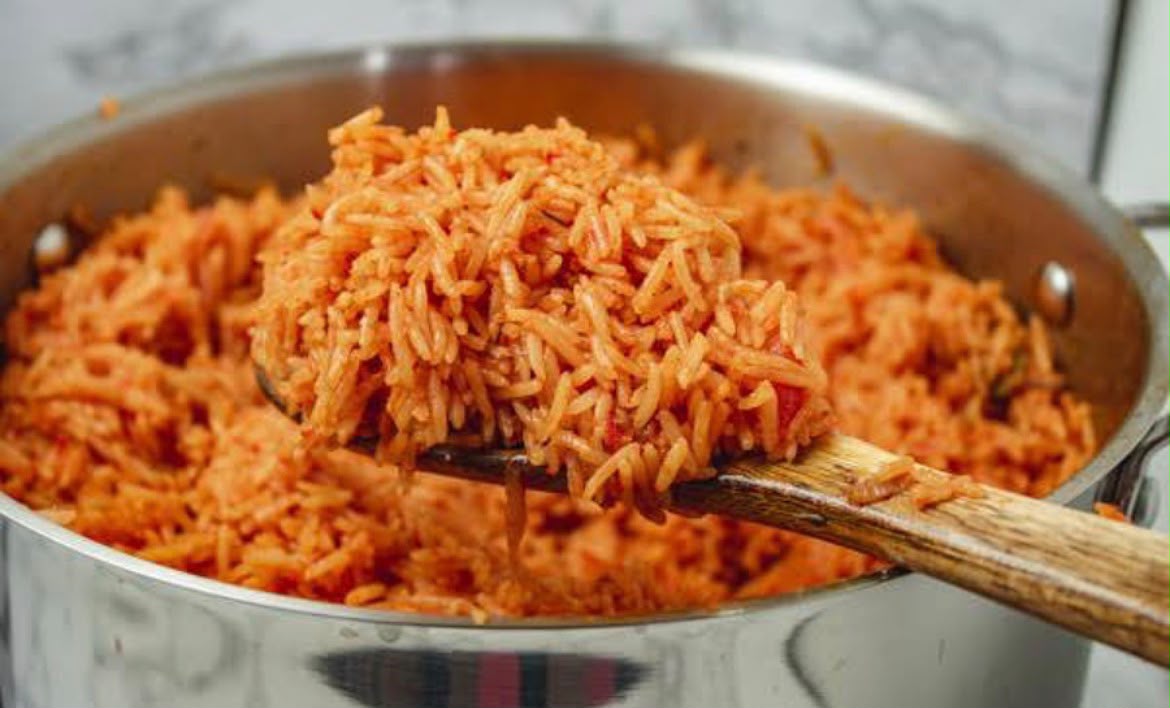
There are certain things Nigerians hold sacred. The superiority of Nigerian jollof over every other jollof on the continent is one of them, and for years that argument has been won confidently, loudly and without apology at every opportunity.
But somewhere between the debate and the dinner table something quietly changed, and a new report from SBM Intelligence has put an uncomfortable number on exactly what changed and by how much.
A pot of jollof rice in Nigeria now costs an average of ₦27,527.85 to prepare, representing a 153 percent increase between March 2023 and June 2025, which means the pot of rice that cost you roughly ₦10,000 two years ago now costs nearly three times that amount, and the ingredients responsible for that surge are not the exotic or optional ones, they are the foundational ones, proteins, pepper, onions and vegetable oil, the non-negotiables that every Nigerian cook knows you simply cannot make jollof without.
This is not a Lagos problem or an Abuja problem. It is a Nigeria problem and the regional breakdown in the SBM data makes that devastatingly clear.
In Abuja a pot of jollof rice that cost ₦4,095 in July 2016 now costs ₦32,125, a figure that has more than doubled since 2021 alone, driven by fuel subsidy removal, foreign exchange adjustments and the kind of compounding inflation that does not announce itself all at once but arrives quietly in every market visit, every grocery run and every moment you pick up ingredients and feel the weight of your basket before you feel the weight of your wallet.
In Bauchi the numbers are starker still, a nearly eightfold surge from ₦5,700 in March 2019 to ₦41,050 by June 2024, the highest figure recorded anywhere in the country, driven by logistics costs, insecurity challenges and inflation that in May 2025 was running at 4.85 percent month on month in the state alone, nearly double the national rate.
Port Harcourt recorded the highest single peak in the South-South at ₦32,600, Lagos' Balogun market came in at ₦23,591 in the Southwest and Kano climbed from just below ₦5,000 in mid-2016 to nearly ₦29,300 by May 2025, a trajectory that maps almost perfectly onto every significant economic policy shift Nigeria has experienced in the last decade.
What makes the SBM Jollof Index more than just an interesting data point is what it represents as a measurement tool, because jollof rice is not a premium meal or a special occasion dish, it is the baseline, the thing Nigerian families cook when they are cooking normally, when there is no celebration and no particular reason except that it is Tuesday and people need to eat, and when the baseline becomes unaffordable the conversation stops being about food prices and starts being about something more fundamental.
SBM Intelligence notes that food inflation in Nigeria has been decoupling from the general Consumer Price Index, meaning food prices are rising faster than the headline inflation rate captures, driven by deep-seated supply-side issues that lower interest rates or monetary policy adjustments alone cannot resolve, and the organization is urging policymakers to prioritize security, infrastructure and agricultural support as the structural interventions that actually address the root causes rather than the symptoms.
Nigeria's headline inflation eased to 22.22 percent in June 2025, down from a peak of 40.87 percent food inflation in June 2024, and that moderation is real and meaningful, but a pot of jollof rice at ₦27,528 is not a number that feels like relief to the person standing in the market trying to feed a family on a budget that has not grown at the same pace as everything around it.
The jollof rice debate will continue. Nigeria will keep winning it. But the conversation about what it actually costs to put that pot on the fire deserves the same energy and the same passion that Nigerians bring to defending their jollof, because the numbers in this report are not just statistics, they are the sound of a kitchen getting harder to run every single month.
When the cost of living keeps climbing your money needs to work harder than ever. Monica helps you convert, save and manage your finances so every naira goes further. Make your money move smarter.
Start Here👉https://monica.cash/app