When USDT Can Be Frozen What Crypto Users Need to Know
A $2.76 million legal dispute involving Tether is putting a familiar question back in the spotlight: how much control does a stablecoin issuer have over the tokens in your wallet?
USDT is designed to make moving value in digital dollars feel simple.
You receive it. You send it. You swap it. You use it across crypto platforms and depending on where you live and the services available, you can eventually convert it back into local currency.
But there is a side of stablecoins that does not get nearly as much attention when everything is working normally.
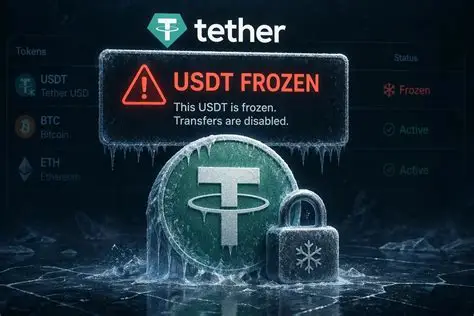
Sometimes, USDT can be frozen.
That question has moved back into the spotlight after Conduit Technology, a payments fintech, filed a lawsuit against Tether over approximately $2.76 million worth of USDT that the company says was frozen and remains inaccessible. The lawsuit was filed in the US District Court for the Southern District of New York.
According to the complaint, Conduit had been holding the funds as working capital in a USDT wallet. The company alleges that Tether froze the entire balance and later refused to release the funds or provide what Conduit considers a sufficient justification for the action. Those are allegations in an ongoing legal dispute, not established findings by the court.
The case is interesting because it highlights something many everyday crypto users may not think about.
USDT may live on a blockchain, but that does not mean every USDT transaction is beyond the issuer's reach.
Tether has previously frozen USDT associated with addresses connected to suspected illicit activity, following requests or investigations involving law enforcement and other authorities. That ability is part of the design of the token and is fundamentally different from holding a decentralised cryptocurrency such as Bitcoin.
So, who controls USDT?
USDT is issued by Tether, while the tokens themselves operate on several blockchain networks.
When you hold USDT, you are holding a digital token whose value is designed to track the US dollar. But Tether maintains mechanisms that can restrict the movement of tokens held at particular blockchain addresses.
For most users, this may never become relevant.
But for someone holding a large balance, running a business that receives stablecoins or moving funds frequently across wallets and platforms, understanding that distinction is important.
A blockchain transaction can be visible and technically valid while the issuer can still take action against particular tokens or addresses.
That is one of the unusual characteristics of centralised stablecoins.
Why the Conduit case matters
The Conduit dispute is not simply about one company and one frozen balance.
It raises a broader question about the relationship between ownership, access and control in the stablecoin economy.
If a company or individual receives USDT legitimately, what circumstances justify restricting access to it? What information should the issuer provide? And what happens when the holder disagrees with the decision?
Those questions become increasingly important as stablecoins move beyond crypto trading and into payments, remittances and international commerce.
Tether itself has continued expanding its stablecoin business.
In its latest quarterly disclosure, Tether said approximately $184.6 billion of USD₮ was outstanding at the end of June 2026, with reserves exceeding its liabilities by about $4.11 billion. It also reported approximately $1.5 billion in quarterly net operating profit, driven largely by its holdings of US government securities and related short-term instruments.
That scale explains why developments involving USDT matter well beyond crypto traders.
What this means for the everyday USDT user
The lesson is not that USDT is suddenly unsafe.
It is that stablecoins are not all built the same way, and users should understand what they are actually holding.
Before sending USDT, check the wallet address, the blockchain network and the destination platform. Keep records of transactions and understand the source of funds you receive. If you use USDT for business, larger balances deserve even more careful record-keeping and compliance checks.
And perhaps most importantly, remember what USDT is designed to be.
It is a digital representation of dollar value, not a traditional bank deposit and not the same thing as holding physical dollars in a bank account.
That distinction becomes especially important when something goes wrong.
The Conduit case will ultimately have to be decided through the legal process. But the question it has put back on the table is already worth asking:
When money moves on a blockchain, who gets the final say?
As USDT becomes increasingly woven into global payments and digital finance, that may become one of the most important questions in the stablecoin conversation.
And for anyone using USDT in Nigeria, understanding how the asset works is just as important as knowing its current naira value.
Need to turn your USDT into naira when it is time to use it? Monica gives you a straightforward route from crypto to your Nigerian bank account. Download Monica, make your conversion and let your digital dollars make their next move.
Download Monica Here: https://monica.cash/app