What Nigeria’s Money Has Looked Like for 66 Years
From pounds and shillings to the naira, electronic transfers and cryptocurrency, Nigeria’s financial story is also a story of how its people have adapted to changing times, new technology and new ways of moving money.
Imagine walking into a Nigerian market in 1959 with the money your grandparents used. Now imagine explaining to a trader from that era that, decades later, people would pay for goods by tapping their phones, transfer money without visiting a bank and convert cryptocurrency into naira through an app.
The conversation would probably take a while.
But that is the story of money. It changes with the people who use it, the economy they live in and the technology available to them. In Nigeria, the journey has been particularly remarkable, moving from physical currency rooted in the colonial era to a financial world where transactions can begin and end on a mobile phone.
As Nigeria reflects on 66 years of independence, its monetary history offers an interesting way to understand how the country has changed, and how Nigerians have continually adjusted to new financial realities.
Before the Naira, There Was the Pound
Nigeria's currency story did not begin with independence in 1960. Before the modern banking system took shape, communities across the territory used different forms of exchange, including cowries, manillas and other locally recognised items. Under colonial administration, pounds, shillings and pence became part of the monetary system.
The Central Bank of Nigeria began issuing Nigerian banknotes and coins on July 1, 1959, replacing currency issued by the West African Currency Board. The move gave Nigeria its own currency-issuing institution before independence. Banknotes were subsequently redesigned to reflect the country's republican status in 1962 and changed again in 1968 during the Nigerian Civil War.
For people living through those years, money was tangible. It was counted by hand, tucked into purses, kept in wooden boxes or stored away for important family needs. A transaction depended on having the right notes and coins, and getting change was part of everyday shopping.
Then came a change that would permanently reshape the way Nigerians counted their money.
1973: The Naira Makes Its Entrance
On January 1, 1973, Nigeria replaced the pound with the naira and adopted a decimal currency system. One naira was equivalent to ten shillings, while one hundred kobo made one naira. The initial banknotes included 50 kobo, ₦1, ₦5 and ₦10 denominations.
It was more than a new name printed on banknotes. The change established a monetary system that Nigerians would come to recognise across generations.
The naira became part of everyday life: schoolchildren learnt to count in naira and kobo, workers received salaries in naira, traders set prices in naira, and families built their budgets around it. Over time, additional denominations were introduced as economic activity and payment needs evolved.
Yet, while the currency remained familiar, its purchasing power did not remain constant.
When the Numbers Changed, So Did the Meaning of Money
Anyone who has listened to older Nigerians discuss the price of food, transport, rent or household goods knows how frequently the conversation returns to what things used to cost.
Those memories reflect a wider economic history. Nigeria has experienced inflation, exchange-rate adjustments, changing foreign-exchange policies and periods of economic uncertainty. The value of the naira against other currencies has also shifted considerably over time.
The Central Bank introduced different foreign-exchange arrangements as economic conditions changed, including the Second-tier Foreign Exchange Market in 1986. Subsequent reforms altered how exchange rates were determined and how foreign currency was allocated.
For ordinary Nigerians, these developments were not merely policy decisions discussed in financial newspapers. They influenced the cost of imported goods, business expenses, travel, education abroad and the amount families needed to meet everyday obligations.
People adjusted in different ways. Some saved towards major purchases, others invested in assets, while businesses learnt to account for exchange-rate movements when setting prices. Foreign currency also became an increasingly important consideration for people paying international fees, purchasing goods from overseas or receiving money from abroad.
The lesson was not that money had become useless. It was that understanding money had become more important.
From Cash in Hand to Money on a Screen
For decades, physical cash remained central to everyday transactions. Banks, cheques and automated teller machines gradually expanded the ways people could access their funds, but a major shift came with the growth of electronic banking and mobile payments.
Sending money to someone no longer always required a physical journey. Customers could transfer funds between bank accounts, pay bills electronically and carry out transactions without handling banknotes.
Mobile banking, USSD services, point-of-sale terminals and digital payment platforms helped make these transactions part of everyday Nigerian life.
A trader could receive a transfer from a customer. A student could pay a fee from a phone. A family member could send money home without travelling to deliver it personally. Businesses could collect payments and track transactions digitally.
Convenience changed expectations. People increasingly wanted payments to be accessible, straightforward and available wherever they needed them.
But the transition also came with familiar challenges: failed transfers, network interruptions, fraud risks and the need to protect personal banking information. Moving money onto a screen did not remove the need for trust. It made trust even more important.
Then Cryptocurrency Entered the Conversation
As digital finance expanded, another form of value began attracting attention among Nigerians: cryptocurrency.
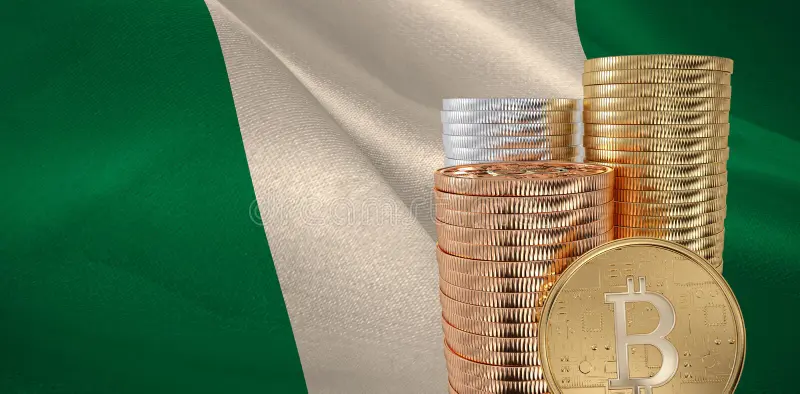
Bitcoin introduced many people to the idea of digital assets operating on a blockchain rather than being issued by a central bank. Other assets followed, including Ethereum and Solana, while stablecoins such as USDT and USDC offered tokens designed to track the value of the US dollar.
For Nigerians, interest in cryptocurrency has grown around several uses, including trading, international payments, access to digital markets and receiving value across borders. Some people have also turned to dollar-linked stablecoins when considering how to manage exposure to fluctuations in the naira.
However, cryptocurrency is not the same as holding money in a conventional bank account. Prices can fluctuate sharply, platforms carry different risks, and stablecoins are not risk-free simply because they are designed to track another currency. Users must also understand applicable regulations, transaction fees, network requirements and the security of the services they use.
The technology has nevertheless added another dimension to Nigeria's evolving financial landscape. Money is no longer discussed only in terms of notes, coins and bank balances. Digital assets have become part of the conversation about how value can be transferred, converted and used.
The New Chapter: Making Digital Value Useful in Everyday Life
Here is where Nigeria's financial journey meets the present.
Having access to digital assets is one thing. Being able to turn them into money that can be used for everyday expenses is another.
For someone who receives cryptocurrency, the practical question may be straightforward: how do I convert it into naira and use the proceeds to pay for what I need?
That is the everyday gap Monica is designed to address.
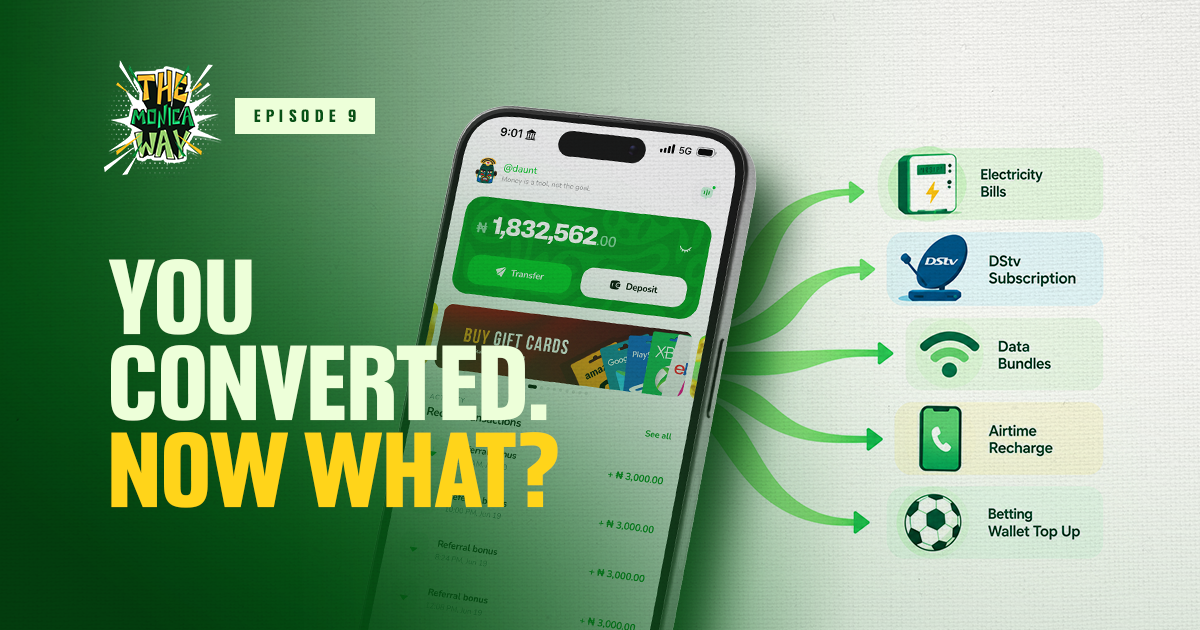
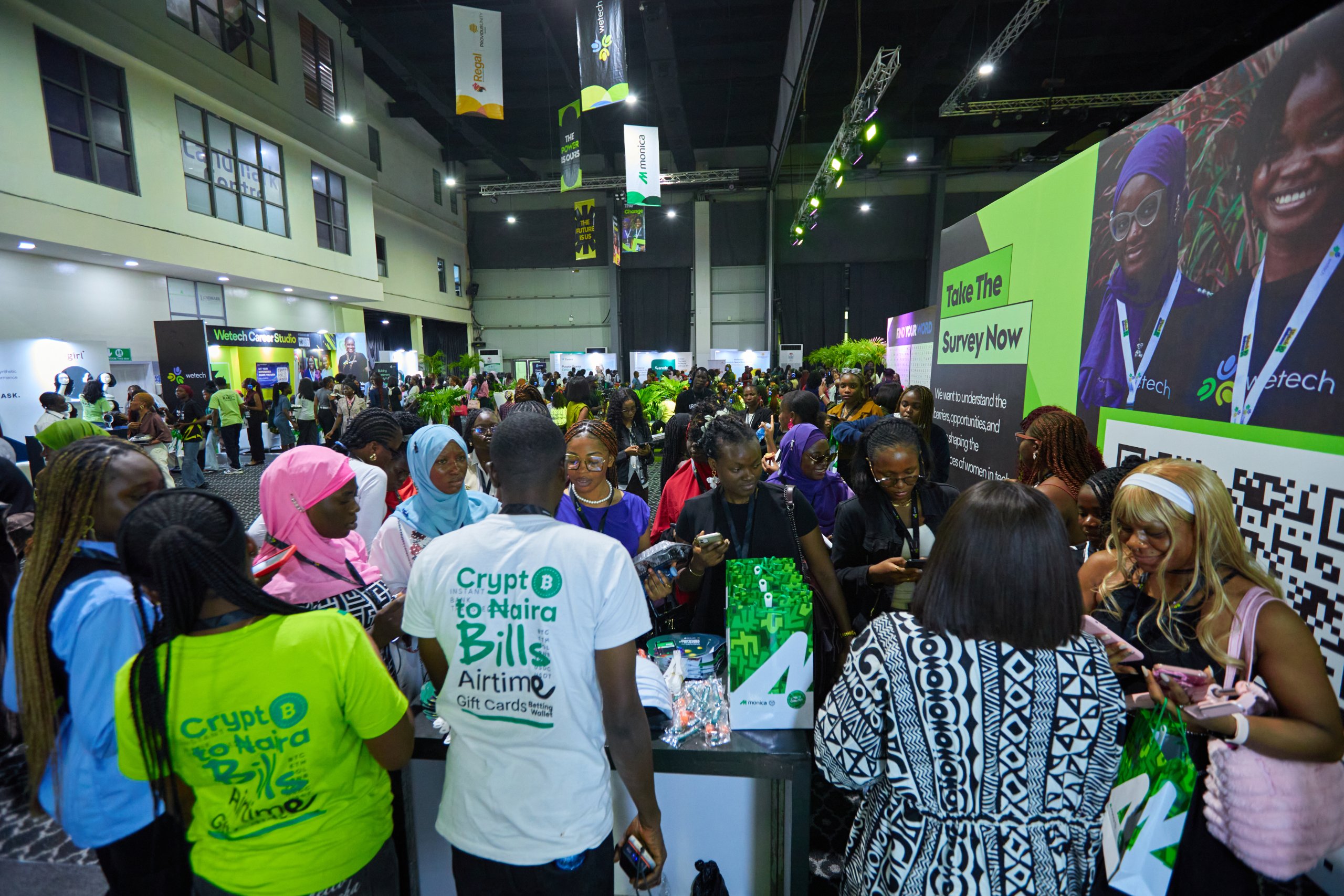
Monica is a crypto-to-naira conversion app that allows users to convert supported cryptocurrencies into naira. It also offers everyday financial utilities, including airtime and data purchases, bill and utility payments, subscriptions and betting wallet funding.
Monica is not a cryptocurrency storage wallet where users keep their USDT or Bitcoin balances. Its core conversion service helps users turn supported crypto assets into naira, while its payment features bring other everyday transactions into the same app.
For a user navigating an increasingly digital financial world, the appeal is practical: digital assets can be converted into spendable local currency, while common payments can be handled through a mobile platform.
That does not mean every financial problem has disappeared, or that digital assets are suitable for everyone. Users should understand the risks, check conversion rates and transaction details before confirming, and use only official app channels.
Still, the broader shift is worth recognising. The same country that once counted money in pounds and shillings now has people exploring digital assets, making electronic payments and looking for simpler ways to move between different forms of value.
The Money Will Keep Changing. So Will We.
Nigeria's financial history is not a straight line from old banknotes to a perfect digital future. It is a story of reforms, economic pressures, new opportunities and difficult adjustments.
The naira remains the country's legal tender, issued by the Central Bank of Nigeria. Digital payments have changed how many people use it, while cryptocurrency has introduced additional ways to transfer and convert value. Each development comes with its own benefits, limitations and responsibilities.
What connects these chapters is the everyday Nigerian trying to make money work: the trader collecting payment, the parent paying school fees, the freelancer receiving income, the small business owner managing expenses and the young person learning to navigate digital finance.
The form of money may change, but the questions remain familiar. How do I receive it? How do I use it? How do I make payments? And how do I make informed decisions about what I earn?
Sixty-six years of independence offer plenty to reflect on, including how far the country's financial systems have travelled. From the notes in a grandparent's purse to a payment confirmed on a smartphone, the journey reveals a nation continually adapting to the ways money moves.
And if the next chapter of that journey is already taking shape on your phone, make sure you understand the tools available to you.
Explore your next money move with Monica. Whether you need to convert supported cryptocurrency into naira, buy airtime or data, pay a utility bill or handle a subscription, Monica brings these everyday transactions together in one app.
The story of money keeps moving. Find your way through it with Monica. Download the app at https://monica.cash/app.