The U.S. Just Stalled Its Biggest Crypto Bill. Why Should Nigerians Care?
A major U.S. crypto bill has hit a roadblock in the Senate. The debate is happening in Washington, but the questions it raises about regulation, stablecoins and the future of digital assets extend far beyond America.
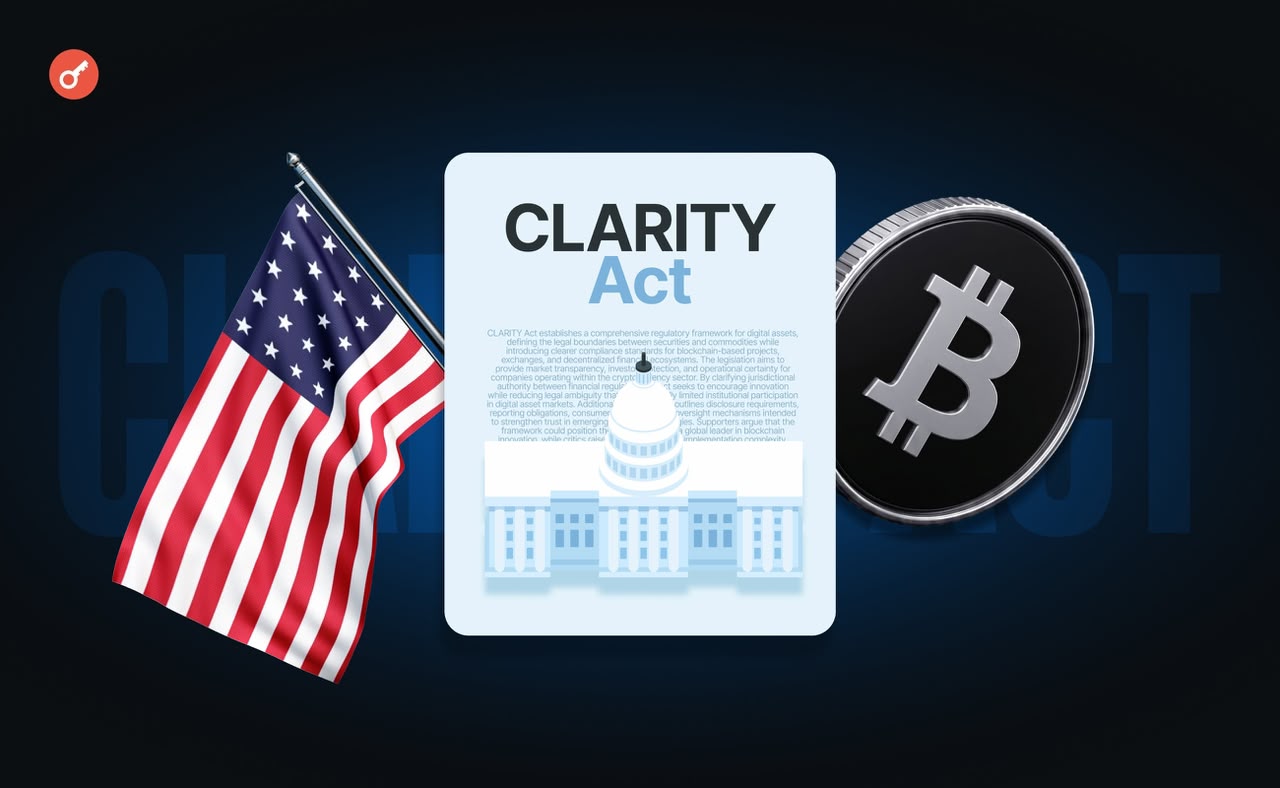
For more than a year, the United States has been trying to answer a question the crypto industry has been asking for even longer:
Who exactly is in charge of crypto?
The U.S. Senate was expected to take another major step towards answering that question this week with the CLARITY Act, a proposed law designed to establish a federal framework for digital assets.
Instead, the bill hit a wall.
On September 15, the Senate voted 49 to 50 on a procedural motion to advance the legislation. It needed 60 votes to move forward.
It did not get them.
That does not mean the bill has been permanently killed, but it does mean one of the biggest attempts to create comprehensive U.S. crypto rules has been stalled at a critical moment.
And if you use crypto from Nigeria, you may reasonably wonder:
Why should something happening in Washington matter to me?
The answer is that crypto stopped being an American story a long time ago.
First, What Was the CLARITY Act Trying to Do?
The Digital Asset Market CLARITY Act was designed to create clearer rules around the U.S. digital asset market.
One of its central goals was to clarify the responsibilities of two major U.S. regulators, the Securities and Exchange Commission and the Commodity Futures Trading Commission, particularly around which digital assets and activities fall under each agency’s oversight.
The legislation also included provisions covering crypto platforms, consumer protections, anti-money-laundering requirements and stablecoins.
In simple terms, the industry wanted something that traditional financial markets have had for years: a clearer rulebook.
Instead of companies constantly asking whether a particular token or activity falls under one regulator or another, the proposed framework was intended to draw clearer lines.
That clarity matters because regulation does not only determine what companies can do.
It can influence where companies build, where investors put money, which financial institutions work with crypto businesses and how easily crypto products can reach ordinary users. (Reuters)
So Why Did It Stall?
This is where the story became bigger than crypto.
The final version of the bill became caught up in disagreements over ethics provisions involving public officials and digital assets.
Democratic lawmakers argued that the legislation did not go far enough in preventing senior government officials from benefiting from crypto ventures while also having influence over the rules governing the industry.
Republican lawmakers backed the bill as an important step towards creating regulatory clarity and argued that it would provide protections and clearer rules for people and businesses using digital assets.
The two sides did not reach an agreement before the vote.
The result was 49 votes in favour and 50 against, leaving the bill short of the 60 votes required to advance.
There were also disagreements over stablecoin rewards and concerns from parts of the banking industry about how certain crypto products could affect traditional banks.
So although the headline says “crypto bill fails,” the underlying story is much more complicated.
It is a debate about regulation, consumer protection, financial institutions, stablecoins and the role of government officials in a rapidly growing industry.
What Happens to Crypto Regulation Now?
The failure does not mean crypto regulation in America simply stops.
The SEC and CFTC can still use their existing authority, and U.S. regulators can continue developing rules within the powers they already have.
But without a comprehensive law from Congress, some of the industry’s biggest questions remain unresolved.
That uncertainty matters.
For a company building a crypto product, regulatory uncertainty can influence how it operates.
For an investor, it can influence risk.
For a financial institution, it can influence whether and how it engages with crypto businesses.
And for the wider crypto market, regulatory uncertainty can become another source of volatility.
Bitcoin and other major cryptocurrencies came under pressure after the Senate vote, with market reports linking the decline partly to the setback surrounding the legislation.
But crypto markets have never needed much encouragement to move.
Why Should Nigeria Be Watching?
Because Nigerian crypto users are already part of the same global system.
A Nigerian freelancer can receive payment from a client abroad in USDT.
A developer can earn Bitcoin from an international project.
A business can use stablecoins for cross-border transactions.
A user can hold crypto today and need naira tomorrow.
The transaction may happen in Lagos, Abuja, Port Harcourt or anywhere else in Nigeria, but the asset itself exists within a global network.
That means decisions made in major financial centres can eventually influence the companies, platforms, liquidity providers and financial institutions that serve users everywhere else.
The U.S. is one of the world’s largest financial markets. When its regulators and lawmakers establish clearer rules, companies around the world pay attention.
When lawmakers fail to agree, they pay attention too.
And Then There Is the Stablecoin Question
Stablecoins are particularly important to this conversation.
Unlike assets such as Bitcoin, which can experience significant price swings, stablecoins such as USDT and USDC are designed to maintain a relatively stable value against reference assets such as the U.S. dollar.
For users in countries where currencies can be volatile, that makes stablecoins particularly useful for certain forms of cross-border payments and digital transactions.
But their growing use also creates regulatory questions.
Who should supervise stablecoin issuers?
What protections should users have?
Should stablecoin platforms be allowed to offer rewards?
How should banks compete with or work alongside them?
These were among the issues surrounding the wider CLARITY Act debate, showing that the future of crypto regulation is no longer simply about Bitcoin.
It is increasingly about the infrastructure surrounding digital money.
The Bigger Picture for Nigerian Crypto Users
There is a temptation to see regulation as something that only concerns companies and governments.
For everyday users, it can feel distant.
But regulation eventually finds its way into the products people use.
It can determine which platforms can operate in a market, what information users receive, how transactions are monitored, how companies interact with banks and what protections exist when something goes wrong.
That is why the U.S. debate is worth watching from Nigeria.
Not because Nigerian crypto users need to follow every argument in the U.S. Senate.
But because the rules being created in major financial markets can shape the environment in which global digital assets move.
What Happens Next?
For now, the CLARITY Act has been stalled rather than permanently erased from the conversation.
Senator Thom Tillis changed his vote to oppose the measure, allowing him to enter a motion for reconsideration under Senate procedure. That leaves a possible route for the legislation to return, although the path forward remains uncertain.
What is clear is that the push for a comprehensive U.S. crypto framework has encountered another major obstacle.
And the industry is watching closely.
Because crypto has spent years asking governments for clearer rules.
Now, the question is whether governments can agree on what those rules should actually look like.
What This Means for You
If you are holding or using crypto in Nigeria, the immediate lesson is not to panic because a U.S. bill failed to advance.
It is to understand that the crypto industry is still evolving.
Prices will move.
Regulations will change.
Platforms will adapt.
New financial products will emerge.
And the relationship between crypto and traditional finance will continue to develop across different countries.
The smartest crypto user is not simply the person watching the price.
It is the person paying attention to the system behind the price.
The rules are changing. The market is changing. And the way we move money is changing with it.
Stay Connected to Your Crypto
Whether the market is moving because of regulation, interest rates or investor sentiment, one thing remains important: knowing what is happening to the assets you use.
When you are ready to convert supported crypto assets to naira, Monica gives you a direct route from crypto to your Nigerian bank account. Your crypto journey does not end when the market makes the news. Sometimes, that is when you need to understand it even better.
Explore Monica Now: https://monica.cash/app Crypto in, Naira out, The choice is yours.