The CBN Just Redrew the Rules for Every Bank and Fintech in Nigeria
Four sweeping directives, Two hard deadlines. One message from the apex bank: the era of unchecked expansion in Nigeria’s digital payments ecosystem is over.
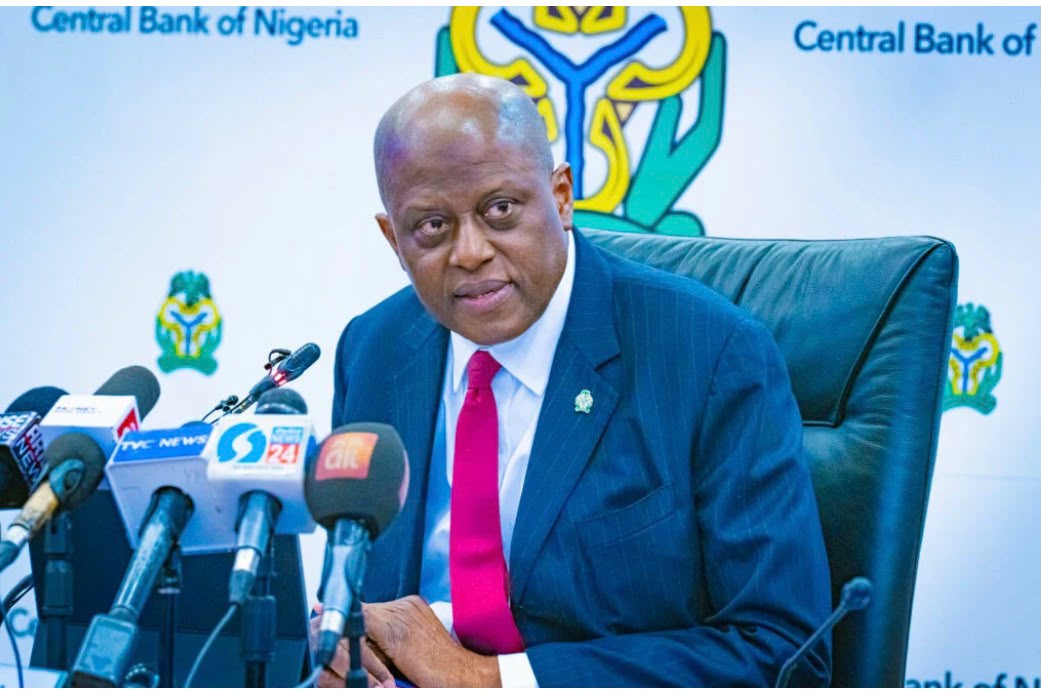
Four sweeping directives, Two hard deadlines. One message from the apex bank: the era of unchecked expansion in Nigeria’s digital payments ecosystem is over.
On June 15 2026 the Central Bank of Nigeria issued one of the most consequential regulatory circulars the country’s payments industry has ever received, and the fintech companies, commercial banks, mobile money operators and payment processors it was addressed to have spent the weeks since working out exactly what it means for their business models, their technology infrastructure and their corporate structures.
The circular, referenced PSS/DIR/PUB/CIR/001/004 and signed by Dr Rakiya O Yusuf, Director of the CBN’s Payments System Supervision Department, arrived at a moment when Nigeria’s digital payments ecosystem had grown large enough and concentrated enough to make the CBN genuinely nervous, with a handful of dominant players controlling significant portions of both the consumer wallet and merchant acquiring sides of the market simultaneously, and the apex bank’s response was structured, specific and time-bound.
Here is exactly what it says and what it requires;
Ring-Fencing Banks and Their Fintech Subsidiaries
The CBN’s ring-fencing guidelines enforce total operational separation between parent commercial banks and their digital financial subsidiaries, and the requirements are specific enough to leave very little room for interpretation. Banks and their affiliated fintechs cannot share backend technology infrastructure, physical office space or employee personnel without explicit CBN approval, parent banks are strictly prohibited from using customer deposits or core banking funds to subsidise their fintech arms, affiliated fintechs must maintain separate boards of directors, independent liquidity structures and distinct risk management frameworks, and any automated transfer of funds or customer data between a bank and its fintech subsidiary now requires explicit consumer authorisation before it can proceed.
The intent is to prevent financial distress at a fintech subsidiary from spreading into the regulated banking entity behind it, a concern that becomes more relevant as fintech arms grow larger and more systemically important within their parent bank’s overall business.
Data Localisation by January 1 2027
Every piece of payment transaction data generated within Nigeria must be stored and managed on servers physically located within Nigerian borders, effective January 1 2027, and the directive applies uniformly to deposit money banks, microfinance banks, mobile money operators, switching and processing companies and payment solution service providers without exception.
For companies currently relying on global cloud infrastructure through Amazon Web Services, Microsoft Azure or Google Cloud, the directive requires either migrating primary workloads to local data centres or contracting with cloud providers that host servers within Nigeria, a significant infrastructure undertaking that the CBN has given the industry approximately six months to complete, and TechCabal’s reporting suggests the directive could meaningfully accelerate investment in Nigerian data centre capacity as affected operators scramble to meet the deadline.
Market Share Caps and the Issuing-Acquiring Rule
The CBN introduced a hard cap on market concentration: any licensed financial institution controlling more than 25 percent of the consumer card-issuing market cannot simultaneously hold more than 15 percent in merchant acquiring, and the mirror restriction applies in reverse, meaning an institution dominant in merchant acquiring faces a corresponding cap in issuing.
For Moniepoint, OPay, PalmPay, Paystack and Flutterwave, each of which has spent years building dominant positions on both sides of the payments chain, the CBN’s message is direct: pick a lane. The compliance deadline is December 31 2026, and affected institutions must submit monthly market share returns to the CBN based on prescribed reporting templates beginning immediately.
Flutterwave, valued at over $3 billion and having recently secured a microfinance banking licence while acquiring open-banking provider Mono, represents exactly the kind of cross-segment expansion the CBN’s new rules are designed to govern, and the company is among those most directly affected by the structural realignment the December deadline demands.
Ultimate Beneficial Ownership Disclosure
Every regulated payment firm and fintech company must now identify and disclose the true physical individuals who ultimately own or control significant stakes in their business, maintaining accurate records available to the CBN upon request and aligned with existing anti-money laundering, counter-terrorism financing and counter-proliferation financing regulations.
The requirement effectively ends anonymous shell structures and complex offshore funding vehicles within Nigeria’s startup ecosystem, bringing corporate governance in line with international compliance frameworks and giving the CBN visibility into ownership structures that have historically been difficult to trace through layers of holding companies and offshore vehicles.
The CBN framed the entire package of measures as a response to the rapid growth of digital payments having produced operators with substantial market presence across key payment activities in ways that raised structural concerns about systemic risk, consumer protection and competitive fairness, and Dr Yusuf emphasised that while electronic payment infrastructure has drastically enhanced banking efficiency, the preservation of financial system integrity remains the apex bank’s paramount concern.
Four directives, Two deadlines. One industry that will look considerably different on January 2 2027 than it did on June 14 2026.
Nigeria’s regulatory environment is maturing fast. Monica is built to move with it, compliant, transparent and always on the right side of the rules.
Finance is changing, Be where it is going.
Download Here: https://monica.cash/app