Tesla Lost $112 Million on Bitcoin in Q2 2026 and Still Did Not Sell a Single Coin
Three years of holding one of the longest uninterrupted corporate BTC streaks in history. A $112 million paper loss, and not one coin moved. Here is the full story of Tesla’s most interesting Q2 decision.
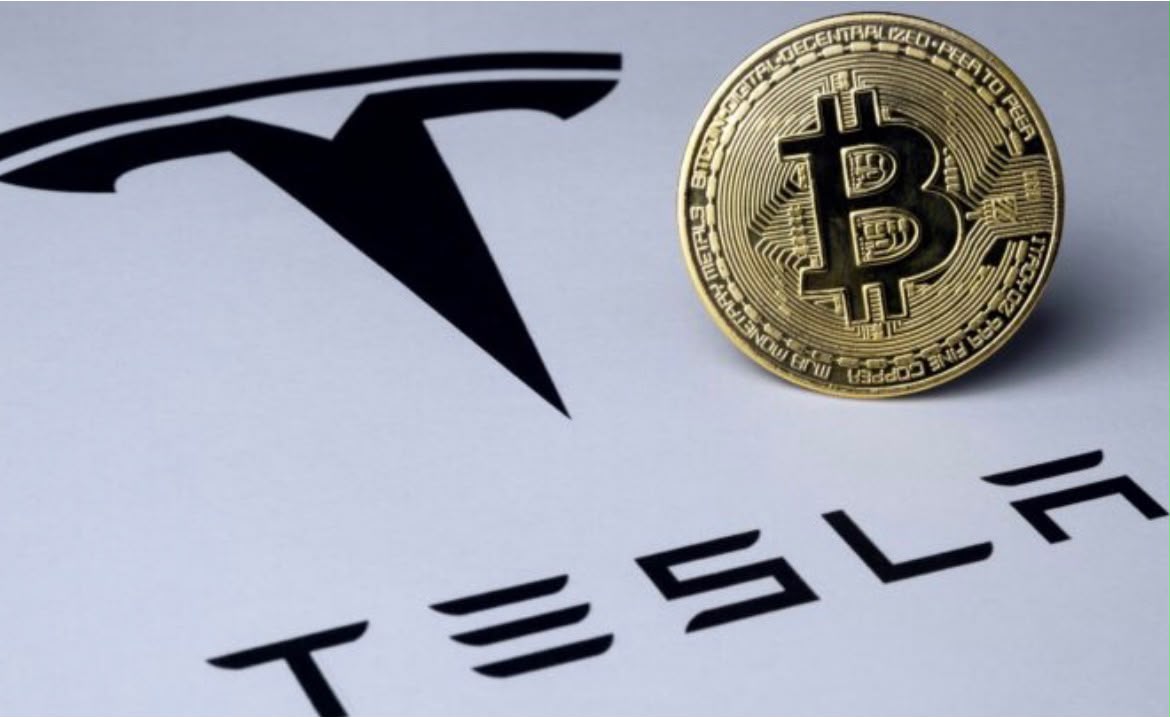
Tesla released its second quarter earnings on July 22 2026 there was one number that told a more interesting story than the revenue figures, the delivery records or even the profit miss that sent the stock down more than 4 percent in after-hours trading.
That number was zero.
Zero Bitcoin bought and Zero Bitcoin sold. For the ninth consecutive quarter Tesla reported its BTC holdings completely unchanged, and the message embedded in that zero is worth unpacking carefully.
The Numbers
Tesla kept its reserve of 11,509 BTC untouched through Q2 2026, continuing a holding pattern that has remained unchanged since 2022. At current Bitcoin prices that position is valued at approximately $742 million, and under the updated fair-value accounting rules that Tesla adopted, the company booked a $112 million unrealized loss on its Bitcoin holdings during the quarter, reflecting the gap between Bitcoin’s current price and the higher prices at which the asset was valued at the end of Q1.
The broader Q2 picture was mixed. Revenue rose 26 percent year over year to $28.24 billion, driven by record EV deliveries of 480,126 vehicles, the best second quarter in company history, but adjusted earnings per share came in at $0.33, well below analyst estimates of $0.51, gross margin fell to 16.8 percent and operating margin dropped to 1.4 percent, with capital spending jumping 142 percent from a year earlier to $5.79 billion as Tesla poured money into AI infrastructure, Optimus robots and Cybercab robotaxi production.
The Bitcoin loss contributed to the profit shortfall but was not the primary driver. A $1.01 billion unrealized gain on Tesla’s SpaceX stake did much of the lifting in net income, meaning the company’s reported profit of $1.11 billion was significantly dependent on a paper gain from one Elon Musk company partially offsetting a paper loss from another Elon Musk company’s Bitcoin position, which is a sentence that captures something genuinely unusual about Tesla’s current financial structure.
How Tesla Got Here
Tesla’s Bitcoin story begins in February 2021 when the company made a $1.5 billion BTC purchase, one of the most influential corporate crypto investments ever announced, sending Bitcoin’s price surging and triggering a wave of corporate treasury conversations that fundamentally changed how boards and CFOs thought about digital assets.
What followed was less straightforward. Tesla sold 10 percent of its holdings shortly after purchase to test Bitcoin’s liquidity, then sold 75 percent of its remaining position during the 2022 bear market, with Elon Musk explaining that the company needed to strengthen its cash position amid growing economic uncertainty, a decision that generated considerable criticism from Bitcoin advocates but looked defensible given the severity of the 2022 crypto downturn.
Since then the position has not moved. Tesla originally bought 43,200 BTC in early 2021, cut those holdings dramatically in 2022 and has held its reduced stack of 11,509 BTC completely steady ever since, through Bitcoin’s recovery from its 2022 lows, its 2024 surge following ETF approval, its 2025 all-time highs and the current period of consolidation, making Tesla one of the few major corporate Bitcoin holders whose strategy has remained genuinely unchanged across multiple market cycles.
SpaceX and the Minor Transfer That Caused Major Questions
Elon Musk’s SpaceX, which went public recently, revealed in its latest SEC filing before its IPO that it still owns 18,712 BTC, but made a minor transfer in early July that caused some concern in the market before it became clear that nothing more significant had occurred.
The SpaceX transfer was small, the concern was short-lived and the FUD, as the crypto community calls fear, uncertainty and doubt, dissipated quickly, but the episode illustrated how closely corporate Bitcoin positions are watched and how sensitive sentiment can be to even minor movements from major holders.
The Bigger Picture
Tesla and SpaceX together hold approximately 30,221 BTC between them, a combined position worth roughly $1.95 billion at current prices, making Elon Musk’s corporate ecosystem one of the largest institutional Bitcoin holders in the world outside of MicroStrategy, BlackRock’s ETF and government seizure funds.
Tesla’s decision not to sell any Bitcoin throughout 2026 is likely to be viewed positively by long-term crypto investors, particularly after several quarters of uncertainty over whether rising investment requirements might prompt additional asset sales, because the question that has hovered over Tesla’s Bitcoin position since 2022 has always been whether the company would liquidate its remaining holdings if it needed capital for its aggressive AI and robotics spending program.
The Q2 report answers that question clearly, at least for now. Despite market volatility, accounting losses and heavy spending elsewhere in the business, the company has kept its entire Bitcoin treasury intact throughout 2026.
Bitcoin’s current market cap stands at $1.310 trillion while Tesla closed Friday at $1.262 trillion, placing the two within striking distance of each other in the global market cap rankings, a proximity that would have seemed remarkable to say out loud five years ago and now simply reflects how embedded Bitcoin has become in the financial landscape of major corporations.
Tesla took a $112 million paper loss and did not blink. In the corporate Bitcoin world that is called conviction, and right now Tesla has it in large, unchanged quantities.
Bitcoin holders understand the long game. Monica makes the short game simple, convert your BTC to naira instantly whenever you need to, fast, reliable and built for Nigerian crypto users.
Your Bitcoin moves on your terms.
Start Here 👉https://monica.cash/app