Nigeria's Investors Just Put ₦250 Billion Behind the Country's Productive Sector in Five Days
The Bank of Industry went to Nigeria's domestic capital market with a ₦250 billion bond and investors filled it in five working days. Here is what that speed, that appetite and that oversubscription actually mean for Nigeria's economy.
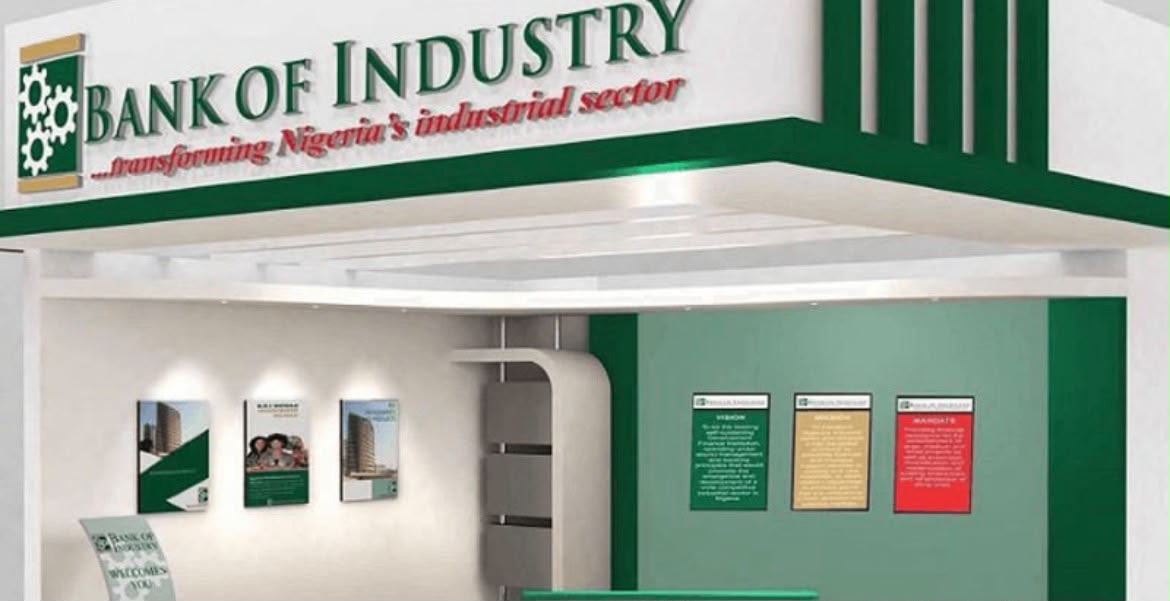
An oversubscribed bond, A domestic capital market proving it can mobilise serious long-term capital, and a development finance institution ready to turn that investor confidence into financing for Nigerian businesses.
Five working days.
That is how long it took for the Bank of Industry's ₦250 billion Series 1 Fixed Rate Bond to be oversubscribed, and in the language of capital markets, where investor appetite is the clearest possible signal of confidence, that timeline says something significant about where Nigeria's domestic institutional investment community currently stands.
The bond was issued through BOI Financing SPV Plc under the bank's $1 billion Multi-Currency Instruments Programme, and the speed and quality of the investor response prompted BOI Chief Executive Officer Olasupo Olusi to describe it as a vote of confidence not only in BOI but in the capacity of Nigeria's domestic capital market to mobilise long-term capital for productive investment, a framing that moves the story beyond a single transaction and into something more consequential about what is happening in Nigeria's financial infrastructure.
The significance of the oversubscription lies in where the money came from, domestic institutional investors, pension funds, insurance companies, asset managers and the long-term savings pools that form the backbone of any mature capital market, choosing to place long-term capital into a development finance instrument rather than keeping it in shorter-term, more liquid assets, a choice that reflects genuine confidence in the instrument's quality, the issuer's credibility and the broader macroeconomic environment in which the transaction was priced.
BOI noted that the transaction represents a significant broadening of its funding architecture, complementing its established track record in international capital markets with deeper mobilisation of long-term capital from domestic institutional investors, and the distinction matters because relying less on international capital markets and more on domestic institutional savings for development financing is both more sustainable and more structurally aligned with building the kind of deep, liquid domestic capital market that Nigeria's economy needs to fund its own growth over the long term.
Olusi was direct about the role of executive support in making the transaction work, saying the bank could not have received the strong investor demand in five working days without President Tinubu's executive approval for various incentives to encourage investors, incentives that functioned as a positive signal to discerning institutional allocators that the government was aligned with the transaction's objectives and committed to its success.
A separate ₦100 billion fund approved by the President for BOI will be used to blend the bond's pricing and cushion the impact of high interest rates for manufacturers and other BOI customers, addressing one of the most persistent complaints from Nigeria's productive sector, that the cost of long-term financing is so elevated that viable businesses cannot justify the borrowing, and that the capital that exists in the system is not reaching the enterprises that need it most.
Proceeds from the issuance will enhance BOI's capacity to provide long-term financing to eligible enterprises across priority sectors, with the stated objectives covering investments in productive capacity, local value addition, employment creation and economic diversification, a set of outcomes that connect a capital markets transaction to the everyday reality of Nigerian businesses trying to expand, hire and compete.
Final subscription and allotment figures have not been disclosed as the transaction remains subject to Securities and Exchange Commission approval and is still progressing toward completion, but BOI confirmed that the immediate significance lies in the strength and quality of investor demand, the pricing achieved and the breadth of the investor base, all of which point to sustained institutional appetite for high-quality, long-term domestic assets.
Nigeria's domestic capital market has spent years being described as underdeveloped relative to the size of the economy it is supposed to serve, too shallow, too short-term, too dependent on government securities at the expense of productive sector financing. A ₦250 billion development bond oversubscribed in five days does not resolve that structural challenge overnight, but it is the clearest demonstration yet that the appetite for long-term development capital exists inside Nigeria's own institutional investor base and that the right instrument, at the right price, with the right sovereign signal behind it, can unlock it.
The money is there. The confidence appears to be building. The question for Nigeria's capital market is whether this transaction becomes a template for what follows or simply a milestone that stands alone.
Nigeria's financial infrastructure is building toward something significant. Monica is already part of that future, fast, regulated and built for the Nigeria that is taking shape right now.
Be where the money moves. Monica keeps yours moving too.
Download Here👉https://monica.cash/app