Maybe You Do Not Need to Keep Moving Like a Shark
We have turned "keep moving" into a lifestyle. But sharks are more complicated than the motivational quotes make them sound, and maybe that is exactly the lesson we need.
There is a particular kind of advice Nigerians understand immediately.
Keep moving.
Even when you are tired, keep moving. When the money is not coming, keep moving. When the job has rejected you three times, update the CV and keep moving. When everyone around you seems to be getting ahead, keep moving.
And if you ever need a motivational animal to complete the speech, somebody will probably say it.
"Be like a shark. A shark never stops moving."
It sounds good.
It also happens to be more complicated than we think.
The Shark Got Misquoted
Here is the biology behind the slogan, and it is only half true.
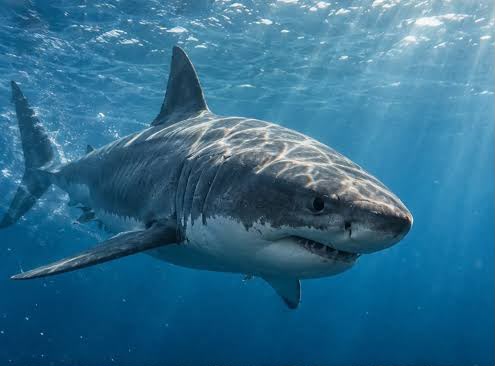
Some sharks genuinely do need to keep swimming, because forward motion pushes oxygen-rich water over their gills in a process called ram ventilation, and without that constant flow, those particular species would struggle to breathe. Great white sharks and mako sharks fall into this category, and it is where the "never stop moving or die" idea originally came from.
But other sharks, including nurse sharks and several reef species, have a different biological setup entirely. They can pump water over their gills using muscles in their mouth and throat, a method called buccal pumping, which means they can rest completely still on the ocean floor and keep breathing just fine. Whitetip reef sharks have been documented resting in groups on the seabed during the day, and researchers have observed sleep-like states in multiple shark species, periods of reduced activity and lowered responsiveness that look remarkably like what we would call rest.
So the shark was never one animal with one rule. It was several hundred species, some of which have to move constantly, and many of which know exactly when to stop.
Somewhere between the science and the motivational speech, the nuance got left behind.
We Have Made Hustle a Personality
The version of "keep moving" that made it into human culture did not carry the biological nuance with it. It carried only the slogan, and the slogan has done real damage to how an entire generation relates to rest.
If you are not learning, working, posting, networking, applying or building something, there is now a quiet guilt that shows up uninvited, the sense that stillness is falling behind, that a quiet Sunday is a wasted one, that recovery is something to feel embarrassed about rather than something the body and mind genuinely require to keep functioning.
This shows up everywhere in Nigerian hustle culture specifically. The side hustle on top of the main job. The content posted at 11pm because staying visible online has started to feel like its own form of labour. The refusal to say no to one more opportunity because saying no might mean missing the window. Movement has become a personality, and stillness has become something that requires an apology.
Movement Is Not the Same as Progress
Here is where the shark's biology becomes a genuinely useful metaphor rather than a tired one.
You can be extremely busy and still be going nowhere. A shark swimming constantly is not necessarily hunting, feeding or getting anywhere meaningful, it may simply be maintaining the minimum motion required to breathe, which is a survival function, not a strategy.
The same distinction applies to human busyness. Answering every message the moment it arrives is not the same as doing meaningful work. Filling every hour with activity is not the same as making progress toward something that matters. There is a specific kind of exhausted stillness that comes from moving constantly without direction, and it produces the same depleted feeling as genuine overwork, without the results to show for it.
The nurse shark resting on the seafloor is not falling behind. It is simply not the kind of shark that needs to move to survive, and it has adapted its behaviour to match what actually keeps it alive rather than following a rule that belongs to a different species entirely.
Even Sharks Have a Version of Rest
National Geographic has documented whitetip reef sharks resting in groups in caves and on sandy seabeds, sometimes for extended periods during daylight hours, before becoming active again at night to hunt. Researchers studying shark behaviour have identified periods that resemble sleep in several species, characterised by reduced movement, lowered metabolic activity and decreased responsiveness to stimuli, the same basic markers that define rest in most animals capable of it.
This is not weakness in the shark. It is regulation. The animal that everyone quotes as the ultimate symbol of relentless motion has, in several of its most studied species, a built-in mechanism for stopping, and that mechanism is not a flaw in the system. It is the system.
Maybe We Need a Better Definition of "Keep Moving"
Movement does not have to mean constant forward motion at a single unchanging pace. It can mean changing direction when the current path is not working. It can mean learning something new rather than repeating the same effort. It can mean trying again after a setback rather than pretending the setback did not happen. It can mean leaving a job, a relationship or a habit that has stopped serving you, even though leaving looks, from the outside, like stopping.
And sometimes, movement means resting long enough to return with clarity, which is not the opposite of moving forward. It is frequently the precondition for it.
Maybe you do not need to be the person who is always moving.
Maybe you need to be the person who knows when to move, when to pause and when to change direction.
Because even the shark is not living by one rule.
And neither should you.
Knowing when to move and when to pause applies to your money too. Monica keeps your finances simple so you can focus on the pace that actually works for you.
Move when it matters. Rest when you need to. Monica keeps up either way 👉https://monica.cash/app