Ebola Virus Is 2,000 Deaths Deep in Central Africa and Nigeria Has Been Here Before
The 2026 Ebola outbreak in DR Congo is now the second largest in history, moving faster than any outbreak on record, killing nearly half of everyone it infects and spreading across five provinces toward borders with Uganda, Rwanda and South Sudan. Nigeria has faced Ebola before and survived it. Here is how to make sure history does not repeat itself.
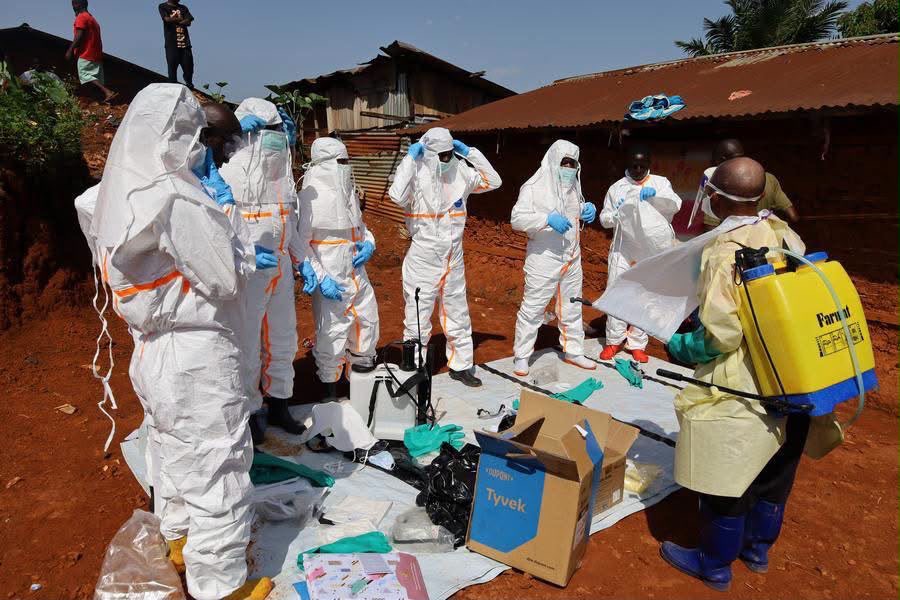
Over 2,000 people have died from Ebola in the Democratic Republic of Congo since May 2026. The outbreak is spreading faster than any in recorded history. Lagos has already activated surveillance. Here is everything Nigerians need to understand about what is happening and why paying attention right now is not panic, it is wisdom.
Somewhere in Ituri Province in northeastern DR Congo, a virus is outrunning the people trying to stop it.
The 2026 Ebola outbreak, caused by the rare Bundibugyo strain of the virus, was officially declared on May 15 2026 after laboratory analysis confirmed the disease in eight samples taken from a high-mortality illness cluster in Mongbwalu Health Zone, and in the weeks since it has done something no Ebola outbreak has done before in terms of speed.
As of July 30 2026 a total of 3,605 confirmed cases including over 1,587 deaths have been reported, corresponding to a case fatality ratio of 44 percent, the outbreak has expanded from a single health zone in Ituri Province to five provinces across eastern Congo, now affecting 49 health zones, and the most recent complete reporting week recorded 567 new cases and 296 deaths in a single seven-day period, the highest weekly figures since the outbreak began.
The ITV report you may have seen citing over 2,000 deaths reflects the most recent figures available at time of publication, and the trajectory of the outbreak confirms that number is still climbing.
The CDC has described this outbreak as spreading substantially faster than previous Ebola outbreaks and has classified it as the second-largest Ebola outbreak on record, behind only the catastrophic 2014 to 2016 West Africa outbreak that killed more than 11,000 people across Guinea, Sierra Leone and Liberia, and which reached Nigeria.
That last part is the sentence that every Nigerian needs to read twice.
Nigeria has been here before. In 2014 a single infected passenger arriving at Lagos Airport from Liberia seeded an outbreak that spread to 20 confirmed cases in Lagos and Port Harcourt before an extraordinary public health response, widely praised by the WHO as a model for the world, contained it within three months, preventing what could have been a catastrophic epidemic in Africa's most densely populated city.
That response worked because Nigeria moved fast, because the authorities took it seriously before the numbers became impossible to manage, and because ordinary Nigerians understood what they needed to do and did it.
The same readiness is needed now.
Lagos State has already activated its surveillance and response mechanisms in light of the current DRC outbreak, according to PM News, and the Nigeria Centre for Disease Control and Prevention has been monitoring the situation closely since the WHO declared it a Public Health Emergency of International Concern on May 17 2026, but awareness at the institutional level only protects people if awareness at the individual level matches it.
What makes this outbreak different and more dangerous than previous ones
The Bundibugyo strain behind this outbreak is not the same virus that drove the 2014 West Africa epidemic. It is rarer, and critically, there is no licensed vaccine or specific therapeutic treatment for the Bundibugyo virus, unlike the Zaire strain for which vaccines and monoclonal antibody treatments now exist, meaning the tools that helped bring previous outbreaks under control more quickly are not available in the same form for this one.
Clinical trials for both vaccines and treatments have begun in Ituri Province, but they are trials, not deployments, and the people currently infected cannot wait for a trial to conclude.
The outbreak is also happening in conditions that make containment exceptionally difficult, rebel conflict, bad roads, payment disputes that have caused health worker stoppages, and significant population movement for trade and mining across five provinces and toward multiple international borders, all of which create the kind of porous environment that Ebola exploits most effectively.
The outbreak is occurring in areas affected by insecurity, population displacement, mining-related population movement, and frequent cross-border travel, all of which increase the risk of further transmission, and the WHO regional director for Africa summarised the situation plainly when he said officials are chasing the virus and the virus is ahead of them.
How Ebola spreads and what it is not
Understanding exactly how Ebola spreads is the most important piece of information any Nigerian can have right now, because the virus is frightening but it is not invisible and it is not magical, it has specific routes of transmission that, when understood, can be meaningfully interrupted.
Ebola does not spread through the air. It is not transmitted by casual contact, by breathing the same air as an infected person, by sharing public transport or by mosquitoes.
Ebola spreads through direct contact with the blood, body fluids, organs or other secretions of infected people or animals, including the bodies of people who have died from the disease, which is why funeral practices that involve touching or washing the body of a deceased person have historically been significant transmission routes in previous outbreaks.
This means the risk to someone in Lagos who has not been in contact with anyone returning from the affected areas in DRC is currently very low, and the CDC has confirmed that the overall risk to people outside the directly affected region remains low at this time.
But low is not zero, and the distance between DRC and Nigeria is considerably smaller in terms of travel time than it feels on a map.
What every Nigerian should know and do right now
Know the symptoms. Ebola begins with sudden fever, severe headache, muscle pain, weakness and fatigue, followed by vomiting, diarrhoea, rash, and in severe cases unexplained bleeding or bruising. These symptoms appear between two and twenty-one days after exposure.
If you have recently travelled to DRC, Uganda or the surrounding region and develop any of these symptoms, do not go to a hospital or clinic without calling ahead first. Contact the NCDC toll-free line on 0800-9700-0010, available 24 hours a day, seven days a week, and follow their guidance before presenting anywhere for treatment.
Avoid consuming bushmeat, particularly in areas where there may be contact with wild animals, as bats and non-human primates are considered natural hosts for the Ebola virus and have been associated with outbreaks at the point of origin.
Wash your hands regularly and thoroughly with soap and water, a practice that costs nothing and forms a baseline layer of protection against a wide range of infections beyond Ebola.
If you are a healthcare worker, follow standard infection control precautions rigorously including the use of personal protective equipment when managing any patient presenting with fever and unexplained bleeding, and report any concerning cluster of cases to public health authorities immediately rather than waiting.
Stay informed through verified sources including the NCDC website, the WHO situation reports updated weekly, and the CDC Ebola current situation page updated regularly, and be sceptical of unverified information spreading on WhatsApp and social media, because misinformation during disease outbreaks costs lives just as the disease itself does.
What Nigeria's government needs to do
Surveillance at all international airports and land borders must be strengthened immediately, with particular attention to travellers arriving from DRC, Uganda and South Sudan, the three countries currently most affected.
Isolation and treatment facilities need to be on standby in Lagos, Abuja and other major cities, not because an outbreak is imminent but because readiness that exists before it is needed is the only kind that actually works.
Health workers across the country need to be briefed and equipped, because the lesson of 2014 is that the response is only as strong as the people delivering it, and those people need information, protective equipment and the confidence that the system behind them is functioning.
Public communication needs to be clear, honest and consistent, because one of the most dangerous forces in any outbreak is the information vacuum that rumour fills when official communication is slow, vague or absent.
Nigeria survived Ebola in 2014 because the response was serious, swift and centred on the truth. That is the template. The same one applies now.
The virus is 2,000 deaths deep in Central Africa and moving fast. Nigeria is watching. The question is whether it is watching closely enough.
Your health is your most valuable asset. Monica keeps your finances sorted so that when health emergencies arise, money is one less thing standing between you and the care you need.
Financial readiness starts here. Health readiness starts with knowledge. Download The App Here: https://monica.cash/app