Crypto Is Fighting for Its Rules. The Banks Are Fighting Back
The battle over who should regulate crypto in the United States is entering a decisive stage. With the Senate preparing to vote on the Clarity Act, crypto companies and traditional banks are now fighting for very different visions of what the future of digital finance should look like.
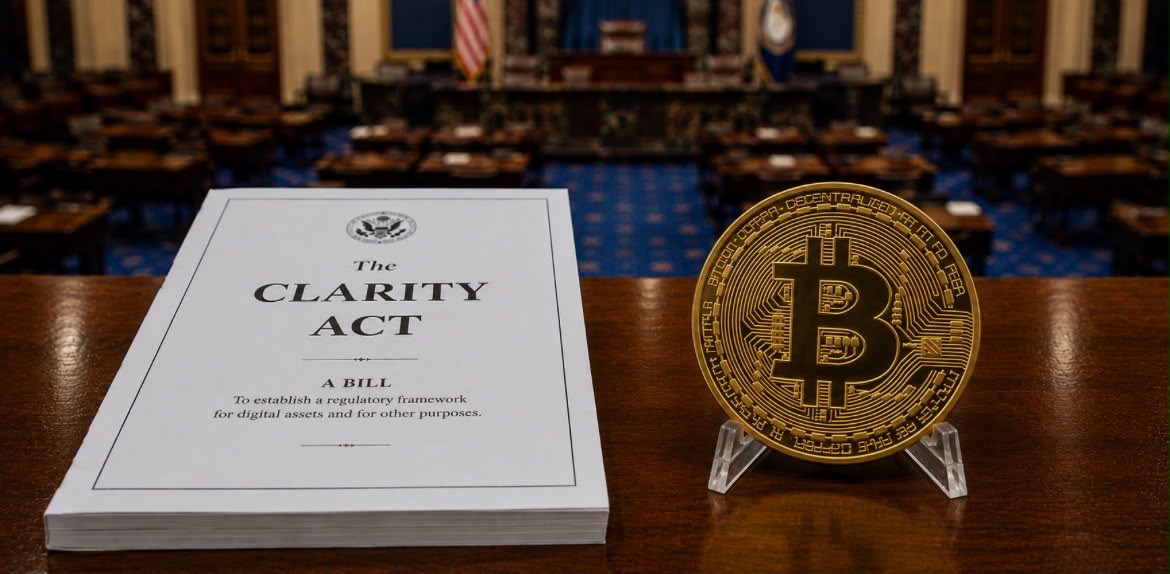
Crypto has spent years asking for clarity.
Now that clarity may finally be within reach, everyone seems to have a different idea of what it should look like.
The US crypto industry and traditional banking sector are stepping up their lobbying efforts ahead of a key Senate vote on the Digital Asset Market Clarity Act, with both sides trying to persuade lawmakers before they return to Washington.
The Senate is scheduled to hold a procedural vote on September 15. The outcome could determine whether one of the industry’s most important attempts at comprehensive crypto market regulation moves forward or gets trapped in another round of negotiations.
For crypto companies, this is about finally knowing which rules apply to them.
For banks, some provisions could determine how much competition they face from digital assets and stablecoins. And for the wider crypto market, the stakes are much bigger than one American bill.
What Is the Clarity Act Actually About?
At its core, the legislation is trying to answer a question that has complicated the US crypto industry for years:
Who regulates what?
The bill seeks to establish clearer boundaries between the Securities and Exchange Commission and the Commodity Futures Trading Commission and determine which digital assets should fall under each regulator’s authority.
That distinction matters because crypto businesses have spent years operating in an environment where regulatory boundaries have often been disputed.
A clearer framework could give exchanges, developers, investors and financial institutions a better idea of what is permitted and what compliance requirements they need to meet.
The House already passed its version of the bill in 2025 by a 294 to 134 vote. The Senate version, however, has become considerably more complicated.
Why Are Banks Fighting It?
This is where the story gets particularly interesting.
The banking industry is not simply opposed to regulation of crypto. Banks are worried about what kind of regulation eventually emerges. One major area of disagreement involves stablecoins.
Stablecoins have moved far beyond the image of being a niche crypto product. Dollar-linked digital assets are increasingly being used for payments, transfers and settlement, while financial institutions are exploring ways to incorporate them into existing financial infrastructure.
That creates a potential competitive problem for banks.
If consumers can hold digital dollars, move them quickly and potentially receive incentives for using them, banks worry that some money could move away from traditional deposits.
Banking groups have therefore pushed lawmakers to strengthen safeguards around stablecoins and their potential impact on deposits and lending.
The crypto industry’s argument is almost the opposite. It says excessive restrictions could push innovation and capital outside the United States.
The Lobbying Battle Is Already Underway
This is not a quiet policy debate happening behind closed doors.
Crypto groups have taken the fight directly to senators’ home states during the congressional recess.
Stand With Crypto, an advocacy organisation backed by Coinbase, says its supporters have made tens of thousands of calls and emails to lawmakers during the recess. The organisation has also organised local events and newspaper campaigns urging senators to support the legislation.
The Blockchain Association has launched its own campaign encouraging people to contact senators.
The banking industry is responding with campaigns of its own.
The Independent Community Bankers of America has been mobilising local bankers to meet lawmakers and raise concerns about provisions they believe could threaten traditional lending and financial stability.
The result is unusual.
Crypto is no longer behaving like an industry waiting outside the financial system asking to be let in. It is now lobbying from inside the conversation.
Why September 15 Matters
The Senate vote next week is not necessarily the final vote on the legislation.
It is a procedural step.
But it could be decisive.
The bill needs enough support to overcome the Senate’s 60-vote threshold, and Democrats’ support will be important.
That is where some of the biggest disagreements remain.
Democrats have raised concerns about consumer protection, money laundering safeguards and ethics provisions connected to government officials and crypto interests.
Some Republicans have also expressed concerns, particularly around stablecoins competing with bank deposits and potentially affecting the traditional lending model. So although the crypto industry has significant political momentum, passage is far from guaranteed.
This Is Bigger Than America
It might be tempting to treat the Clarity Act as a US regulatory story.
It is not.
The United States remains one of the world’s largest financial markets. Decisions made there can influence how global companies build products, where investors deploy capital and how financial institutions approach digital assets.
If the US establishes a clearer framework for crypto markets, other countries will be watching.
Nigeria will be watching too.
The country already has one of the world’s most active crypto user bases, while regulators continue to work through how digital assets should fit into the wider financial system.
For Nigerian users, the global regulatory direction matters because crypto is no longer operating in isolation.
The assets people receive, hold and convert are increasingly connected to exchanges, payment companies, financial institutions and regulatory systems across borders.
Crypto Is Becoming Too Big to Be Treated as a Side Conversation
That may be the most important development hiding underneath the political fight.
The argument is no longer about whether crypto exists.
It does.
The argument is about how the financial system should accommodate it.
Stablecoins are being discussed as payment infrastructure. Major banks are entering digital asset markets. Financial platforms are seeking regulatory licences that would allow them to expand their crypto operations.
Even the current debate over the Clarity Act reflects that shift.
Traditional finance is no longer simply watching crypto from a distance.
It is negotiating with it.
And in some cases, competing with it.
What Happens Next?
The immediate date to watch is September 15.
The Senate’s procedural vote should provide a clearer indication of whether the Clarity Act has enough support to move forward.
But even if the legislation advances, negotiations are likely to continue.
The final version could look different from the current proposal.
That is why the most important question is not simply whether Congress passes a crypto bill.
It is what kind of financial environment the final legislation creates.
A good regulatory framework should give legitimate businesses room to innovate while protecting consumers and preserving the stability of the wider financial system.
That balance is difficult.
But as crypto becomes more deeply connected to everyday finance, avoiding the conversation is becoming even harder.
The Crypto Industry Has Changed
A few years ago, the biggest crypto stories were often about price.
Bitcoin went up.
Bitcoin crashed.
Another token launched.
Another exchange failed.
Today, some of the most important crypto stories are happening in boardrooms, banks and government offices.
That is not necessarily a sign that crypto has become less interesting.
It may be a sign that it has become more consequential.
The industry is now fighting over rules because the rules will determine how large a role digital assets can eventually play in the financial system.
And with the US Senate preparing to take its next step, that fight is about to become even more important.
A Clearer Way to Move Your Crypto
As digital assets become more connected to the mainstream financial system, the everyday experience of moving crypto should not have to become more complicated.
Monica gives users a direct route to convert supported crypto assets into naira, helping bridge the gap between digital assets and everyday spending.
Whether you are receiving crypto from abroad, converting assets you already hold or simply need a straightforward way to access your money in naira, Monica keeps that part of the journey simple.
Your crypto should work for you, not become another problem to solve. Download Monica Here: https://monica.cash/app